Mark Oppenheimer: What is your book about?
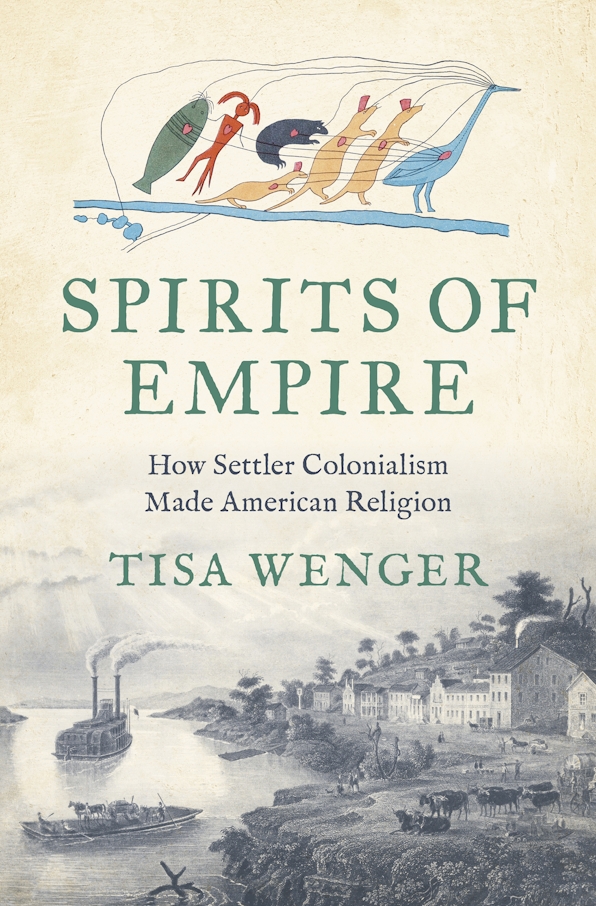
Tisa Wenger: It is about the intersection of religion and settler colonialism in early America, and it makes the argument that American religion, both the category of religion and the practices and traditions that go by that name, developed on settler colonial grounds, in a settler colonial context, and was fundamentally shaped by the settler colonial process that we call Western expansion. I write in the book that the United States was, from the start, a new kind of empire built on a governing model that scholars call settler colonialism.
MO: What is settler colonialism?
TW: Settler colonialism is the form of colonialism in which settlers from another place, representing a foreign empire perhaps, displace native peoples and their structures of governance. So it does not refer to any immigrants or migrants, but it is where local indigenous forms of governance and control over land get displaced and pushed away. This model involves the displacement of Indigenous peoples and polities from their lands, replacing them with white settlers and a new government that privileges them.
MO: One of the criticisms that I could imagine coming at the book is that there are no indigenes, that the natives themselves were often settler colonialists who displaced or eliminated prior peoples. Does that complicate the question of settler colonialism?
TW: It is true that people migrate. That’s been a big part of human history everywhere. I don’t think that the same patterns of settler colonialism existed prior to European settlement here. There were conflicts between groups, but in my understanding of history, those conflicts happened in different ways. Certainly they were not a kind of civilizational displacement that was supported by a foreign empire. There were wars between neighboring nations, but sometimes groups shifted in territory. That seems to me more similar to wars between neighboring nations in Europe, Africa, or in other parts of the world where nations think of themselves as peers or neighbors and they’re in conflict. Sometimes they’re in conflict over resources that they both want, but they’re not completely displacing each other or aiming to eliminate the other.
The concept of indigeneity is very complicated, you’re right. Who gets to count as indigenous? This is a fraught question now with the Israel-Palestine conflict, in which both sides claim indigeneity to the land. It seems very clear to me that in the Americas, whether you believe that these native people have been here forever—I mean, who’s ever been anywhere forever?—that native nations were the first humans here. They had developed their cultures, civilizations, traditions, and way of being in the world in relation to this land. I think indigeneity and who identifies as indigenous actually is a category that has developed historically in relation to being colonized.