In the aftermath of American independence, the lexicographer Noah Webster described equality as “the very soul of a republic.” Indeed, by the 1830s, Alexis de Tocqueville and countless other visitors from Europe were struck by the pervasive claims to equality found in American life. But there was also, of course, a glaring exception: the impenetrable barriers that excluded black Americans, whether slave or free, from the enjoyment of anything remotely resembling equality.
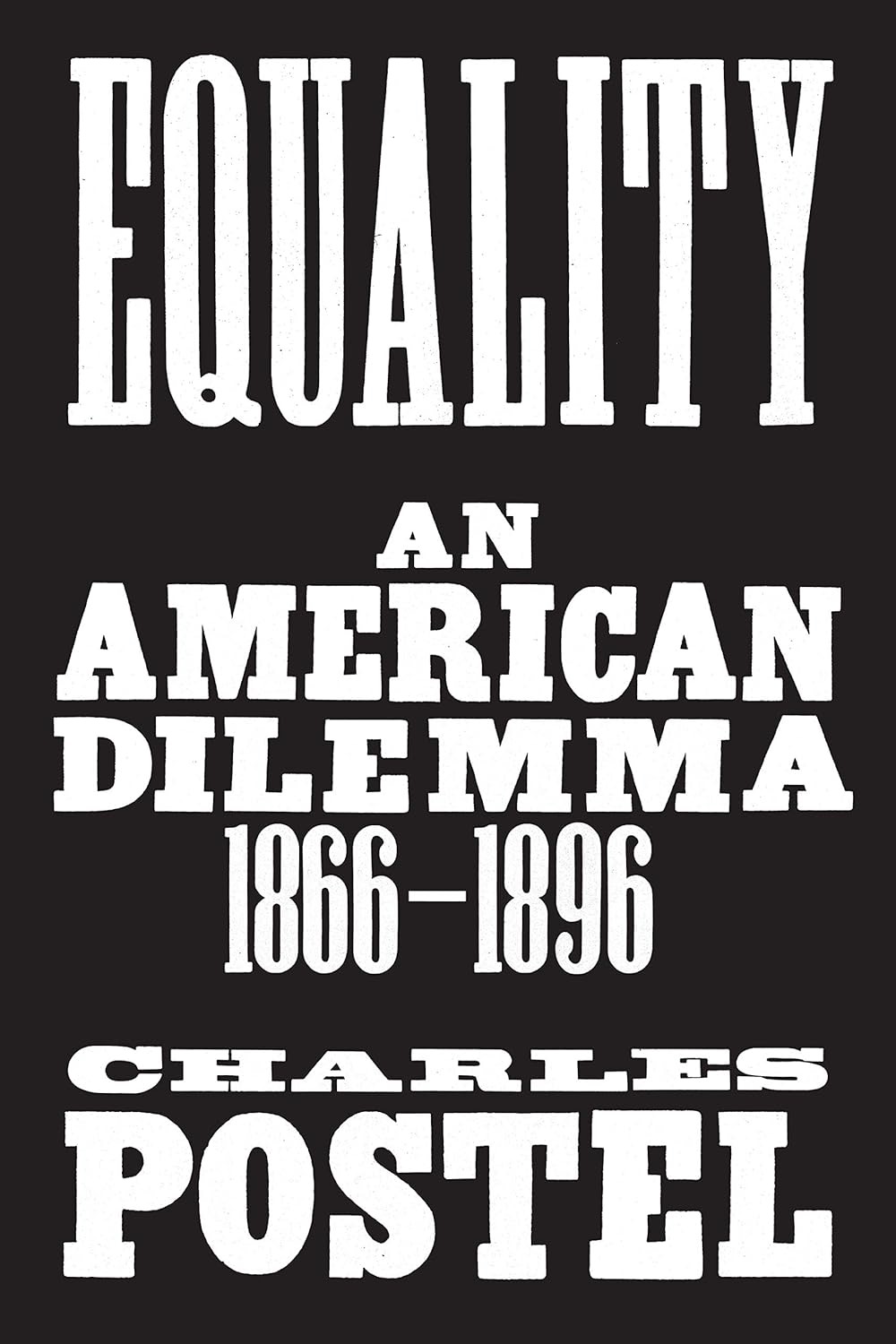
The Civil War and Reconstruction sought to eradicate these barriers, destroying the institution of slavery and rewriting the Constitution and laws in an attempt to guarantee equal rights regardless of race. Yet the nation soon retreated from the work of racial equality, and at the same time an expanding industrial capitalism gave birth to a class of plutocrats who dominated large sectors of the economy and exercised inordinate influence on politics. As Charles Postel shows in his new book, Equality: An American Dilemma, 1866–1896, the years that Mark Twain and Charles Dudley Warner dubbed the Gilded Age produced a widespread sense that something was seriously amiss in the American economic and political order, and a variety of mass citizen movements arose aiming to secure greater equality.
Postel, who teaches history at San Francisco State University, is best known for his 2007 book The Populist Vision, winner of the Bancroft Prize. That book succeeded in the difficult task of reinterpreting a movement—the People’s Party of the 1890s—that had already attracted the attention of historian heavyweights, including Richard Hofstadter and Lawrence Goodwyn. Hofstadter’s Populists were prototypes of what he called the “paranoid style” in American politics (a concept that has recently enjoyed a new lease on life as a too-easy explanation for the electoral success of Donald Trump). Imprisoned in nostalgia for a lost golden age of small-scale farming, the Populists, Hofstadter claimed, were prone to irrational and xenophobic conspiracy theories to explain their economic plight. Goodwyn’s Populists, on the other hand, were proto-socialists who rejected 19th century capitalism in favor of a cooperative commonwealth in which both government and the economy were able to operate on democratic principles. Postel offered a correction to both. He showed that, contra Hofstadter, the Populists were forward-looking men and women who embraced technological change, were comfortable with modern means of transportation and communication, and understood all too well the inequities of the economic system they confronted in the 1890s. In contrast to Goodwyn, Postel made a convincing case that they embraced the capitalist marketplace, so long as the rampant power of giant corporations and national banks was curbed by the federal government.
In some ways, Equality is what Hollywood would call a prequel to Postel’s first book. It offers a lucid, thoroughly researched account of three mass movements of the 1870s and ’80s that sought to redress various forms of inequality in Gilded Age America: the Grange, the Women’s Christian Temperance Union, and the Knights of Labor. All three were national in scope, had a strong impact on politics, and attracted the support of hundreds of thousands of Americans, and all were key participants in the public debate over equality. What interests Postel is not only how these movements defined equality and tried to achieve it but also how, in his view, they could not escape—and sometimes participated in—the post-Reconstruction rollback of the rights of black Americans. Rhetorically, all three elevated solidarity—among farmers, women, or laborers—to a cardinal principle, but all fell short of transcending the divide of race.