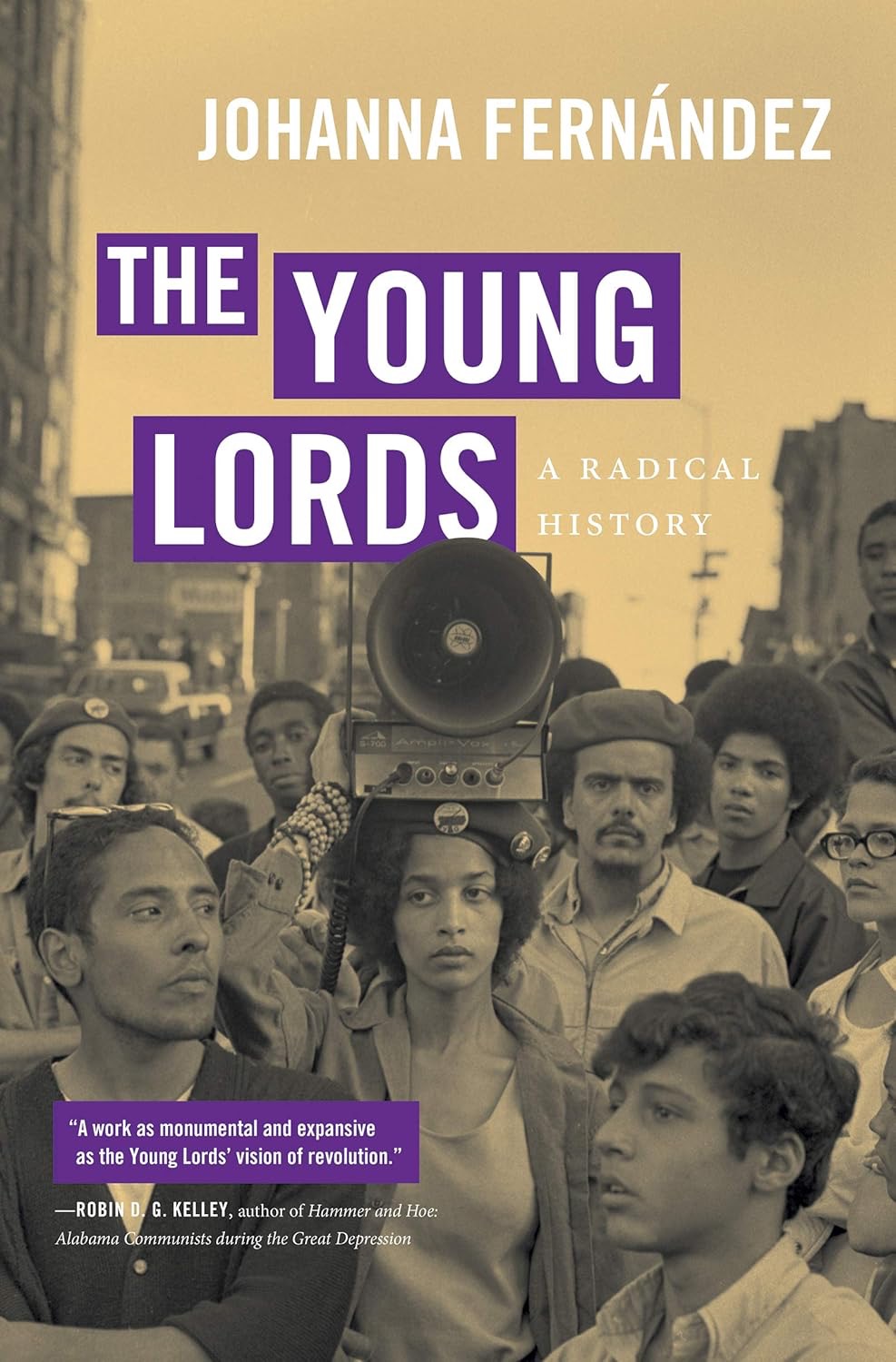

In her new book, The Young Lords: A Radical History, historian Johanna Fernández offers us an exhaustive and enlightening study of their history and makes the case for their influence as profound thinkers as well as highly capable street activists. There have been other books on and by the Lords (including Darrel Wanzer-Serrano’s The New York Young Lords and the Struggle for Liberation, Iris Morales’s Through the Eyes of Rebel Women: The Young Lords 1969–1976, and Miguel Meléndez’s We Took the Streets) but Fernández’s distinguishes itself by providing solid, incredibly detailed historical research, including extensive interviews with the Lords and their contemporaries. It also places them in the context of the political and social debates that shaped the era and reveals how so much of their activism centered on the same issues—housing, health, education, and the marginalization of women, the LGBTQ community, and the working poor—that we face today. Perhaps most important, she offers a useful reminder of just how central anti-colonial and anti-capitalist politics were to them.
The Young Lords were established in Chicago in 1968, led by a street activist named Cha Cha Jiménez, who organized the group to fight local gentrification, police brutality, and racism. He pioneered the use of the Lords’ signature purple berets (perhaps inspired by the Sharks’ colors in West Side Story) and semi-military code of conduct. But it was only when the New York chapter was founded a year later that the group began to take off and the Young Lords burst into national prominence, adding their unique spin to the moment’s revolutionary politics. A less confrontational variation on the Black Panthers, the Weather Underground, and Students for a Democratic Society (SDS), the New York group and its founders—Meléndez, Morales, Juan González, Pablo Guzmán, Felipe Luciano, and Denise Oliver—were probably the most successful media communicators among these different organizations. They were also representative of two late-1960s phenomena: the Rainbow Coalition of black, Latinx, Native, and white working-class radicals emerging in the era, and the bicultural and bilingual Nuyorican generation. The Lords themselves were a rainbow, since, as Fernández notes, more than 25 percent of the group’s members were African American, including Oliver.
The Nuyorican generation was not represented by the Young Lords alone. It operated in three intersecting spheres of influence: salsa music, which fueled a nostalgia for its Caribbean antecedents, representing the past; the Spanglish poetry of the Nuyorican Poets Café, which anticipated the future’s code-switching, rap music, and spoken-word performance; and political organizations like the Young Lords, which were inspired by the radical internationalism of their day as well as Puerto Rico’s independence struggle.