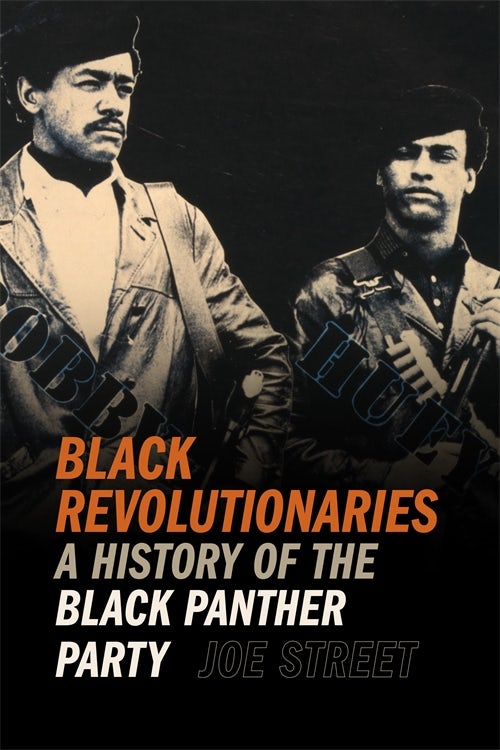
Joe Street: Yeah, I think obviously that the Black Panther Party tells us so much about the nature of American racism, and the centrality of American racism to even the modern day, going back into the modern day or going forward rather into the postmodern day. And I think that’s the most obvious and, in some respects, that’s kind of almost quite a depressing thing to say about what the Black Panther Party does. It holds up a mirror to the US. But I think also what it says is the fact that significant numbers of people in the United States want a more radical change than is being offered, or that has ever been offered by the two major political parties at the time, and it’s significant. I think that the Black Panther Party emerged within a year of supposedly the greatest liberal success of the 20th century. And, within that, people come in and say that is not enough.
This is hugely significant, and I think when we look at that, as well, it suggests that there are significant numbers of people who want to move outside of the two-party political system to create change. There are people themselves who were prepared to put their bodies and their souls on the line in order to effect that change. And that’s a story that’s not often told in the mainstream histories of the United States. There is actually a radical alternative right at the core of the United States, and that, I think, is what is rightly important to an understanding of both the Black Panther Party and the Black Panther Party’s position in American history.
JC: Yeah, I appreciate the way that this discussion about the party signals fundamental structural issues. You do a great job of illuminating our contemporary issues right down to their relationship between that sort of grassroots activism that is by definition more radical and challenging of the status quo that we can rightly parallel to something like the Black Lives Matter movement.
And I’m always curious when we talk about the Black Panther Party that, you know, one of its legacies is a culture of resistance at some level, more grassroots than the capacity of the political organization in the United States seemingly is able to absorb or reflect. Your book really calls attention to a lingering understanding, at least at the grassroots level, of a politics of change that can be achieved. How much that is struggling in the system that we have is very much appreciated.