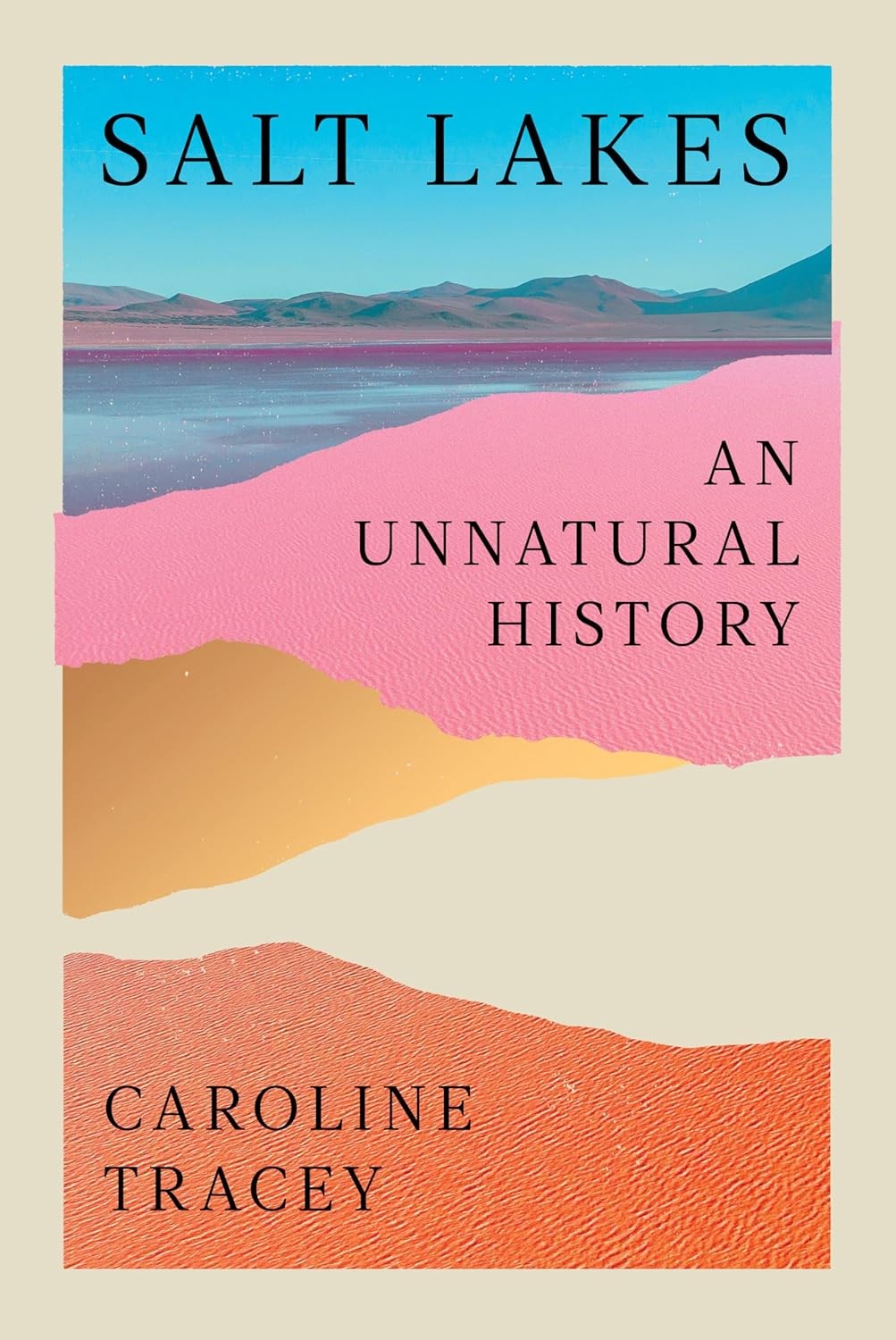
The crisis of the salt lakes has much to do with the fact that their flora and fauna aren’t charismatic—not in the botanical or zoological sense of the word, at least, and probably not familiarly, either. Brine shrimp, alkali flies, phalaropes, and eared grebes don’t appear on postage stamps or sell well as stuffies at the zoo. Nevertheless, it is through developing an appreciation for the intrinsic weirdness of these creatures, from how alkali flies have evolved to birth in “a bubble made of amino acids” to the polyandry of female phalaropes, that Tracey begins to understand her own experience more clearly, the unconventional nature of salt lake ecosystems opening her eyes to her own queerness. If some varieties of brine shrimp are born with both male and female sex organs while still others reproduce asexually, how can any form of human sexual expression be construed as abnormal?
First coming to prominence in the 1990s, the study of queer ecology aims, in the words of environmental studies professor Cate Sandiland, “to disrupt prevailing heterosexist discursive and institutional articulations of sexuality and nature, and also to reimagine evolutionary processes, ecological interactions, and environmental politics in light of queer theory.” For Tracey, this line of thought is liberatory. The adaptations of creatures like brine shrimp, she writes, “resonate with ideas of queerness not only because they mirror humans’ diverse sexual practices, family structures, and reproductive adaptations, but also because they enable creatures to adapt to adverse conditions,” just like their human counterparts have managed to pursue vibrant lives despite heteronormative social pressure and pervasive discrimination.
This application of critical theory is hard to disentangle from what John Ruskin labeled “pathetic fallacy,” the literary tendency to assign human emotion or intention to naturally occurring phenomena. In Ruskin’s formulation, the word pathetic served primarily as a way to invoke pathos, a sense of empathetic identification. Tracey’s emphasis on queer ecology fits the bill, allowing her to construct Salt Lakes in a way that holds human emotion and ecological destruction at once.