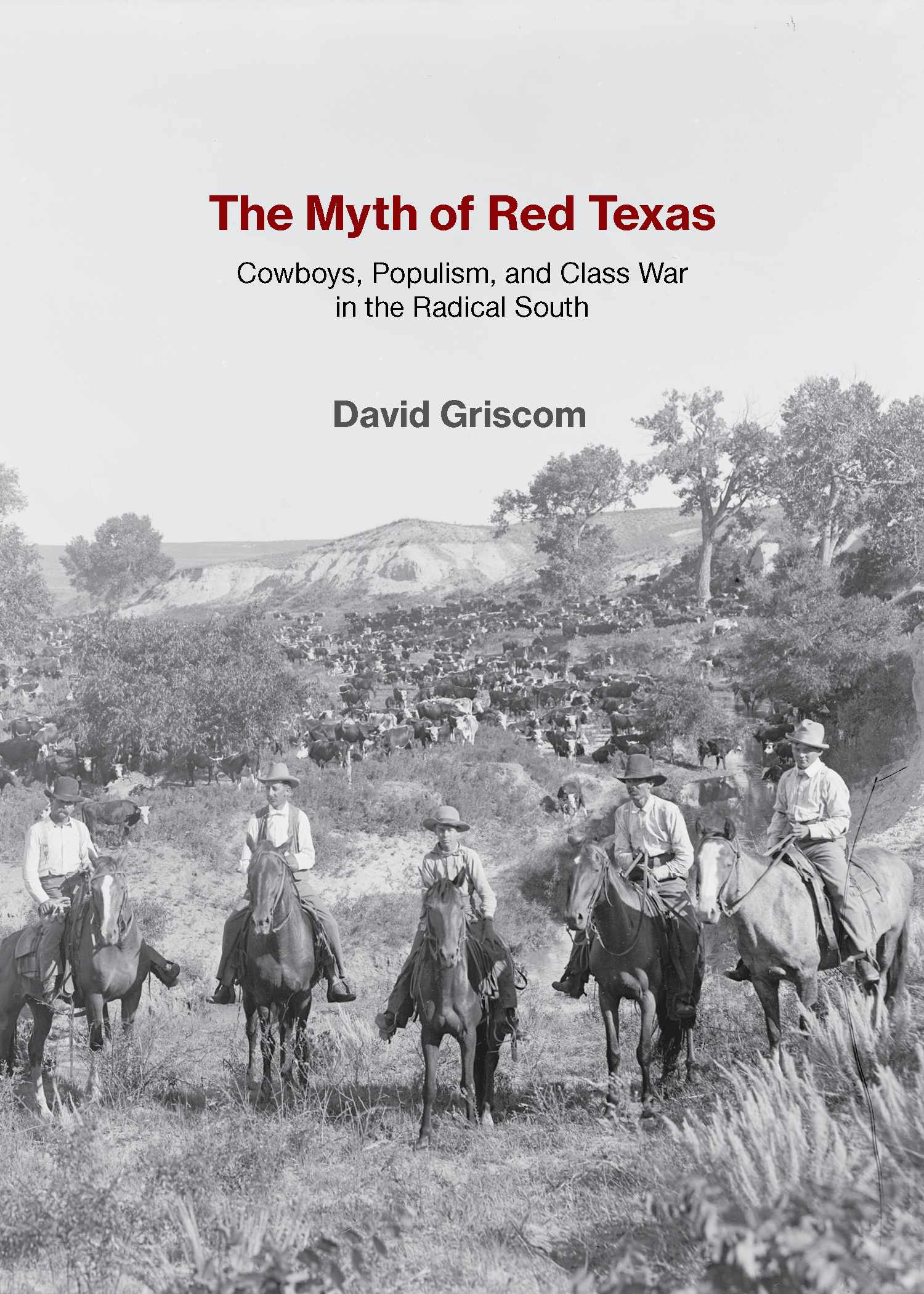
“Republicans in Texas have been skillful at crafting a version of Texas history that is favorable to their current goals. And they are not afraid of using their political power to enforce this Narrative,” Griscom, a Texan who hosts the political podcasts Left Reckoning and The Jacobin Show, writes in the introduction to his book. He’s right, and their narrative strategy starts as early as elementary school. Every student takes Texas history, where they learn about life on the open range, frontiersman Davy Crockett, the Alamo he died defending, and the few years Texas operated as an independent republic. As a young student in the 2000s, I got the impression that early Texans were freedom-loving rebels in the style of the cowboys, and the state today, with its limited, conservative government, is an inevitable outgrowth of their moral belief in autonomy. Texas’s modern wealth, success and enviability come from that love of freedom, an inherently capitalist value that teaches us how to build great things on our own, take care of ourselves by ourselves, and do whatever we damn well please. Looking back, the education—which is impossible to fully separate from the cultural lessons I got outside of the classroom in a conservative town—now feels less like history than it does software, a process of calibrating young minds to the state’s default setting. This narrative was so pervasive that even my Spanish teacher gave a lesson (in English) on why socialism, with all its big government programs, is bad.
For this story to appear true, Griscom writes, huge swaths of Texas history had to be ruthlessly re-written. The Myth of Red Texas offers a first-of-its-kind, jaw-dropping corrective. For example, those cowboys we iconize? Griscom tells us they were not Texas’s golden boys, but at moments, the enemies of the powerful men who built our state. In fact, cowboys were actually some of the first labor organizers; not lone wolves, but people who worked together to fight for fair wages and public ownership of Texas’s vast land. When the early corporate ranchers put up miles and miles of barbed wire around their newly acquired property lines, these land-owners willfully broke up cattle trails cowboys had used for decades and claimed exclusively as their own water sources necessary for the livestock’s survival. So the cowboys cut the fences. Instead of coming to their senses and sharing the state’s bountiful resources, the ranchers colluded with the government, who sent the Texas Rangers after our cowboys—rangers who took “morbid pleasure” in hunting them down. When those same ranchers tried to underpay them, cowboys banded together and went on strike in 1883. According to the U.S. Commissioner of Labor, the cowboys won, though many history books will errantly say they lost. In an epic debunking, Griscom writes:
The simple fact is that when Thomas Harris turned down his boss’s offer to break the strike and preserve his $100-a-month position, it was not because of a ‘value system of the rugged individual.’ Call it neighborliness, bravery, or simply looking out for the men riding next to you on that day in Old Tascosa. In any case, being a cowboy in those days—not just working on the range, but more broadly, living by Texan values—meant solidarity.