Known more for his poetry, exemplified by Leaves of Grass (1855), Whitman’s dark 1871 treatise on the nation remains a harsh but ultimately optimistic appraisal of the American experiment. It serves as a useful tool for thinking about the nation’s current state on the 250th anniversary of the Declaration of Independence.
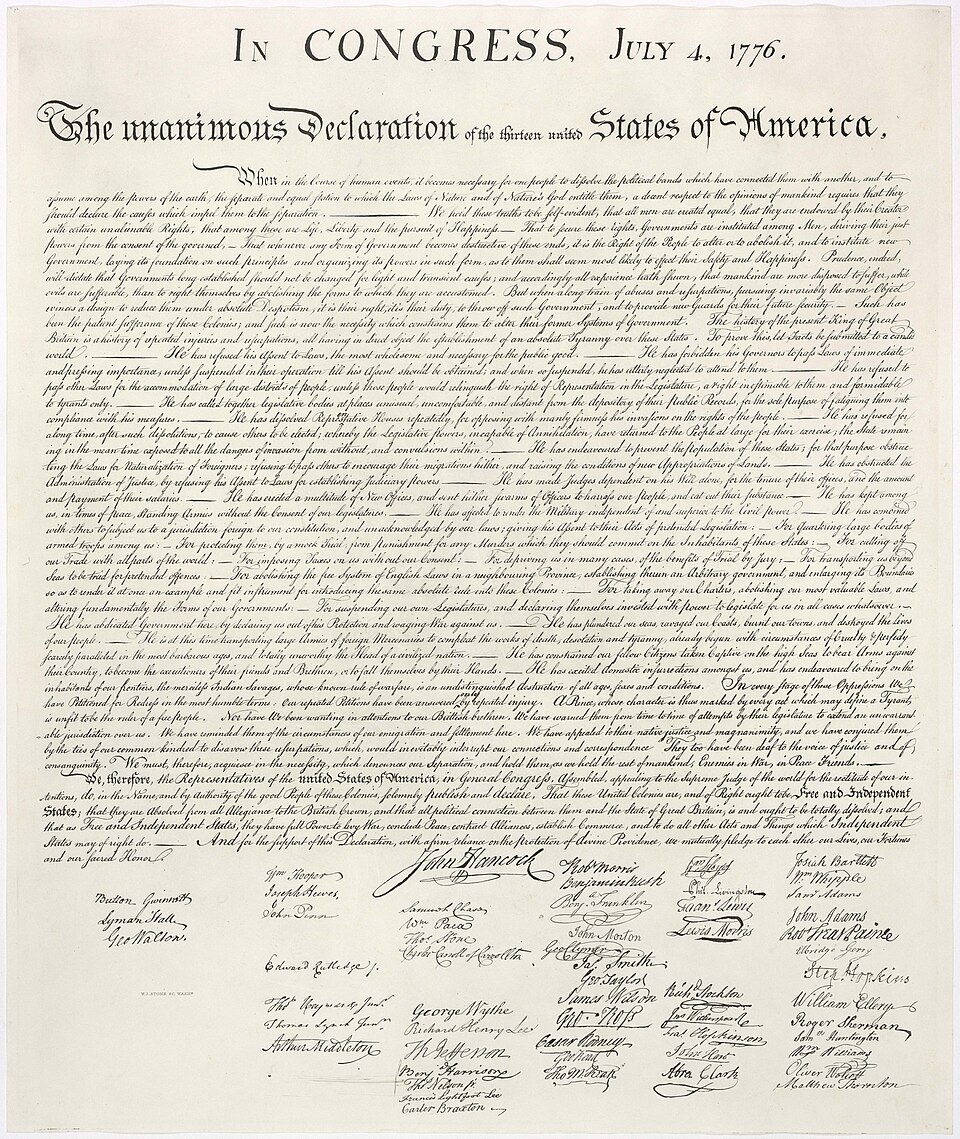
Whitman’s revolutionary patriotism had long been part of his worldview. He celebrated the Declaration of Independence and the Revolution in the preface to Leaves of Grass, noting that a poet must “enter the essences of the real things and past and present events,” among them “the haughty defiance of ’76, and the war and peace and formation of the constitution.”
But for all his celebration of the Declaration and the nation’s founding, he did not mince words regarding the nation’s failings. He wrote of a “hollowness” at the center of American life at the time, calling the business classes depraved and the government saturated in corruption.
Whitman thought that the best answer to such corruption and malfeasance was the Democratic process itself. “I know nothing grander, better exercise, better digestion, more positive proof of the past, the triumphant result of faith in humankind, than a well contested American national election.”
However, Whitman did not necessarily point to institutions or political parties as the nation’s salvation. He believed that the actions of individual Americans defined and redeemed the nation, and that we should ignore “the antics of the parties and their leaders, these half-brain’d nominees, the many ignorant ballots, and many elected failures and blatherers.” As New York’s Al Smith put it over fifty years later, “All the ills of democracy can be cured by more democracy.”
Critically, Whitman wrote several years after Abraham Lincoln’s Gettysburg Address reshaped how America thought about the Declaration of Independence, and Whitman’s writings were heavily influenced by Lincoln’s faith in the nearly forgotten document. Despite the Declaration’s centrality to American life today, for much of the first two decades following the revolution, it fell into some level of obscurity. “In the years immediately after 1776, the Declaration did not enjoy special reverence in American culture,” observes historian Michael Hattem in his 2024 work, The Memory of ’76: The Revolution in American History. It took the advent of political parties in the 1790s for it to reemerge when it became a “weapon of partisan warfare,” observed early Americanist Robert M.S. McDonald.