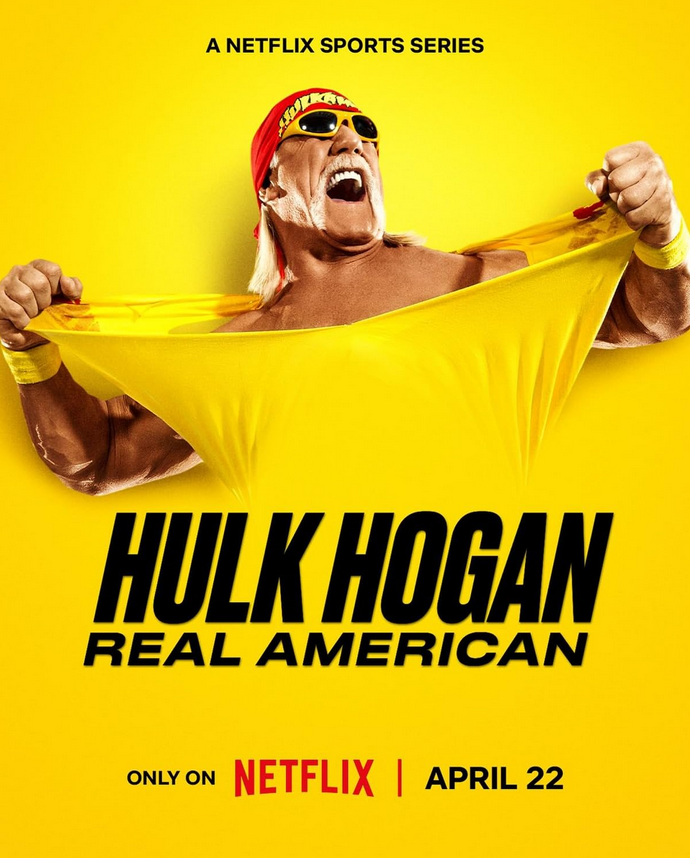
Hogan’s fellow wrestler Bret Hart says early in the documentary that Hogan knew almost nothing about wrestling. He’s not entirely wrong. Hogan had a predictable formula, and it wasn’t a technical one. He was all presence. He didn’t fly off the top rope, because he didn’t need to. He didn’t attempt technical maneuvers, because his sheer appearance was enough. He was enormous. He had twenty-four-inch pythons for biceps and a cartoonishly expressive face. The crowd didn’t come to see him wrestle. They came for the broader set of feelings they experienced and for the relationship they had built with the character.
That’s why they went along for the ride. They believed in him. He was the last of a bygone era of “good guys” in wrestling.
By the mid-1990s, the era of Jerry Springer and MTV, the kids who had gone along for the Hulkamania ride were now teenagers more interested in raunch than the good-guy image Hogan had crafted at his wrestling career’s peak. After a lackluster turn in Hollywood, Hogan finally caught up to the culture, returned to wrestling for billionaire Ted Turner’s new league, World Championship Wrestling, and turned heel in 1996, reinventing himself as “Hollywood Hogan,” a narcissist who referred to the audience in derogatory terms and often cheated to win against his opponents. Hogan had the power to pull off this transformation. The harder question, and the one Real American never takes up, is what he did with it everywhere else.
The biggest omissions in the documentary are also the most important about Hogan’s life. In the second episode, Hogan claims that his drawing power lifted all boats in the World Wrestling Federation (WWF), and that all wrestlers made more money because of him. Most wrestlers, however, never worked with Hogan. They worked the mid-card and the lower card, jeopardizing their bodies, their home lives, and their marriages for paydays that were a fraction of his. WWF wrestlers were classified as independent contractors despite working a schedule that left no time for and in fact prohibited outside employment. They had no health insurance, no pensions, no collective bargaining rights, no retirement.
The toll was not abstract. The WWF rosters of the 1980s and 1990s are populated with men who died in their forties and fifties from heart attacks, overdoses, and suicides, and the through line is almost always the same: bodies broken on the road, then medicated to keep them on it.