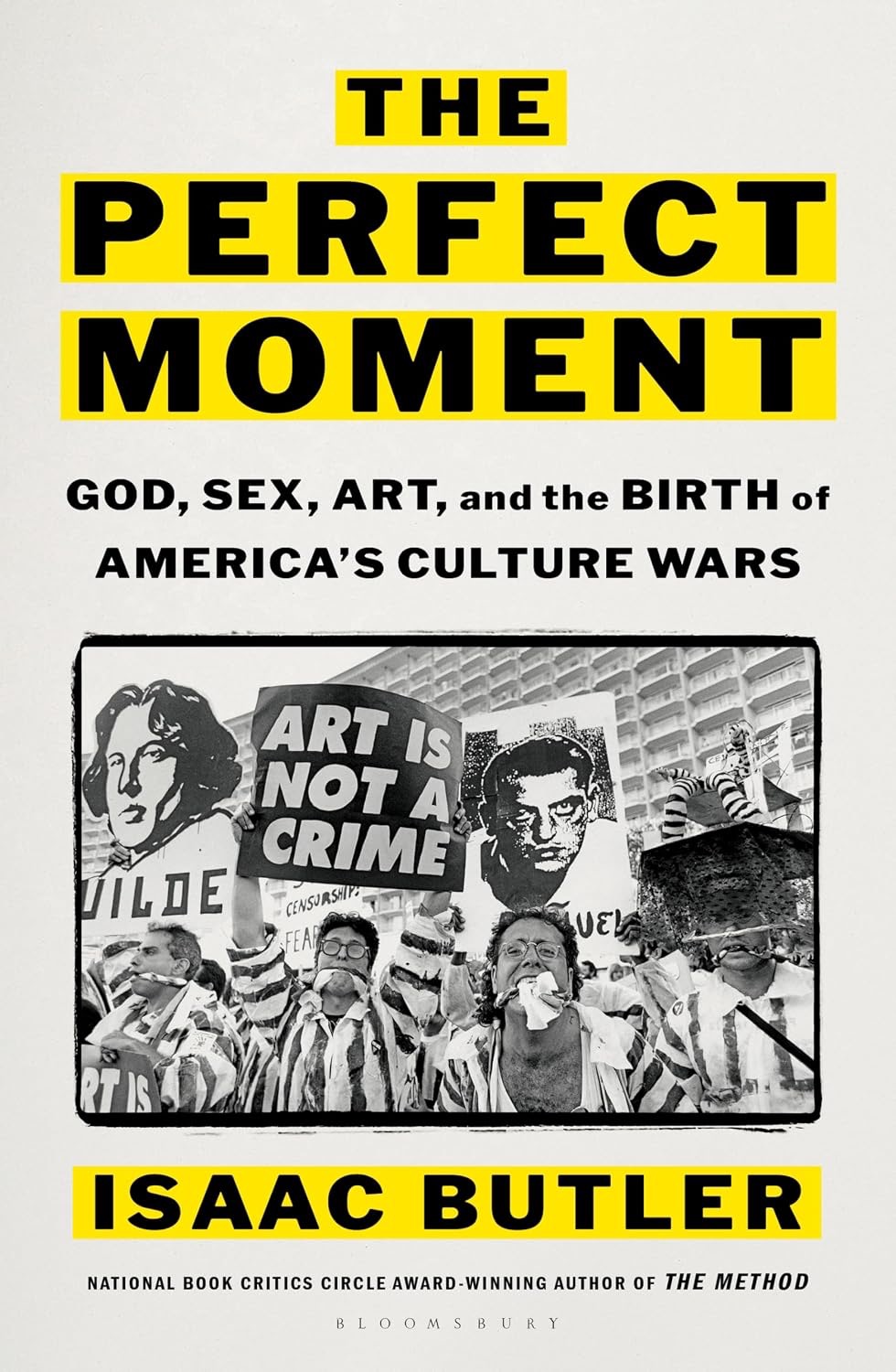
First, it is essential to understand, as Butler persuasively argues, that the “culture wars” almost always disguise wider bigotry. It is hardly a coincidence that every battle over visual art that Butler dissects, like every contemporary fight over a library book, involves the work of Black, Latino, gay, or transgender people. Implicit in nearly every cultural battle over photography, novels, or movies is the idea that “they” should not amplify anything about their views or their lives; “they” should sit silently in a corner and have no place in a public library. The cultural agenda coheres with the political program of the MAGA Republican Party, currently on display with the political disfranchisement of Black political power, the violent persecution of Latino immigrants, the opposition to women controlling their bodies, and the promotion of state laws targeting transgender citizens.
The power of the late Senator Helms, whose ideology became dominant on the American right, demonstrates that the Republican Party has, in modern times, been a reactionary force. Still, Butler captures how the party was at war with itself in previous eras. When Helms began demanding the NEA’s demolition, then-President George H.W. Bush appointed a moderate Democrat, John Frohnmayer, as director of the beleaguered agency. Operating according to a sophisticated, now-defunct country-club conservatism, along with a well-reported discomfort with the religious right, Bush hoped that Frohnmayer could navigate tempestuous waters by preserving federal support for the arts while tempering the rage of evangelicals. There is a hilarious quote in The Perfect Moment when Bush tells Frohnmayer that he is “doing a good job,” but that he and his wife, Barbara, are uncomfortable with the “urine and rectum stuff.” Despite misgivings about the more provocative material by Serrano and Mapplethorpe, Bush maintained a healthy air of indifference. Butler quotes Bill Kristol, who was Vice President Dan Quayle’s chief of staff, as summarizing the 41st president’s position: “People being angered by performance art paled in importance when compared to the seismic shifts happening in Eastern Europe.”
George H.W. Bush’s priorities reveal a confident and sane president concerned with the substance of governance, unlike the current administration, with a cabinet full of clownish vulgarians who behave as if the executive branch is the Fox News green room. Of course, their boss, with his Truth Social logorrhea, is the shock jock-in-chief.
Bush, Frohnmayer, and liberals all made the same error by believing that the NEA’s adversaries were, first and foremost, sincere about championing quality in the artistic world. It isn’t hard to imagine that Helms was genuinely outraged by “Piss Christ.” Still, conviction was a distant second to the political utility of attacking racial and sexual minorities and the Democratic Party that attempted to give them some governmental representation.