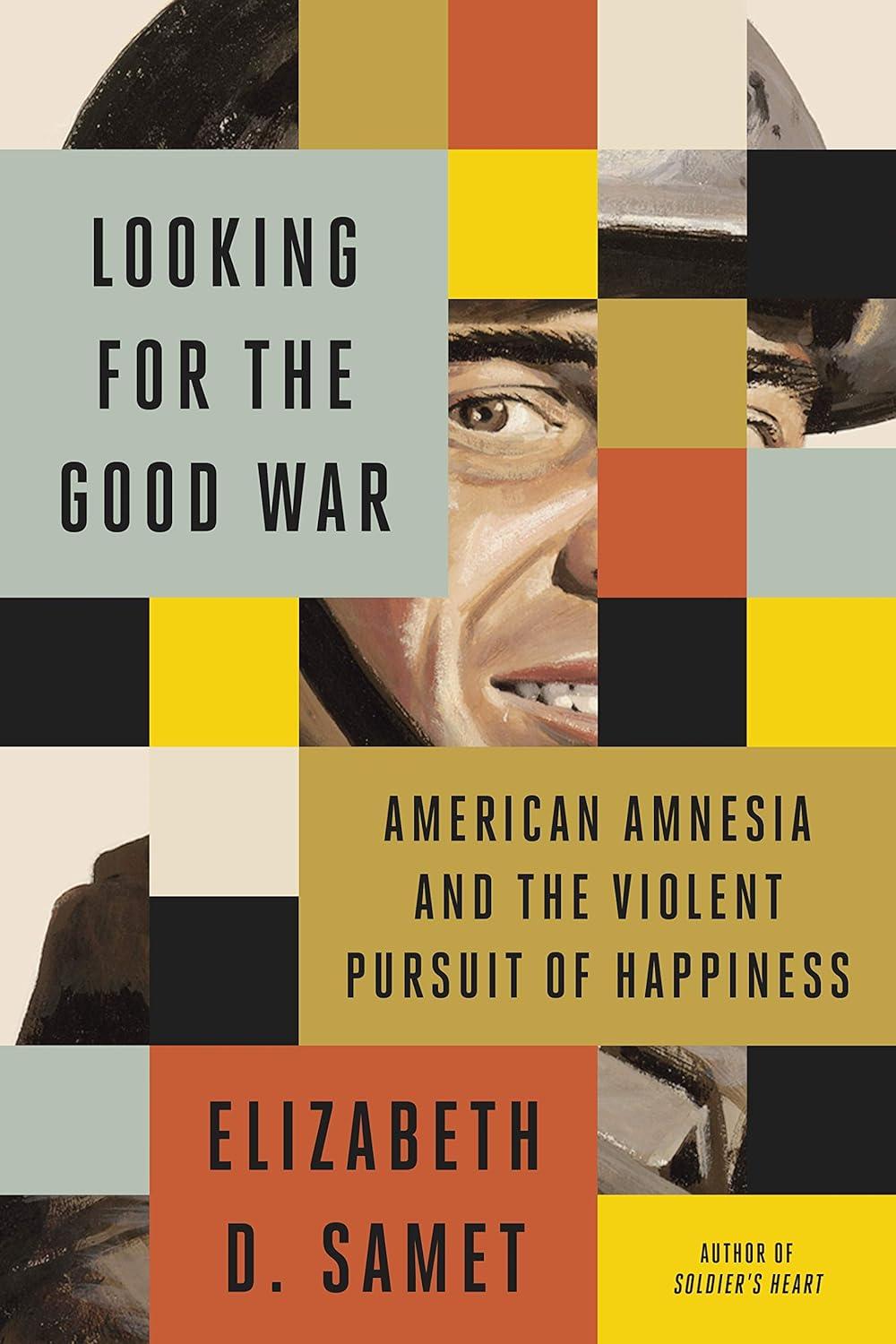
GAZETTE: What are the roots of the mythology about World War II being the “Good War”? How did it take hold in the American imagination?
SAMET: The most robust version of the mythology surrounding World War II is that of the 50th-anniversary commemoration, which took place in the 1990s. One of the people most closely identified with this version is the historian Stephen Ambrose, whose series of books about World War II were wildly popular; they’re fast-paced narratives that tell a particular story of the “Good War” and portray American service members as decent, boyish liberators who come to seem larger than life. Tom Brokaw labeled them the “The Greatest Generation” in his book of the same name. In terms of popular culture, several films that came out around that period, but particularly Steven Spielberg’s film “Saving Private Ryan” cemented this mythology in our imagination.
It’s an immensely flattering and seductive narrative. It seized the imagination because it came in the wake of wars that could not have been described as victories, chiefly Vietnam. In addition, the 50th anniversary came close on the heels of the First Gulf War, which was an overwhelming spectacle of American power and was viewed by the first President Bush, who was a World War II veteran, as the war that would once and for all cure what he and others called the “Vietnam syndrome.”
This concatenation of events crystallized the mythology and effectively wiped away the traces of the deep ambivalence — and differences of opinion — about World War II that existed while it was being fought and in its aftermath. But my book is not an argument that our participation was either unjustified or unnecessary. I believe it was both justified and necessary. It’s not an attempt to diminish in any way the cruelty or crimes of the regimes that we defeated or the significance of Allied victory. It’s not a history of the war per se, but rather of how it entered our national imagination and was transformed into something else.
GAZETTE: As a result of that mythology, you write, there is a “sentimental narrative” about World War II that obscures the historical reality of the conflict. Can you explain?
SAMET: When we think back to World War II, we say, “Everybody was united, everybody was behind the war,” and certainly in comparison to subsequent wars, that’s true. But that was not exactly the case. Before Pearl Harbor, there were many Americans who had no desire to intervene in the war: the America First committee — among whose members were public figures, U.S. senators, and a national hero, Charles Lindbergh — all were isolationists, and some were alarmingly sympathetic to European fascism. The isolationist sentiment was very strong after World War I.