Excerpts

Curated stories from around the web.
New on Bunk
Chart of when Confederate monuments and namings occurred, with peaks in the 1910s and the 1960s.

Whose Heritage? Public Symbols of the Confederacy

A Southern Poverty Law Center study identified over 1,500 publicly-displayed symbols of the Confederacy in the South and beyond.

When Julia Child Worked for a Spy Agency Fighting Sharks

Before Julia Child became a chef, she worked for the forerunner of the CIA in Washington, developing shark repellent during World War II.
A Denmark Vesey monument is seen in Hampton Park in Charleston, S.C., in 2015.
partner

The Formerly Enslaved Man Whose Faith Inspired a Slave Revolt

Denmark Vesey expressed the Bible’s anti-slavery messages.
A woman spraying DDT aerosol on her windows to keep insects at bay, 1955.

DDT Is Still With Us, 50 Years Since It Was Banned

Scientists have found toxic levels of the chemical at large. And some groups are making the case to produce even more.
Lithograph of James Madison from Portrait and Biographical Album of Washtenaw County, Michigan, 1891, Wikimedia.

The Founders’ Muddled Legacy on the Right to Bear Arms Is Killing Us

A case of 18th-century politicking has stymied our ability to deal with a 21st-century crisis.
Sen. Henry “Scoop” Jackson visiting Soviet Jewish émigrés in Israel.

Henry "Scoop" Jackson and the Jewish Cold Warriors

An alliance between Jewish activists and congressional neocons made Soviet Jewry a key issue in superpower relations—and reshaped American Jewish politics.
Biggie Smalls posing for the camera, with three friends looking on from behind.

Behind the Scenes of Ready to Die

An intimate look at the creation of an iconic album.
People dancing at Woodstock

When Science Was Groovy

Counterculture-inspired research flourished in the Age of Aquarius.
Sign for the Community of Faith church in Houston, lit up at night near dark railroad tracks.

The Racist Roots of the Southern Baptist Convention’s Sex Scandal “Apocalypse”

The Southern Baptist Convention is tearing itself apart over its leaders’ long-running cover-up of abusers in its ranks. But there’s a deeper reckoning below.
Photo of an elderly Jane Stanford, dressed in lace and beads.

The Robber Baroness of Northern California

Authorities who investigated Jane Stanford’s mysterious death said the wealthy widow had no enemies. A new book finds that she had many.
Photo of John Brown holding a flag and raising his right hand as if in oath.

A Hero in the Midst of Cowards

The righteous rage of John Brown.
Demonstrators march down a street with a sign for African Liberation.

50 Years Ago, D.C.'s First African Liberation Day Launched a Movement

The annual celebration helped spur an anti-colonial movement for Africa.
A line of cars waiting their turn at a filling station in Portland, Oregon, 1973.

The Price of Oil

The history of control and decontrol in the oil market.
Soldiers inspecting damaged helmets in a scene from John Huston's 1945 film "The Battle of San Pietro."
partner

The War Documentary That Never Was

John Huston's 1945 movie The Battle of San Pietro presents itself as a war documentary, but contains staged scenes. What should we make of it?
Photo of a large crowd at the Altamont Festival, 1969.

What Happened to Rock and Roll After Altamont?

On the Grateful Dead's “New Speedway Boogie,” and the true end of the Sixties.

Could Internet Culture Be Different?

Kevin Driscoll’s study of early Internet communities contains a vision for a less hostile and homogenous future of social networking.
Photograph of Mike Mahoney on the White House grounds.

Blood and Vanishing Topsoil

“We’re the virus.” So read a tweet in March praising reports of less pollution in countries under COVID-19 lockdown. By mid-April, it had nearly 300,000 likes.
An image of a sardine can with a large group of people shoved inside.

The People Who Hate People

Of all the objections NIMBYs raise to new housing and infrastructure, perhaps the most risible is that their community is already too crowded.
President William Howard Taft signs New Mexico into statehood at the White House. The signing was witnessed by dignitaries on Jan. 6, 1912

Building Uncle Sam, Inc.

These Progressive Era Republicans wanted to run the Federal government like a business.
Lithograph of medical diagrams of a developing fetus.

Miscarriage Wasn’t Always a Tragedy or a Crime

Looking back on 150 years of history shows that American women grappled with miscarriages amid different legal, medical, and racial norms.
Portrait of George Washington

Conotocarious

When Native Americans met George Washington in 1753, they called him by the Algonquian name "Conotocarious," meaning "town taker" or "devourer of villages."
Sketched portrait of Kim Stanley Robinson in front of a line drawing of the Sierra Navada landscape

Seeing Mars on Earth

Kim Stanley Robinson on how the High Sierra has influenced his science fiction.

Tom Petty: A Cool, Gray Neo-Confederate?

Michael Washburn explains what we can glean from the failure of Tom Petty's 1985 concept album "Southern Accents."
Stokely Carmichael talking to members of the press at the House Rules Committee (1966).

Watching the Watchers

Confessions of an FBI special agent.

Jane Jacobs vs. The Power Brokers

How the patron saint of progressive urban planning’s ideas and ideals were implemented – and corrupted.
A cave in Kansas formerly used to store government cheese.

Why Did the U.S. Government Amass More Than a Billion Pounds of Cheese?

The long, strange saga of government cheese.
Photo from above showing people walking and biking on the painted letters in Black Lives Matter Plaza.

When Did the Ruling Class Get Woke?

A conversation with Olúfẹ́mi O. Táíwò on his new book, which investigates the co-option of identity politics and the importance of coalitional organizing. 
Image from the 1860 US Federal Census Mortality Schedule

Sarah

An 1860 census record offers a glimpse into the choices available to pregnant women who were enslaved.
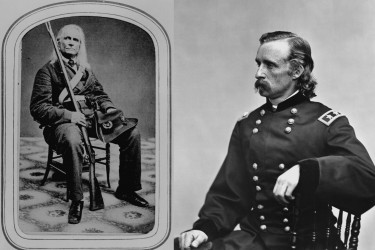
Left: Pvt. Edmund Ruffin, Confederate soldier with long flowing white hair. Right: George Armstrong Custer, United States Army officer and cavalry commander with long wavy brown hair.

Civil War Soldiers Used Hair Dye to Make Themselves Look Better in Pictures, Archaeologists Discover

Researchers have found hair dye bottles and evidence of a photographic studio at Camp Nelson—a former Union camp.
Advertisement commemorating 25 years of video games since the release of Oregon Trail.

Playing in the Past

Gameplay can be useful in history classrooms – but manufacturers have to think about how children will be affected by the competition.
1996 Photograph of Robert B. Smith, 18, is escorted from jail to arraignment for the 1966 slayings of five people in Mesa, Arizona.

The Story of the First Copycat Mass Shooter

Robert Benjamin Smith inaugurated murder for the media age.
Studio portrait of American violinist Maud Powell, c. 1909
partner

Women, Men, and Classical Music

As more women embraced music as a profession, more men became worried that the world of the orchestra was losing its masculinity.
The XVIII Airborne Corps Headquarters sign is displayed at Fort Bragg, N.C. on June 28, 2019.

Panel Unveils Nine Army Base Name Recommendations

The commission is charged with renaming bases whose names currently honor Confederate leaders.
An young African American man speaking at a podium with a sign "SDS: Black Power and Change"

Friends of SNCC and The Birth of The Movement

The Friends of the SNCC published the story of the struggle for freedom in the 1960s.
FDR flashing the victory sign.

Franklin Roosevelt: The Father of Gun Control

One of the great pieces of unfinished business for the Democratic Party.
Drawing of men and women of the Oneida community playing croquet.
partner

The Oneida Community Moves to the OC

The Oneida Community's Christian form of collectivism was transported to California in the 1880s, when the original Oneida Community fell apart.
Borden logo featuring the smiling face of Elsie the Cow in the center of a flower.
partner

Who Was Elsie, Besides the World’s Most Famous Cow?

In the Great Depression, Borden sought a new spokescow to help preserve its traditional agrarian image.
Charlton Heston (left), then president of the NRA, meets with fellow leaders Wayne LaPierre (far right) and Jim Baker (center) on April 30, 1999, ahead of the NRA's annual meeting in Denver. Around the same time, leaders discussed how to respond to the shooting at Columbine High School in nearby Littleton, Colo. More than 20 years later, NPR has obtained secret recordings of those conversations.

A Secret Tape Made After Columbine Shows the NRA's Evolution on School Shootings

In 1999, NRA leaders agonized over what to do about Columbine, paving the way for the group's approach to mass shootings ever since.
Samantha Hull looks for books at the Ephrata Public Library on March 2. Hull has been fighting book bans as a school librarian in Lancaster County, Pa., where conservatives are pushing to remove books that touch on gender identity and racism.
partner

Conservatives Long Ago Lost The War Over America’s Public Schools

As conservative groups give up on public schools, the fight today is about looting public resources.
Colorful rainbow image of a brain.

Mental Illness Is Not in Your Head

Decades of biological research haven't improved diagnosis or treatment. We should look to society, not to the brain.
Illustration of people on different types of bicycles

Bicycles Have Evolved. Have We?

Biking innovations brought riders freedom. But in a world built for cars, life behind handlebars is both charmed and dangerous.
Hillary Clinton addresses her supporters in Philadelphia the night before the 2016 presidential election.

Would These Undelivered Speeches Really Have Changed History?

At a time of upheaval, we want to believe that better leaders have the power to change the course of history. But counterfactuals are never simple.
Richard Nixon, Pat Nixon, Gerald Ford, and Betty Ford walking away from White House

Regime Change, American Style

A new book about Watergate is the first to stress how much we still do not know many of the basic facts about the burglary at its center.
Poster with women pledging to "pay not more than top legal prices" and "accept no rationed goods without giving up ration stamps"

Politics and the Price Level

On inflation, institutions, and the governance of the price level.
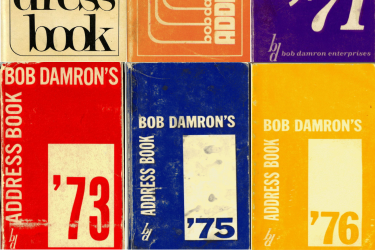
Covers of annual editions of Bob Damron's Address Book from the 1970s.

Mapping the Gay Guides

Visualizing Queer Space and American Life
Salmon P. Chase

The Most Important 19th Century American You've Never Heard Of

A new book chronicles the life of the 19th century political giant of Salmon Chase.
A fat-free label on a food product.

The Big Fat Lie of the Fat-Free Food Movement

For decades, consumers were duped into believing that a fat-free food label would put them on track for weight loss, when the complete opposite was true.
An American soldier guards a Japanese internment camp at Manzanar, Calif., on May 23, 1943.
partner

Is it Possible to Condemn One Empire Without Upholding Another?

The danger of making wars into moral crusades.
Shirley Temple Black speaking at the 1969 U.N. General Assembly in New York.

Shirley Temple Black's Remarkable Second Act as a Diplomat

An unpublished memoir reveals how the world’s most famous child actress became a star of the environmental movement.
Photograph of Rose Greenhow, right, with her daughter, Rose, at left. She was held in the Old Capitol Prison in Washington with her 8-year-old daughter, “Little Rose,” during the Civil War after repeatedly being caught spying for the Confederacy.

The Most Audacious Confederate Spies — and How They Got Away With It

These men, women and children betrayed the Union and spied for the Confederacy. They're featured in a new online exhibit from the Wall of Spies Experience.
Filter by:

Categories

Select content type

Time