Menu
Excerpts
Exhibits
Collections
Originals
Podcasts
Categories
Map
Search
Excerpts
Curated stories from around the web.
Load More
Viewing 12,301–12,350 of 15,295
Sort by:
New on Bunk
Publish Date
New on Bunk
Why Would Anyone Collect Nazi?
Neo-Nazis aren't the only ones collecting Nazi memorabilia.
by
Ben Marks
via
Collectors Weekly
on
June 23, 2011
The Struggle in Black and White: Activist Photographers Who Fought for Civil Rights
None of these iconic photographs would exist without the brave photographers documenting the civil rights movement.
by
Hunter Oatman-Stanford
via
Collectors Weekly
on
October 7, 2014
Straight Razors and Social Justice: The Empowering Evolution of Black Barbershops
Black barbershops are a symbol of community, and they provide a window into our nation's complicated racial dynamics.
by
Hunter Oatman-Stanford
,
Quincy Mills
via
Collectors Weekly
on
May 30, 2014
Black Is Beautiful: Why Black Dolls Matter
"Why do you have black dolls?"
by
Lisa Hix
via
Collectors Weekly
on
February 21, 2013
Victorian Moustache Cup
Victorian "Moustache Cups" ensure that one can drink while keeping their mustache dry.
by
Michael Boddy
via
Collectors Weekly
on
December 29, 2012
partner
The Forced Migration of Enslaved People
An interactive set of maps and narratives of the forced migration of approximately 850,000 enslaved people from 1810-1860.
by
Ed Ayers
,
Robert K. Nelson
,
Justin Madron
,
Nathaniel Ayers
via
American Panorama
on
December 1, 2015
How America’s Obsession With Hula Girls Almost Wrecked Hawai’i
Popularized images of female hula dancers have deviated far from their origins and perpetuated stereotypes.
by
Lisa Hix
via
Collectors Weekly
on
March 22, 2017
Why Are America’s Most Innovative Companies Still Stuck in 1950s Suburbia?
Suburban corporate campuses have isolated themselves by design from the communities their products were supposed to impact.
by
Hunter Oatman-Stanford
via
Collectors Weekly
on
April 8, 2016
The Sissies, Hustlers, and Hair Fairies Whose Defiant Lives Paved the Way for Stonewall
In 1966, the queens had finally had enough with years of discriminatory treatment by the San Francisco police.
by
Hunter Oatman-Stanford
via
Collectors Weekly
on
August 15, 2016
Hillary Clinton Goes Back to the Dunning School
How do you diagnose the problem of racism in America without understanding its actual history?
by
Ta-Nehisi Coates
via
The Atlantic
This publication restricts nonsubscriber access to some or all of its articles.
on
January 26, 2016
The Civil Rights Act of 1964: A Long Struggle for Freedom
A Library of Congress exhibit on the context, passage, and significance of the Civil Rights Act of 1964.
via
Library of Congress
on
September 10, 2014
partner
The History of Black Women Championing Demands for Reparations
It's a struggle that's been waged for centuries.
by
Ana Lucia Araujo
via
HNN
on
May 19, 2019
The Fascinating History of Mescaline, the OG Psychedelic
From prehistoric caves, through Aztecs, Mormons, Beat poets, Jean-Paul Sartre and a British MP.
by
Mike Jay
,
Max Daly
via
Vice
on
May 15, 2019
Rat Race
Why are young professionals crazy for marathons?
by
Dylan Gottlieb
via
Public Seminar
on
February 15, 2018
Secrets of a Brothel Privy
An archaeologist reconstructs the daily lives of 19th-century sex workers in Boston.
by
Anna Goldfield
via
Sapiens
on
March 6, 2018
The Unlikely Pulp Fiction Illustrations of Edward Hopper
When the iconic painter drew cowboys for the pulp-fiction magazine, 'Adventure.'
by
Daniel Crown
via
Literary Hub
on
March 5, 2018
The Real Story of Linda Taylor, America’s Original Welfare Queen
In the 1970s, Ronald Reagan villainized a Chicago woman for bilking the government. Her other sins were far worse.
by
Josh Levin
via
Slate
This publication restricts nonsubscriber access to some or all of its articles.
on
December 19, 2013
The Last Temptation
How evangelicals became an anxious minority seeking political protection from a not traditionally religious president.
by
Michael Gerson
via
The Atlantic
This publication restricts nonsubscriber access to some or all of its articles.
on
March 8, 2018
The Strange Ratio of Treasure Island
The perfect correspondence of landscape and information can be seen in Ruth Taylor’s 1939 map.
by
Adam Tipps Weinstein
via
Territory
on
June 22, 2017
Dead or Alive: Originalism as Popular Constitutionalism in Heller
Was the 2008 Heller decision a victory for originalism or a living Constitution?
by
Reva B. Siegel
via
Yale Faculty Scholarship Series
on
January 1, 2008
James Madison Understood Religious Freedom Better than Jefferson Did
One emphasized the freedom to think; the other, in effect, the freedom to pray.
by
Steven Waldman
via
National Review
This publication restricts nonsubscriber access to some or all of its articles.
on
May 20, 2019
The 'Clotilda,' the Last Known Slave Ship to Arrive in the U.S., Is Found
The discovery carries intense, personal meaning for an Alabama community of descendants of the ship's survivors.
by
Allison Keyes
via
Smithsonian Magazine
on
May 22, 2019
The Twin Insurgency
The postmodern state is under siege from plutocrats and criminals who unknowingly compound each other’s insidiousness.
by
Nils Gilman
via
The American Interest
on
June 15, 2014
Dred Scott Strains the Mystic Chords
Dred Scott was an opportunity to settle what the South had previously been unable to achieve either legislatively or judicially.
by
Michael Liss
via
3 Quarks Daily
on
March 5, 2018
American Sphinx
Civil War monuments erased an emancipated Black population, but the Sphinx looked to an integrated Africa and America.
by
Colin Dickey
via
Longreads
on
August 31, 2017
The Kerner Omission
How a landmark report on the 1960s race riots fell short on police reform.
by
Nicole Lewis
via
The Marshall Project
on
March 1, 2018
Introducing the Brand-New Historic District
A company hopes its construction of a Historic District will satisfy those who are upset with its demolition of historic sites.
by
Jeremiah Budin
via
The New Yorker
This publication restricts nonsubscriber access to some or all of its articles.
on
May 9, 2019
Want to Save the Humanities? Make College Free
It's time to shift the social contract of education away from short-term job training toward long-term development.
by
David M. Perry
via
Pacific Standard
on
May 9, 2019
partner
The Mob Violence of the Red Summer
In 1919, a brutal outburst of mob violence was directed against African Americans across the United States. White, uniformed servicemen led the charge.
by
David F. Krugler
,
Matthew Wills
via
JSTOR Daily
on
May 14, 2019
Slavery and the Family Tree
How do you make a family tree when you may not know your family history?
by
Whitney Nell Stewart
via
Black Perspectives
on
May 15, 2019
Muslims of Early America
Muslims came to America more than a century before Protestants, and in great numbers. How was their history forgotten?
by
Sam Haselby
via
Aeon
on
May 20, 2019
partner
Betsy DeVos Wants to Resurrect an Old — and Failed — Model of Public Education
Government-funded schools evolved from a broader system of public education that couldn't provide what students needed.
by
Adam Laats
via
Made By History
on
May 16, 2019
Julius Scott’s Epic About Black Resistance in the Age of Revolution
"The Common Wind" covers the radical world of black mariners, rebels, and runaways banding together to realize their freedom.
by
Manisha Sinha
via
The Nation
This publication restricts nonsubscriber access to some or all of its articles.
on
May 20, 2019
Charleston-Area Residents Remember the First Time They Ate in White-Owned Restaurants
Their experiences help explain why segregated spaces persist in Charleston's restaurants today.
by
Hanna Raskin
via
Post and Courier
on
May 18, 2019
Women in Jamestown and Early Virginia
A conversation with the curator of an exhibit about the oft-overlooked lives of women in early colonial Virginia.
by
Katherine Egner Gruber
,
Philippe Halbert
via
The Junto
on
May 20, 2019
Simply Elegant, Morse Code Marks 175 Years and Counting
The code has undergone minor changes since its creation, but its use persists to this day.
by
Eddie King
via
The Conversation
on
May 21, 2019
‘Orientalism,’ Then and Now
Edward Said's Orientalism is still with us forty years after his influential book’s publication, but it is not the same as it was.
by
Adam Shatz
via
New York Review of Books
This publication restricts nonsubscriber access to some or all of its articles.
on
May 20, 2019
How the Daughters and Granddaughters of Former Slaves Secured Voting Rights for All
A look at the question of race versus gender in the quest for universal suffrage.
by
Martha S. Jones
via
Smithsonian Magazine
on
March 8, 2019
The Troubled History of Psychiatry
Challenges to the legitimacy of the profession have forced it to examine itself. What, exactly, constitutes a mental disorder?
by
Jerome Groopman
via
The New Yorker
This publication restricts nonsubscriber access to some or all of its articles.
on
May 20, 2019
partner
Why We Can — and Must — Create a Fairer System of Traffic Enforcement
The discretionary nature of traffic enforcement has left it ripe for abuse.
by
Sarah A. Seo
via
Made By History
on
May 15, 2019
Abortion's Past
Before Roe, abortion providers operated on the margins of medicine. They still do.
by
Maureen Paul
via
Boston Review
on
May 16, 2019
What It Felt Like
If “living history” role-plays in the classroom can so easily go wrong, why do teachers keep assigning them?
by
Rebecca Onion
via
Slate
This publication restricts nonsubscriber access to some or all of its articles.
on
May 20, 2019
Bernie, the Sandinistas, and America's Long Crisis of Impunity
Or, the pros and Contras of relying on political reporters.
by
Jonathan M. Katz
via
Mother Jones
on
May 30, 2019
The Long Road to Women’s Suffrage
The “Anthony Amendment” was introduced with no luck for 41 years. And even then, it wasn’t for everyone.
by
Eleri Harris
,
Ellen T. Crenshaw
via
The Nib
on
March 8, 2019
‘Bad Bridgets’: The Criminal and Deviant Irish Women Convicted in America
Irish-born women were disproportionately imprisoned in America for most of the nineteenth century.
by
Elaine Farrell
,
Leanne McCormick
via
The Irish Times
on
February 20, 2019
Antislavery Wasn’t Mainstream, Until It Was
After Republicans lost their first election in 1856, Democrats declared slavery opposition radical and fringe. Then came 1860.
by
Matthew Karp
via
Jacobin
This publication restricts nonsubscriber access to some or all of its articles.
on
May 11, 2019
All Stick No Carrot: Racism, Property Tax Assessments, and Neoliberalism Post 1945 Chicago
Black homeowners have been an oft ignored actor in metropolitan history despite playing a central role.
via
The Metropole
on
May 9, 2019
Data Overload
How will the historians of the future manage the massive archival data our society has begun to compile on the internet?
by
Seth Denbo
via
Perspectives on History
on
May 7, 2019
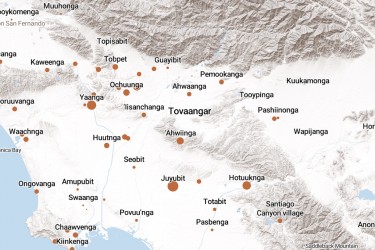
Mapping the Tongva Villages of L.A.'s Past
The original people of Los Angeles, the Tongva, defined their world as Tovaangar.
by
Sean Greene
,
Thomas Curwen
via
Los Angeles Times
on
May 9, 2019
When Betty Ford Had Her Ears On
A strong woman using a new tool to talk to people who were otherwise overlooked played as a joke for some. But was it effective?
by
Gabe Bullard
via
The Bitter Southerner
on
May 16, 2019
Previous
Page
247
of 306
Next
Filters
Filter by:
Categories
Belief
Beyond
Culture
Education
Family
Found
Identity
Justice
Memory
Money
Place
Power
Science
Told
Content Type
-- Select content type --
Annotation
Antecedent
Argument
Art History
Audio
Biography
Book Excerpt
Book Review
Bunk Original
Comment
Comparison
Debunk
Digital History
Discovery
Dispatch
Drawing
Etymology
Exhibit
Explainer
Film Review
First Person
Forum
Journal Article
Longread
Map
Media Criticism
Museum Review
Music Review
Narrative
News
Obituary
Oral History
Origin Story
Overview
Poll
Profile
Q&A
Quiz
Retrieval
Satire
Social Media
Speech
Study
Syllabus
Theater Review
Timeline
TV Review
Video
Vignette
Visualization
Select content type
Time
Earliest Year:
Latest Year: