Person

Charles Sumner

Related Excerpts

African American prisoners in Alabama post-Reconstruction.

How the Slavery-Like Conditions of Convict Leasing Flourished After the Collapse of Reconstruction

On the terror that filled the void left by the retreat of federal authority in the South.
Print shows Rebel troops killing the citizens of Lawrence, Kansas, and setting fire to the buildings.

Where Will This Political Violence Lead? Look to the 1850s.

In the mid-19th century, a pro-slavery minority used violence to stifle a growing anti-slavery majority, spurring their opposition to respond in kind.
Headstones in Mount Auburn cemetery. Photograph by Daderot at en.wikipedia, CC BY-SA 3.0, https://commons.wikimedia.org/w/index.php?curid=18003519.
original

A Tour of Mount Auburn Cemetery

Two centuries of New England intellectual history through the lives and ideas of people who are memorialized there.
Puerto Rican protests for statehood
partner

The U.S. Having Territories Perpetuates Inequality and Colonialism

Caribbean islands as U.S. territories within an American empire has since the start sparked fierce debates.
Nipsey Russell, Harry Belafonte, Coretta Scott King and Martin Luther King Jr. smiling and laughing.
partner

The Right to Joy and Pleasure is a Crucial Element of Racial Justice

Addressing systemic racism and state violence is not enough.
A bronze statue of Civil War soldiers on horseback, in front of the U.S. Capitol building.

How Twitter Explains the Civil War (and Vice Versa)

The proliferation of antebellum print is analogous to our own tectonic shifts in how people communicate and what they communicate about.
‘Flight of Lord Dunmore’; postcard, 1907.

The Paradox of the American Revolution

Recent books by Woody Holton and Alan Taylor offer fresh perspectives on early US history but overstate the importance of white supremacy as its driving force.
‘This Little Boy would persist in handling Books Above His Capacity—and this was the Disastrous Result’; cartoon of Andrew Johnson by Thomas Nast, 1868

He Was No Moses

While he opposed slavery and southern secession early in his career, as president Andrew Johnson turned out to be an unsightly bigot.
tintype portrait of Mary Todd Lincoln

The Insanity Trial of Mary Lincoln

How the self-proclaimed "First Widow" used her celebrity to influence public opinion.
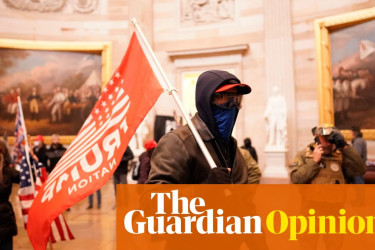
Rioters during the January 6th capitol siege

White Supremacists Declare War on Democracy and Walk Away Unscathed

The United States has a terrible habit of letting white supremacy get away with repeated attempts to murder American democracy.
Left: Longfellow in His Study, by Worth Brehm, c. 1912. Cooper Hewitt, Smithsonian Design Museum. Right: Dante Meditating on “The Divine Comedy”, by Jean-Jacques Feuchère, 1843.

As Far From Heaven as Possible

How Henry Wadsworth Longfellow interpreted Reconstruction by translating Dante.
The First Hague Conference in 1899: A meeting in the Orange Hall of Huis ten Bosch palace – collections of the Imperial War Museums.

Oh, the Humanity

Yale's John Fabian Witt pens a review of Samuel Moyn's new book, Humane.
Engraving of freedmen voting in New Orleans, 1867

Forging an Early Black Politics

The pre-Civil War North was a landscape not of unremitting white supremacy but of persistent struggles over racial justice by both Blacks and whites.
Two dueling pistols laying on a table.

A Somewhat Comprehensive History Of U.S. Senators Who Have Died In Duels

The tales of the three fallen senators, as well as some other notable beefs in history.
A scrapbook of African American history

A Priceless Archive of Ordinary Life

To preserve Black history, a 19th-century archivist filled hundreds of scrapbooks with newspaper clippings and other materials.
Wallpaper printed in support of the Constitutional Union Party’s presidential candidate, John Bell, in 1860.

A Constitution of Freedom

During the 1860 presidential election, political parties dueled over the intent of the framers.
Raphael Warnock
partner

Warnock’s Win Was 150 Years In the Making — But History Tells Us It Is Fragile

The selection of African American Sen. Hiram Revels in 1870 offered great hope — but it was soon dashed.
Side-by-side of Josh Hawley and David Atchison

Josh Hawley Is Not the First Missouri Senator with Blood on His Hands

The Bleeding Kansas parallels with our current moment get weirder and darker.

Meet Joseph Rainey, the First Black Congressman

Born enslaved, he was elected to Congress in the wake of the Civil War. But the impact of this momentous step in U.S. race relationships did not last long.
John F. Kennedy signing a copy of "Profiles in Courage" for a young man.

J.F.K.’s “Profiles in Courage” Has a Racism Problem. What Should We Do About It?

Kennedy defined courage as a willingness to take an unpopular stand in service of a larger, higher cause. But what cause?