Menu
Excerpts
Exhibits
Collections
Originals
Podcasts
Categories
Map
Search
Person
Matthew Karp
Bylines
partner
The Revolutionary Beginnings of the Republican Party
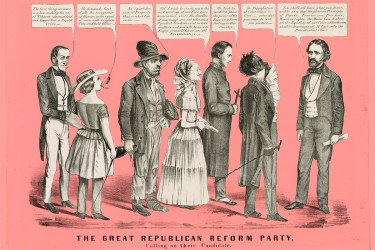
Popular resistance to the Fugitive Slave Law and “Slave Power” helped forge a new electoral force.
by
Matthew Karp
,
Livia Gershon
via
JSTOR Daily
on
April 7, 2026
The First Punch
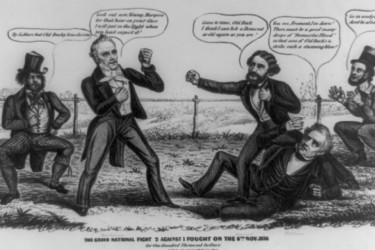
There are uncanny parallels between the elections of 2024 and 1856, with one big exception: in 1856, it was the political left that was on the offensive.
by
Matthew Karp
via
Harper’s
This publication restricts nonsubscriber access to some or all of its articles.
on
December 5, 2024
“As If You Was a Insect”
George Eliot refused to stereotype the rural working class. Her outlook would serve us well today.
by
Matthew Karp
via
Harper’s
This publication restricts nonsubscriber access to some or all of its articles.
on
April 26, 2024
The Right May Be Giving Up the “Lost Cause,” but What’s Next Could Be Worse
The GOP’s new embrace of Lincoln, emancipation, and Juneteenth is no sign of progress.
by
Rebecca Onion
,
Matthew Karp
via
Slate
This publication restricts nonsubscriber access to some or all of its articles.
on
June 25, 2021
History As End
1619, 1776, and the politics of the past.
by
Matthew Karp
via
Harper’s
This publication restricts nonsubscriber access to some or all of its articles.
on
June 8, 2021
The Politics of a Second Gilded Age
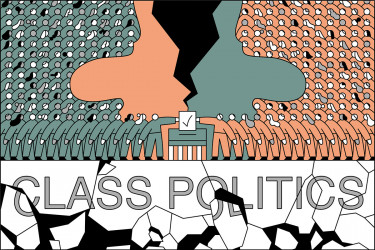
Mass inequality in the Gilded Age thrived on identity-based partisanship, helping extinguish the fires of class rage. In 2021, we’re headed down the same path.
by
Matthew Karp
via
Jacobin
This publication restricts nonsubscriber access to some or all of its articles.
on
February 17, 2021
How Abraham Lincoln Fought the Supreme Court
As Lincoln recognized, it's not enough to question the decisions, justices, or even the structure of the Court. We need to challenge the foundation of its power.
by
Matthew Karp
via
Jacobin
This publication restricts nonsubscriber access to some or all of its articles.
on
September 19, 2020
Slavery Was Defeated Through Mass Politics
The overthrow of slavery in the US was a battle waged and won in the field of democratic mass politics; a battle that holds enormous lessons for radicals today.
by
Matthew Karp
via
Jacobin
This publication restricts nonsubscriber access to some or all of its articles.
on
February 24, 2020
Frederick Douglass Railed Against Economic Inequality
Never-before-transcribed articles from Frederick Douglass’ Paper denounce capitalism and economic inequality.
by
Matthew Karp
,
Frederick Douglass
via
Jacobin
This publication restricts nonsubscriber access to some or all of its articles.
on
February 20, 2020
Antislavery Wasn’t Mainstream, Until It Was
After Republicans lost their first election in 1856, Democrats declared slavery opposition radical and fringe. Then came 1860.
by
Matthew Karp
via
Jacobin
This publication restricts nonsubscriber access to some or all of its articles.
on
May 11, 2019
The Transformation of Bernie Sanders
How the Vermont senator went from a third-party independent to a 2020 frontrunner.
by
Matthew Karp
via
The Nation
This publication restricts nonsubscriber access to some or all of its articles.
on
May 7, 2019
View All
14
View on Map
Related Excerpts
Viewing 1–10 of 10
When Slaveholders Ran America
Before the Civil War, many Southern leaders hoped to expand slavery even beyond the nation's borders.
by
Abrahim Sundiata
via
Public Books
on
March 1, 2017
Looking Back at 1619 in 2019–2021, and Beyond
1619 Project reignited debate over slavery’s origins, exposing tensions between continuity vs change in U.S. history and competing “origin stories.”
by
David Waldstreicher
via
Reviews In American History
This publication restricts nonsubscriber access to some or all of its articles.
on
March 16, 2026
Popular History
What role do we really want history to be playing in our public life? And is the history we have actually doing that work?
by
Scott Spillman
via
The Point
This publication restricts nonsubscriber access to some or all of its articles.
on
September 29, 2024
After the Lost Cause
Why are politics so consumed with the past?
by
Benjamin Wallace-Wells
via
The New Yorker
This publication restricts nonsubscriber access to some or all of its articles.
on
June 24, 2021
Donald Trump Would Be Weaker the Second Time Around
Donald Trump wants the ideology of William McKinley and Gilded Age Republicanism, but with a totally different social base. It won’t work.
by
Paul Heidman
via
Jacobin
This publication restricts nonsubscriber access to some or all of its articles.
on
October 23, 2024
Our Segregation Problem
The consequences of racial separation are significant for left political organizing aimed at building a multiracial working-class majority.
by
Aziz Rana
via
Dissent
on
October 5, 2022
A Usable Past for a Post-American Nation
We are living through a time when we cannot take our shared identity—and therefore our shared stories—for granted.
by
Johann N. Neem
via
The Hedgehog Review
on
July 8, 2022
Did the Constitution Pave the Way to Emancipation?
In his new book, "The Crooked Path to Abolition," James Oakes argues that the Constitution was an antislavery document.
by
Richard Kreitner
via
The Nation
This publication restricts nonsubscriber access to some or all of its articles.
on
October 6, 2021
No, John C. Calhoun Didn’t Invent the Filibuster
As convenient as it might be to blame the filibuster on the famous defender of slavery, the historical record is much messier.
by
Robert Elder
via
The Bulwark
on
September 20, 2021
Lincoln’s Paramilitaries, the “Wide Awakes,” Helped Bring About a Political Revolution
In 1860, a novel paramilitary-style organization mobilized hundreds of thousands against the Southern planter class.
by
Matthew E. Stanley
via
Jacobin
This publication restricts nonsubscriber access to some or all of its articles.
on
July 11, 2020