Menu
Excerpts
Exhibits
Collections
Originals
Podcasts
Categories
Map
Search
Person
Michael John Witgen
Bylines
The State of Nature
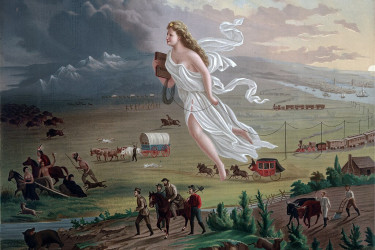
From Jefferson's viewpoint, Native peoples could claim a title to their homelands, but they did not own that land as private property.
by
Michael John Witgen
via
UNC Press Blog
on
November 13, 2023
Related Excerpts
Viewing 1–6 of 6
A Legacy of Plunder
In its reexamination of narratives about the expropriation of Native land, Michael Witgen’s work changes how Native people are in the arc of American history.
by
Francisco Cantú
via
New York Review of Books
This publication restricts nonsubscriber access to some or all of its articles.
on
May 30, 2024
Reconsidering Expansion
Historians question "expansion" as the defining process of U.S. growth, proposing alternative terms like "empire" and "settler colonialism."
by
Rachel St. John
via
Teaching American History
on
August 20, 2024
“Invasion is a Structure Not an Event.” On Settler Colonialism and Joseph Conrad’s Heart of Darkness
When he reflected on the consequences of empire, Conrad saw no logic or teleology. He saw mayhem. There is no surety in "Heart of Darkness."
by
Robert G. Parkinson
via
Literary Hub
on
May 29, 2024
An American Story
Kelly Lytle Hernández’s new book chronicles the tumultuous period leading up to the Mexican Revolution, casting the border as ground zero for continental change.
by
Francisco Cantú
via
New York Review of Books
This publication restricts nonsubscriber access to some or all of its articles.
on
March 9, 2023
Contest or Conquest?
How best to tell the story of oppressed peoples? By chronicling the hardships they’ve faced? Or by highlighting their triumphs over adversity?
by
Daniel Immerwahr
via
Harper’s
This publication restricts nonsubscriber access to some or all of its articles.
on
October 11, 2022
The Power Brokers
A recent history centers the Lakota and the vast territory they controlled in the story of the formation of the United States.
by
David Treuer
via
New York Review of Books
This publication restricts nonsubscriber access to some or all of its articles.
on
November 11, 2020