Menu
Excerpts
Exhibits
Collections
Originals
Podcasts
Categories
Map
Search
Person
Michelle Alexander
Book
The New Jim Crow
: Mass Incarceration in the Age of Colorblindness
Michelle Alexander
2010
View on Map
Related Excerpts
Load More
Viewing 1–20 of 24
How the Drug War Dies
A few decades ago, the left and the right, politicians and the public, universally embraced the criminalization of drug use. But a new consensus has emerged.
by
Maia Szalavitz
via
The Nation
This publication restricts nonsubscriber access to some or all of its articles.
on
March 21, 2022
New Sheriff in Town
Law enforcement and the urban-rural divide.
by
Jonathon Booth
via
The Drift
This publication restricts nonsubscriber access to some or all of its articles.
on
February 3, 2021
Out of Sight, Out of Mind: Mass Incarceration
The rise of mass incarceration in the early 1970s was fueled by white fear of black crime. But the fear of crime wasn’t confined to whites.
by
Adam Shatz
via
London Review of Books
This publication restricts nonsubscriber access to some or all of its articles.
on
May 4, 2017
The Suburban Imperatives of America's War on Drugs
Since the 1950s, disparities along class and racial lines have defined the nation's drug policy.
by
Matthew D. Lassiter
via
Process: A Blog for American History
on
November 17, 2015
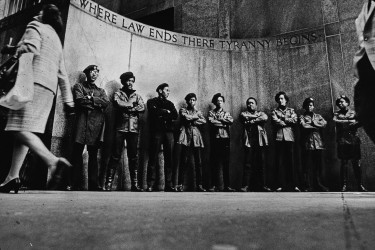
The Long Civil Rights Movement
The traditional narrative of an integrationist vs. Black Power binary fades in the context of global movements for self-determination.
by
Shehryar Fazli
via
The Ideas Letter
on
February 19, 2026
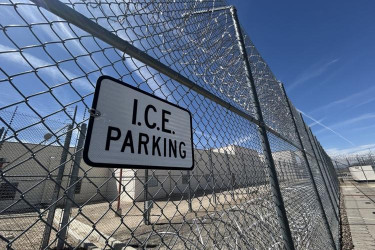
The Making of the Deportation Machine
The pillars aren’t new. They were built over decades, with bipartisan consensus.
by
Marie Gottschalk
via
Boston Review
on
February 10, 2026
A Prison the Size of the State, A Police to Control the World
Two new books examine how colonial logic has long been embedded within US carceral systems.
by
Marisol LeBrón
via
Public Books
on
December 17, 2024
Bryan Stevenson Reclaims the Monument, in the Heart of the Deep South
The civil-rights attorney has created a sculpture park, indicting the city of Montgomery—a former capital of the domestic slave trade.
by
Doreen St. Félix
via
The New Yorker
This publication restricts nonsubscriber access to some or all of its articles.
on
March 25, 2024
Inventing Solitary
In 1790, Philadelphia opened the first American penitentiary, with the US's first solitary cells. Black people were disproportionately punished from the start.
by
Samantha Melamed
via
Philadelphia Inquirer
This publication restricts nonsubscriber access to some or all of its articles.
on
June 8, 2022
Redefining the Working Class
The diminished status of the non-white working class is not a matter of accident, but of design.
by
Shamira Ibrahim
via
The Baffler
This publication restricts nonsubscriber access to some or all of its articles.
on
May 3, 2022
What the 1619 Project Means
Nothing could be more toxic to our ongoing effort to build a multiracial democracy than to cast any race as a perennial hero or villain.
by
Helen Andrews
via
First Things
on
January 23, 2022
Forgotten Camps, Living History
Reckoning with the legacy of Japanese internment in the South.
by
Jason Christian
via
The Bitter Southerner
on
February 18, 2021
Making the Supreme Court Safe for Democracy
Beyond packing schemes, we need to diminish the high court’s power.
by
Samuel Moyn
,
Ryan D. Doerfler
via
The New Republic
This publication restricts nonsubscriber access to some or all of its articles.
on
October 13, 2020
For the First Time, America May Have an Anti-Racist Majority
Not since Reconstruction has there been such an opportunity for the advancement of racial justice.
by
Adam Serwer
via
The Atlantic
This publication restricts nonsubscriber access to some or all of its articles.
on
September 8, 2020
We Should Still Defund the Police
Cuts to public services that might mitigate poverty and promote social mobility have become a perpetual excuse for more policing.
by
Keeanga-Yamahtta Taylor
via
The New Yorker
This publication restricts nonsubscriber access to some or all of its articles.
on
August 14, 2020
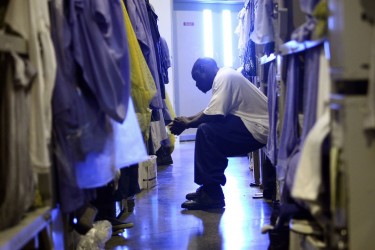
Everything You Know About Mass Incarceration Is Wrong
The US carceral state is a monstrosity with few parallels in history. But most accounts fail to understand how it was created, and how we can dismantle it.
by
Adaner Usmani
,
Jacobin
via
Jacobin
This publication restricts nonsubscriber access to some or all of its articles.
on
March 17, 2020
The Economic Origins of Mass Incarceration
Everything you knew about mass incarceration is wrong.
by
John Clegg
,
Adaner Usmani
via
Catalyst
on
September 1, 2019
partner
What Support for Ilhan Omar Tells Us About the Left
The rising tie between black activism and pro-Palestinian advocacy.
by
Maha Nassar
via
Made By History
on
March 14, 2019
The Untold Story of Mass Incarceration
Two new books, including ‘Locking Up Our Own,’ address major blind spots about the causes of America’s carceral failure.
by
Vesla M. Weaver
via
Boston Review
on
October 24, 2017
Booked: The Origins of the Carceral State
Elizabeth Hinton discusses how twentieth-century policymakers anticipated the explosion of the prison population.
by
Elizabeth Hinton
,
Timothy Shenk
via
Dissent
on
August 30, 2016
Previous
Page
1
of 2
Next