Person

Robin D. G. Kelley

Bylines

Related Excerpts

One Year
Podcast
One Year

1942: The Day the Music Stopped

On Aug. 1, 1942, the nation’s recording studios went silent. Musicians were fed up with the new technologies threatening their livelihoods, so they refused to record until they got their fair share. This week, Evan Chung explores one of the most consequential labor actions of the 20th century, and how it coincided with an underground revolution in music led by artists like Charlie Parker and Dizzy Gillespie.
Hip hop nightclub.

Golden-Era Rap Music and the Black Intellectual Tradition

In Hip hop’s “golden era,” the period from 1987 to 1994, rappers used their platforms to bring attention to issues plaguing poor and working-class Black communities.
George Washington Williams
partner

George Washington Williams and the Origins of Anti-Imperialism

Initially supportive of Belgian King Leopold II’s claim to have created a “free state” of Congo, Williams changed his mind when he saw the horrors of empire.
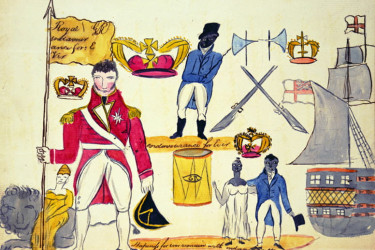
Illustration of enslaved people and the royal crown.

The Consciousness of New World Slaves as Workers

Atlantic slavery was capitalist, with enslaved workers producing profit and resisting exploitation as a “chattel proletariat.”
CPUSA members demonstrate in Union Square on May Day, ca. 1930s.

Maurice Isserman’s Red Scare

A new history of the CPUSA reads like a Cold War throwback.
Group of people playing various instruments

A Hip-Hop Syllabus—For Fans, By Fans

Reflections on popular books written about hip-hop.
Joe Biden holding hands with Black members of Congress.

Black Class Matters

Class conflict undermines assumptions about political solidarity.
Covers of popular history books.

Who Is History For?

What happens when radical historians write for the public.
Colin Kaepernick at the ACLU SoCal Hosts Annual Bill of Rights Dinner in 2017.

“Black History Is an Absolute Necessity.”

A conversation with Colin Kaepernick on Black studies, white supremacy, and capitalism.
Two unnamed Black officers in the Union Army.

Richard Wright’s Civil War Cipher

Archival records of Black southerners' military desertion tribunals can be read as a distinct form of political action.

The Country That Could Not Mourn

The Covid-19 pandemic has shown just how hard it is for Americans to grieve.
Illustration of Cedric Robinson by Joe Ciardiello.

Cedric Robinson’s Radical Democracy

Rejecting the resignation of the 1970s and ’80s, Robinson found in the disinvested ruins of the city a new egalitarian form of politics.
A picture of armed militias

What the Term “Gun Culture” Misses About White Supremacy

The rise of tactical gun culture among civilians reveals a new front in the U.S. battle against nativist authoritarianism.
Howard Fuller outside Malcolm X Liberation University

The Lost Promise of Black Study

Even as they carve out space for Black scholarship, established universities remain deeply complicit in racial capitalism. We must think beyond them.
Black mother holding baby

The Persistent Joy of Black Mothers

Characterized throughout American history as symbols of crisis, trauma, and grief, these women reject those narratives through world-making of their own.
Artwork depicting two people with shovels and a machette, entitled “Broken Skies: Nou poko fini” (We aren't done yet), 2019, by Didier William

Tarry with Me

Reclaiming sweetness in an anti-Black world.
Cover of "The Meaning of Soul: Black Music and Resilience Since the 1960s"

In Search of Soul

A musicological conversation about the history and social value of Black music.
Statue of George Washington with an American flag tied to his face to cover his nose and mouth, like a covid mask or a gag.

Direct Action and the Rejection of Monumental History

As people have gathered across the country to oppose police violence, they have targeted statues, monuments, and buildings commemorating white supremacy.

On Eric Garner, Jean-Michel Basquiat and Police Brutality as American Tradition

“¿DEFACEMENT?,” Inspired by the 1983 Police Murder of Michael Stewart.
Ta-Nehisi Coates.

The Afro-Pessimist Temptation

An examination of the tragic echoes of Reconstruction-era politics following Obama's presidency.