Menu
Excerpts
Exhibits
Collections
Originals
Podcasts
Categories
Map
Search
Category
Science
On our knowledge about the observable world.
Load More
Viewing 991–1,020 of 1,075
Why Poverty Is Like a Disease
Emerging science is putting the lie to American meritocracy.
by
Christian H. Cooper
via
Nautilus
on
April 20, 2017
partner
Lobotomy: A Dangerous Fad's Lingering Effect on Mental Illness Treatment
From the 1930s to the 1950s a radical surgery — the lobotomy — would forever change our understanding and treatment of the mentally ill.
by
Barbara Dury
,
Margaret M. Ebrahim
via
Retro Report
on
April 16, 2017
How World War I Ushered in the Century of Oil
When the war was over, the developed world had little doubt that a nation’s future standing in the world was predicated on access to oil.
by
Brian C. Black
via
The Conversation
on
April 3, 2017
Letter From a Drowned Canyon
The story of water in the West, climate change, and the birth of modern environmentalism lies at the bottom of Lake Powell.
by
Rebecca Solnit
via
The California Sunday Magazine
on
March 30, 2017
Leftovers / Vapor Trails
Clouds and conspiracies.
by
D. Graham Burnett
via
Cabinet
on
February 28, 2017
How 19th Century Techno-Skeptics Ridiculed Thomas Edison
At his peak, newspapers loved to tease the inventor. They also feared him.
by
Cara Giaimo
via
Atlas Obscura
on
February 28, 2017
The Forgotten History of 'The Oregon Trail,' As Told By Its Creators
You must always caulk the wagon. Never ford the river.
by
Paul Dillenberger
,
Bill Heinemann
,
Don Rawitsch
,
Kevin Wong
via
Vice
on
February 15, 2017
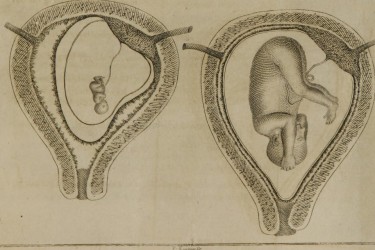
Mother’s Friend: Birth Control in Nineteenth-Century America
How antebellum women prevented themselves from getting pregnant during an era when their identity was founded on being a mother.
by
Lauren MacIvor Thompson
via
National Museum of Civil War Medicine
on
February 5, 2017
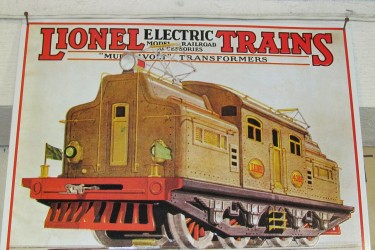
Victorian Era Drones: How Model Trains Transformed from Cutting-Edge to Quaint
Nostalgia and technological innovation paved the way for the rise of model-train giant Lionel.
by
Ben Marks
via
Collectors Weekly
on
February 1, 2017
partner
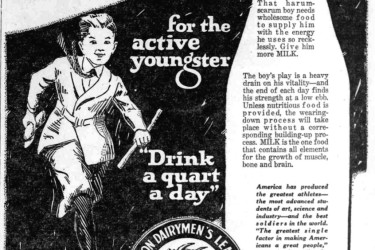
Got Milk?
The hosts discuss the transformation of milk from a dangerous, marginalized 19th Century dairy product, to a 20th Century superfood.
via
BackStory
on
January 6, 2017
partner
Counting Calories
Charlotte Biltekoff talks about the rise of calories at the turn of the 20th century and the push to get scientific nutritional ideas into American mainstream.
via
BackStory
on
January 6, 2017
partner
When Dieting Was Only For Men
Today, we tend to assume dieting is for women, but in the 1860s, it was a masculine pursuit.
by
Livia Gershon
,
Katharina Vester
,
William Banting
via
JSTOR Daily
on
January 2, 2017
partner
Could You Patent the Sun?
Decades after Dr. Jonas Salk opposed patenting the polio vaccine, the pharmaceutical industry has changed.
via
Retro Report
on
December 11, 2016
A History of Transgender Health Care
As the stigma of being transgender begins to ease, medicine is starting to catch up
by
Farah Naz Khan
via
Scientific American
on
November 16, 2016
Mapping a Demon Malady: Cholera Maps and Affect in 1832
Cholera maps chart the movement of the disease, and the terror that accompanied it.
by
Sarah Schuetze
via
Commonplace
on
September 25, 2016
How ADHD Was Sold
A new book outlines an epidemic of over-diagnosis and addiction.
by
Adam Gaffney
via
The New Republic
This publication restricts nonsubscriber access to some or all of its articles.
on
September 23, 2016
The American Influenza Epidemic of 1918: A Digital Encyclopedia
Stories of the places, the people, and the organizations that battled the American influenza epidemic of 1918-1919.
by
Howard Markel
,
J. Alexander Navarro
via
University Of Michigan Library
on
September 19, 2016
“God Help American Science”: Engineering Theatre and Spectacle
When an event promises you will "hear the body broadcast its sounds," "see without light," and "see dancers float on air,” there’s bound to be disappointment.
by
W. Patrick McCray
via
W. Patrick McCray
on
September 7, 2016
Can Twitter Fit Inside the Library of Congress?
Six years ago, the world’s biggest library decided to archive every single tweet. Turns out that’s pretty hard to do.
by
Andrew McGill
via
The Atlantic
This publication restricts nonsubscriber access to some or all of its articles.
on
August 4, 2016
“The Passing of the Great Race” at 100
In the age of Trump, Madison Grant's influential work of scientific racism takes on a new salience.
by
Noel Hartman
via
Public Books
on
July 1, 2016
A Brief History of the Assault Rifle
The genealogy of a killing machine.
by
Michael Shurkin
via
The Atlantic
This publication restricts nonsubscriber access to some or all of its articles.
on
June 30, 2016
A DNA Test Won’t Explain Elizabeth Warren’s Ancestry
You’re not 28 percent Finnish, either.
by
Matt Miller
via
Slate
This publication restricts nonsubscriber access to some or all of its articles.
on
June 29, 2016
partner
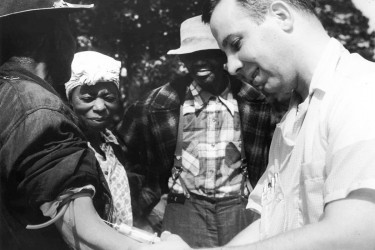
The Lasting Fallout of the Tuskegee Syphilis Study
A recent paper provides evidence that the Tuskegee Syphilis Study reduced the life expectancy of African-American men.
by
Nashwa Khan
via
JSTOR Daily
on
June 20, 2016
partner
Mother's Little Helper
How feminists transformed Valium from a wonder drug to a symbol of medical sexism.
via
BackStory
on
May 20, 2016
Bay of Smokes
Smog first came to Los Angeles suddenly, like a stranded hitchhiker. It was July 8th, 1943, and we were at war.
by
Aric Allen
via
Aricallen.com
on
May 19, 2016
How Literature Became Word Perfect
Before the word processor, perfect copy was the domain of the typist—not the literary genius.
by
Josephine Livingstone
via
The New Republic
This publication restricts nonsubscriber access to some or all of its articles.
on
May 2, 2016
The Yellow Fever Epidemic of 1878
A primary source set and teaching guide created by educators.
by
Samantha Gibson
via
Digital Public Library of America
on
April 7, 2016
There is No Cure for Polio
A primary source set and teaching guide created by educators.
by
Melissa Jacobs
via
Digital Public Library of America
on
April 7, 2016
Coat Hangers and Knitting Needles
A brief history of self-induced abortion.
by
Sarah Pripas
via
Nursing Clio
on
March 10, 2016
Thomas Jefferson's Quest to Prove America's Natural Superiority
French theorists said that American native species were inferior to European ones—the former President went to great lengths to show that they were wrong.
by
Andrea Wulf
via
The Atlantic
This publication restricts nonsubscriber access to some or all of its articles.
on
March 7, 2016
Previous
Page
34
of 36
Next