Harvard’s Eugenics Era

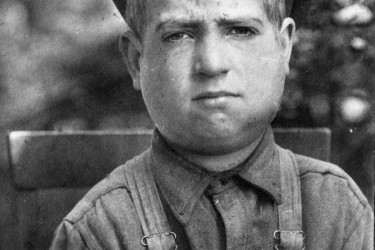
When academics embraced scientific racism, immigration restrictions, and the suppression of “the unfit”.
Sign reading "Is your child vaccinated?"
partner

Contagion

How prior generations of Americans responded to the threat of infectious disease.
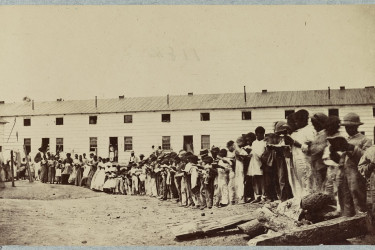
African Americans, including children, gathered in front of a barracks building.
partner

Not So Safe Space

How disease devastated populations of escaped slaves in contraband camps behind Union lines during and after the Civil War.
Emergency hospital during influenza epidemic, Camp Funston, Kansas.
partner

The Things They Carried

How soldiers returning from World War I brought the Spanish flu back with them.
Woman who looks unhappy.

Unwanted Sterilization and Eugenics Programs in the United States

A shameful part of America’s history.
Charles Hatfield.
partner

When San Diego Hired a Rainmaker a Century Ago, It Poured

After Charles Hatfield began his work to wring water from the skies, San Diego experienced its wettest period in recorded history.

Public Health and the Dead at Johnstown

How do we humanely bury the dead after a disaster?
People waiting for a bus, one with a dog.

The Urban Upwelling

By tracing commodities beyond the human, we can learn a great deal about how cities function as ecological and economic units.

Data-Mined Photos Document 100 Years of (Forced) Smiling

A high-school yearbook database dating to the 1900s shows how hairstyles, clothing and smiles have changed.

How the US Military Helped Invent Cheetos

How the US military figured out how to make self-stable cheese ... and helped invent Cheetos to boot.

The Tragic History of Early Weather Forecasting

Read an excerpt from Al Roker's book about the Galveston Hurricane of 1900.
Children in New York City waiting in line for immunization shots, 1944

Vaccination Resistance in Historical Perspective

The vaccination skepticism of today is rooted in postwar social movements, prompting a new generation of parents and children to question drugs and doctors.
A white muscular man flexes confidently while sitting on a stool.
partner

Nose Knows Best

Nasology was a 19th century pseudoscience which claimed to explain personality traits based on the shape of a person’s nose.
Cover of the U.S. Physical Fitness Program book, featuring silhouettes of people doing calisthenics.
partner

Run DNC, Run RNC

When the federal government began to claim a stake in the public’s physical fitness, and the origins of the Presidential Physical Fitness Test.
Small box from the late 1800s containing small vials of homeopathic remedies.

A Short History of Homeopathy: From Hahnemann to Whole Foods

In the 19th Century, homeopathy was popular because of its use of small doses, its emphasis on the curative power of nature, and its holistic treatment of the body.
tampon

The Tampon: A History

The cultural, political, and technological roots of a fraught piece of cotton.

Pop Culture Pulsar: Origin Story of Joy Division's Unknown Pleasures Album Cover

The cover's design, a black-and-white data display, traces its origins to the stars.
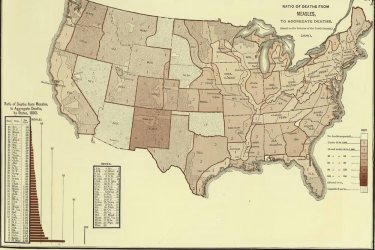
Map of whooping cough and measles deaths in the US in 1883.

Late 19th-Century Maps Show Measles Mortality Before Vaccines

Explore visualizations of a disease nearly every child was expected to contract.
A depiction of the female reproduction system in an early sex ed film.

Slut-Shaming, Eugenics, and Donald Duck

The scandalous history of sex-ed movies.
A survey card from the St. Louis Baby Tooth Survey.

Atomic Anxiety and the Tooth Fairy: Citizen Science in the Midcentury Midwest

How the St. Louis Baby Tooth Study reconciled the ritual of childhood tooth loss with the geopolitics of nuclear annihilation.
Boy with mumps.

"How Serious is the Mumps?"

How a disease often portrayed as harmlessly humorous became the target of one of the most effective vaccination campaigns in U.S. history.

Poems of the Manhattan Project

John Canaday's poems look at nuclear weapons from the intimate perspectives of its developers.

The Accidental, Psychedelic Discovery of LSD

After the drug was dismissed by the pharmaceutical company that developed it, a researcher started experimenting on himself with it. Powerful hallucinations ensued.
The Man of Signs page of Young's 1848 almanac.

Reading the Man of Signs, or, Farming in the Moon

What did the signs and the phases of the moon mean to moon farmers in the 1840s?
Map of Western United States organized by watersheds

This 19th Century Map Could Have Transformed the West

According to John Wesley Powell, outside of the Pacific Northwest, the arid lands of the west could not be farmed without irrigation.

The True Story of Phineas Gage Is Much More Fascinating Than the Mythical Textbook Accounts

Each generation revises his myth. Here’s the true story.
Painting of passenger pigeons over farm

They Covered the Sky, and Then...

Perhaps, in ethical terms, it doesn’t matter whether overhunting was or was not the cause of the passenger pigeon’s extinction. Practically speaking, it matters a good deal.
Picture of William B. Shockley (1910-1989)

Indigenous Circuits

While researching the history of racism in Silicon Valley, Lisa Nakamura is surprised to discover the Navajo Nation's role in the creation of the tech industry.
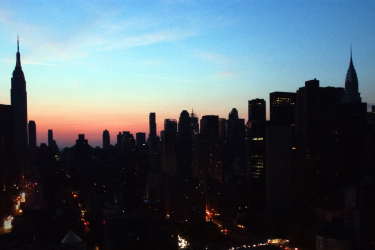
New York City skyline during the 2003 blackout.
partner

What the 2003 Blackout Revealed About the U.S. Power Grid

Our infrastructure showed its age and its vulnerabilities when the lights went out.

The Huge Chill: Why Are American Refrigerators So Big?

From iceboxes to stainless steel behemoths: An Object Lesson.