For as long as there has been satire there has been an effort to explain what exactly it is. A vast critical literature chews over matters of definition and classification. But the task has never fallen only to critics and theorists. Since ancient Rome it has often been the satirists themselves who have spoken most volubly about the proper way to describe their art. In his verse Horace didn’t only mock the vices of his contemporaries (hypocrisy, Stoic philosophy, avarice); he laid out the correct form satire should take—terse, conversational, “in a style rather close to prose.” Juvenal railed against particular groups of people (Greeks, women, the old), but he also proposed a kind of theory of satire as the most ravenous literature: “All human endeavors, men’s prayers, fears, angers, pleasures,/joys and pursuits, make up the mixed mash of my book.” In one famous line he suggested that writing satire simply meant documenting the everyday horror show in front of you. Difficile est saturam non scribere: if you’re paying attention to present conditions, it’s difficult not to write satire.
Satire is not exceptional in its self-consciousness. Other literary modes may also announce what they are doing. But the attempt to define satire, more than other modes or genres, tends to involve pronouncing not just what it is, but what it is for. Satiric literature identifies people or institutions or situations in order to hold them up for ridicule. It is therefore an unusually reactive kind of art, and its response to those incitements can give the impression that it wears its purpose freely, that its objectives are never far from its articulations, indeed that it cannot be understood apart from its conscious motivations for exposing the world’s imbecility.
The complication is that satire usually goes about this assignment in indirect ways. A targeted attack may shroud itself in irony or circumlocution. An utter seriousness of purpose might be camouflaged by jest or insolence. A satirist will hide behind a persona. And so the motive underlying satire can be at once explicit and deceptive, stable and volatile. Just because writers tell you what their aim is doesn’t mean that you should believe them. The Swift scholar Claude Rawson, writing about some extreme phrasings in the work of that most comprehensive of satirists, gets at this quality best: the satiric voice is a “mixture of meaning it, not meaning it, and not not meaning it.”
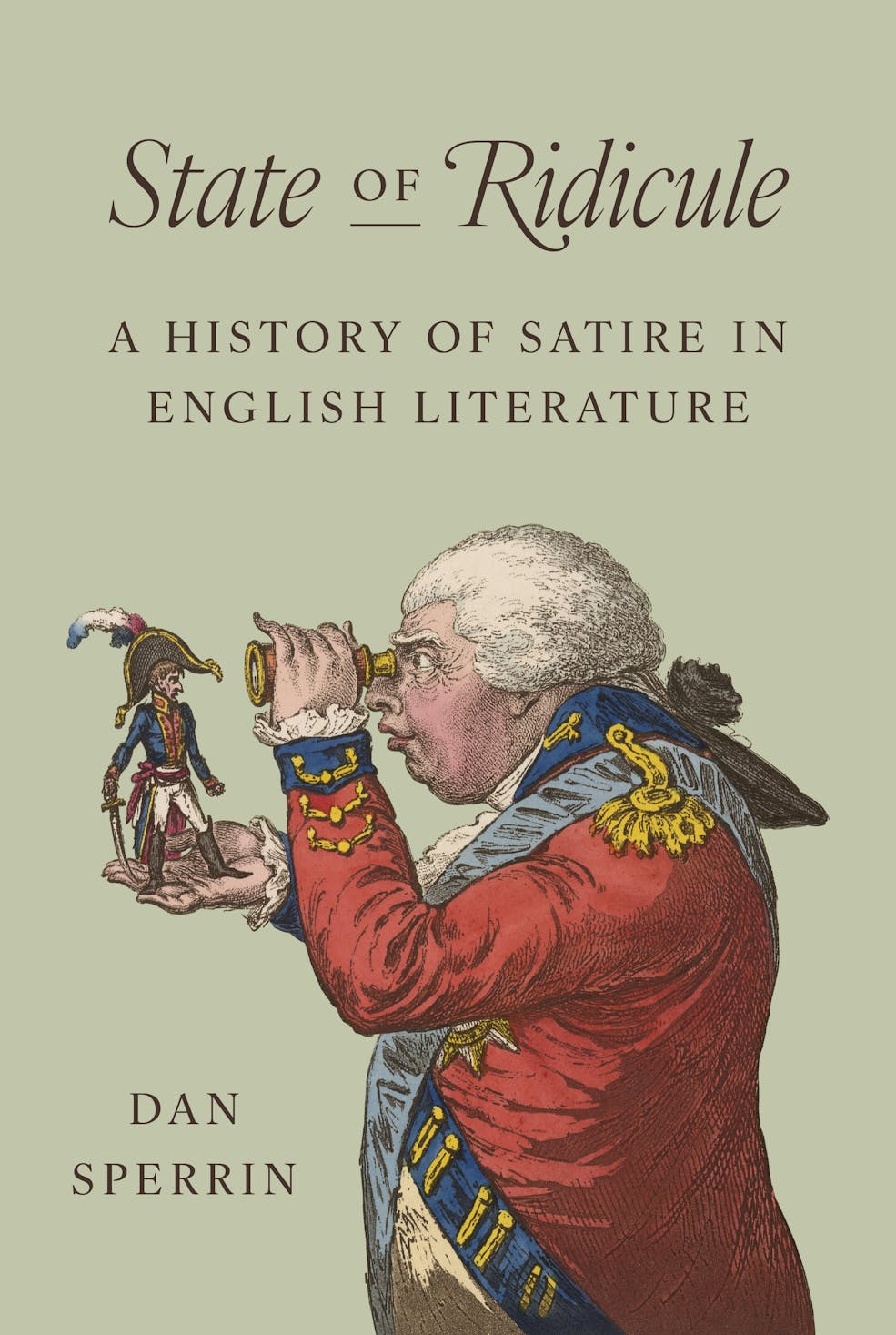
For Dan Sperrin in State of Ridicule, the basic definition of satire is unambiguous: satire is political. It “offers interpretations of power,” though its point is never merely interpretive. It wants to intercede in matters of state and government, sometimes in support of the existing regime and frequently in opposition to it. For hundreds of years English satire has been consumed with recurring subjects and problems: the legitimacy of rule, the succession of dynasties, the ambition of prime ministers, the administration of government.