On February 4, 2026, The Washington Post’s Ukraine correspondent, Lizzie Johnson, announced on X that she had been laid off, via email, “in the middle of a warzone”—left behind in Kyiv by a ruthless wave of layoffs at the Jeff Bezos–owned paper. Johnson’s stranding at the imperiled fringes of America’s once sturdy network of European allies seemed to perfectly embody the pending collapse of another empire, America’s formerly sprawling newspaper industry. Where once an array of informants, stringers, correspondents, editors, newsrooms, and foreign bureaus had splayed across the country and the world, now all that remained was a handful of big city papers, cannibalizing themselves and each other in order to survive, while on occasion leaving former staffers behind like weapons cast off from an army in retreat.
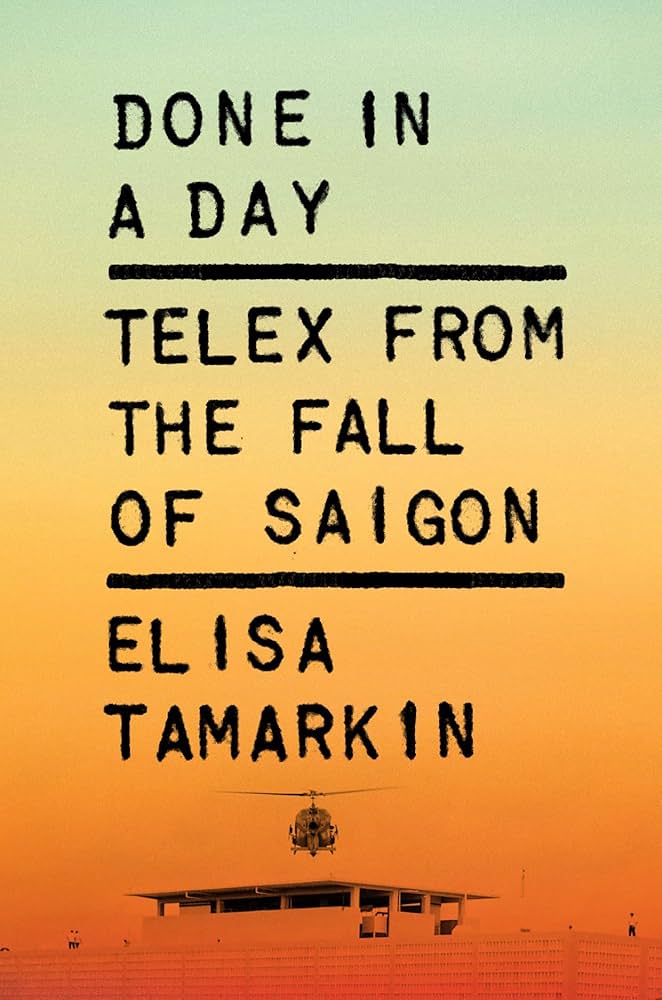
The Post’s self-immolation was, of course, hardly the first wave of devastating cuts to America’s newsrooms—nor was Johnson’s stranding the first time that foreign correspondents who deserved better found themselves unemployed. As Elisa Tamarkin tells us in her mesmerizing Done in a Day: Telex From the Fall of Saigon, her father was one such causality, left jobless decades earlier, after the Chicago Daily News closed in 1978. This was despite Bob Tamarkin having been, in his editor’s words, “promoted to trench coat”—industry slang for a dedicated, in-country foreign correspondent—full time, three years earlier. On April 30, 1975, he had managed to be the last American reporter to flee the fall of Saigon and one of the first to “telex” his story home, one of the triumphs of the Daily News’s 70-year-old foreign bureau, and among its last.
Yet though Done in a Day is in part an elegy for the newspaper business, Elisa Tamarkin resists turning the book into a straightforward hagiography. What results instead is a startlingly original meditation on the last day of the U.S. War in Vietnam and the end of the newspaper business—one that makes clear that,as much as newspapers were one of the great triumphs of modern civilization, they were also intimate partners in the violence that civilization seems to so endlessly produce.