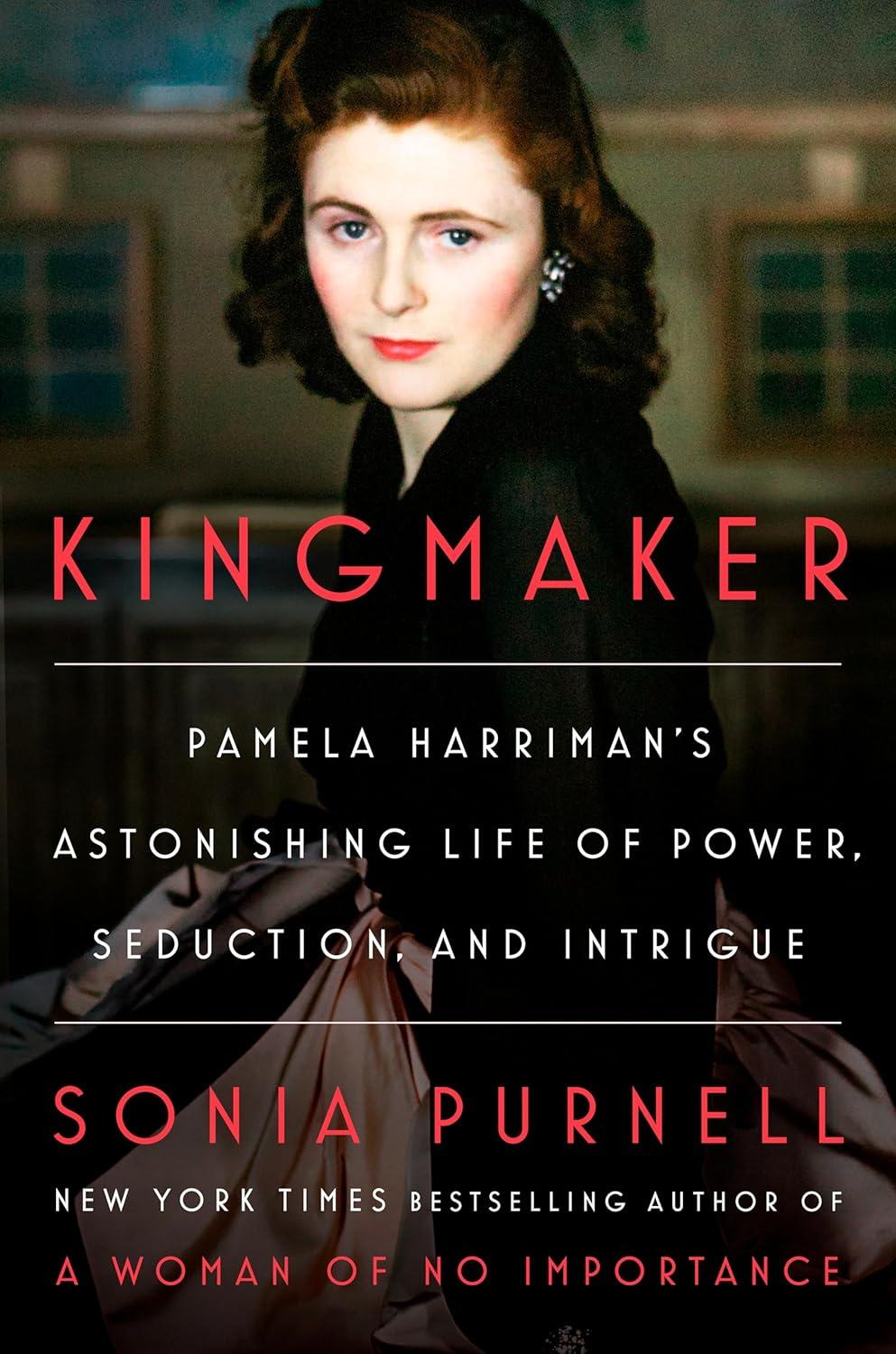
Previous biographers have treated the Harriman affair far less seriously. The American journalist Christopher Ogden spent forty hours interviewing Pamela for her memoirs, which he was helping to write, before she backed out (Harold Evans had bought the rights for an exorbitant sum, stipulating that the account must be ‘full and frank’). Ogden kept the tapes and wrote his book Life of the Party (1994) without directly quoting from the interviews. His conclusion was that Pamela herself ‘never believed it was anything more than a wartime romance with important strategic overtones’. The arrangement made her ‘part of the action’, but only inasmuch as she facilitated Harriman’s closeness to Churchill and Beaverbrook. Sally Bedell Smith’s Reflected Glory (1996) rests on the widest research (more than four hundred interviews, including people who knew Pamela during the war). She calls Pamela a ‘wartime hostess’ and describes her role as a ‘back-channel of information’. Harriman would discuss issues with Beaverbrook and Churchill; Pamela would soak up his private reflections and pass them on.
Pamela’s reputation in these years is disreputable, and Purnell suggests this is because her motivations have been misunderstood. She went after Harriman not because he was a vastly wealthy, attractive, ‘sexed-up vision of athletic American manhood’ and ‘the antithesis of the increasingly blotchy and bloated Randolph’, but as a deliberate, patriotic act of wartime service. In this telling, Pamela did far more than relay what she heard about what the Americans were thinking and planning. She was an intelligence agent run by Beaverbrook, who was ‘effectively her control officer’. Her ‘pillow talk’ was ‘influencing high-level policy on both sides of the Atlantic’ and Harriman was ‘compromised’. To arrive at this position, Purnell knits together inferences: Churchill wanted Roosevelt to agree to have British warships repaired at American ports, Pamela advocated for this, and Harriman eventually persuaded Roosevelt. The outcome was Pamela’s handiwork. Purnell writes that Pamela was ‘the best and perhaps only way of prising out closely guarded thinking on the American side’, and suggests that, without her, Beaverbrook and Churchill would have lacked access to the private opinions of American politicians.
But Harriman was already working to secure Roosevelt’s entry into the war. Quite apart from the link through Pamela, Bedell Smith notes that Harriman was in close contact with Churchill and Beaverbrook ‘to a degree no other American could claim – virtually from the moment he arrived in Britain’. It was not uncommon for Churchill to ring up asking him for a game of bezique. Beaverbrook was on friendly terms with the American generals and was running the Ministry of Supply. The indebted, socially restless Pamela was a handy informant, but no more than that.