James Burnham and George Grant never coauthored a single word. But their ideas form a perfect pairing for understanding the spiritual decline of modern governance. Together, their work reveals how the ever-expanding management of society has divorced whole countries from a shared ideal of the good life.
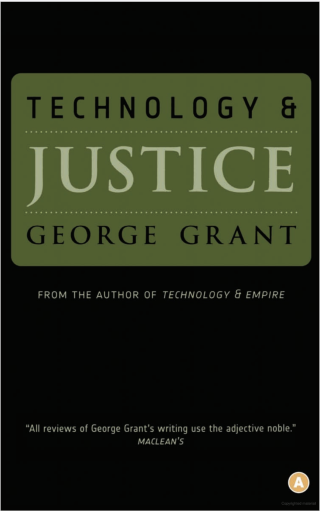
Grant, the Christian Platonist from Toronto, is best known for his books Lament for a Nation (1965) and Technology and Justice (1986). Both are meditations on the homogenizing effects of liberalism and modernity. Grant analyzed and lamented how they erode a people’s homegrown way of life. He described how the importance of family, identity, and moral frameworks is crushed beneath the relentless march of technology.
For Grant, the technological empire of the postwar United States, where innovators churned out satellite televisions, space rockets, and proto-computers, was the force behind this phenomenon. This empire was also the home of James Burnham.
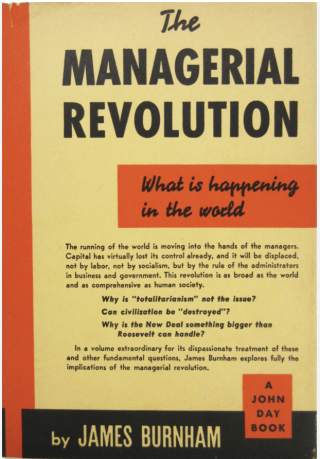
More than eighty years ago, Burnham proposed in The Managerial Revolution (1941) that a new order would soon arise. He wrote of the end of governance by proprietors and townsmen, and their replacement by a self-aware managerial class. According to Burnham, the state, the corporate world, the media, and bureaucracies would unite to convert traditional ownership into modern control. That powerful, credentialed class exercises control by creating and commanding intricate, expanding organizations and techniques, rather than through formal ownership of companies or an overt ideological tyranny. He called their model of governance managerialism, in which power lies in the process itself and in those who design and oversee it.
Read together, Grant and Burnham show why so many Western institutions now stand disconnected and unresponsive to the nations they are supposed to serve.
In The Managerial Revolution and later essays, Burnham explained that as enterprises expand, the separation of ownership and control becomes permanent and endemic. Credentialed managers assert “ownership” by dictating the flows of wealth, information, and even people through impersonal systems of their making. The process, rather than the nation or community, is the point.
In American Affairs, Julius Krein writes that this process changed what defined corporate accountability and the status of property itself. A man who has title to shares in a company is no longer the person who controls the firm, or, in the case of politics, the state. Thus managerialism has usurped power from elected parliaments and transferred it toward boards, courts, and executive agencies.