But how did capitalism come into being, and what makes it such a uniquely dynamic — and thus tenacious — form of social and economic organization? This question has occupied scholars for two centuries, beginning with thinkers like Adam Smith and Karl Marx. Some, such as the American Marxist historian Robert Brenner, point to the transformation of property relations in England in the middle of the last millennium, while others like Jairus Banaji see the beginning of capitalism much earlier in human history — namely, with the emergence of commercial trade networks hundreds of years prior.
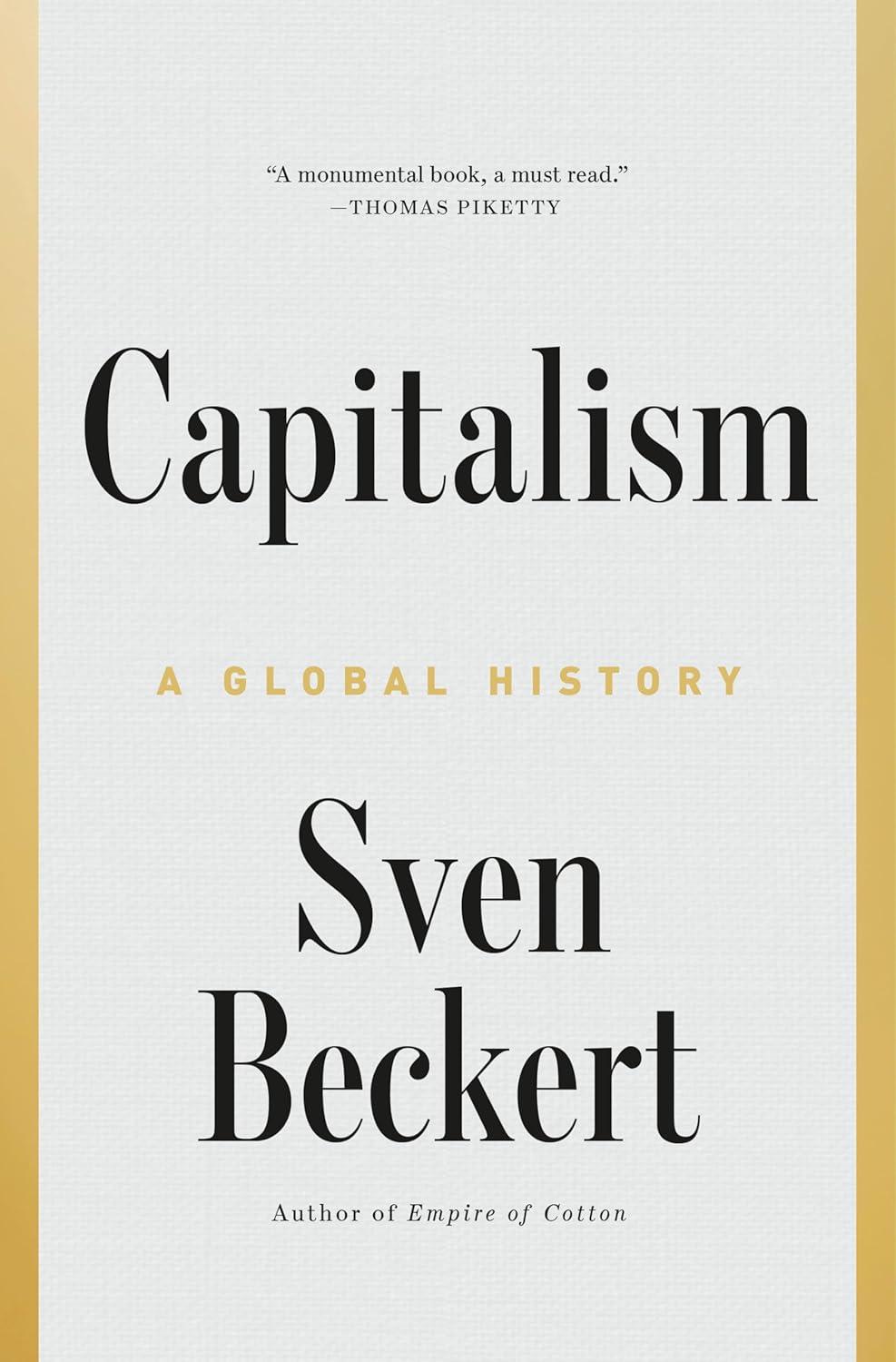
Historian and Harvard University professor Sven Beckert recently published his own contribution to the debate, Capitalism: A Global History, in which he weaves together various strands of historical scholarship across more than 1,200 pages to craft a comprehensive and sweeping yet detailed narrative of capitalism’s rise to global dominance over the past thousand years. He spoke with Jacobin about his intellectual formation, how his own work fits into debates on the history of capitalism, and how — if at all — this notorious mode of production might one day disappear from the stage of history.
Loren Balhorn
As a historian, you’ve studied the emergence of capitalism a long time. Your last book, Empire of Cotton: A Global History, was also a history of capitalism in some ways, or at least specific aspects of it. What did you seek to accomplish with this new history of capitalism?
Sven Beckert
The motivation to write the book came partly from the academic response to my book on cotton production. One of the criticisms was that capitalism is more than a history of cotton, which is obviously true. Empire of Cotton puts forward quite a few arguments about capitalism, but the book naturally only covers a small part of its history — temporally, spatially, but also in terms of what the industrialization of cotton represents in the history of capitalism. There was, naturally, a lot more I wanted to say about capitalism.
Beyond that, however, I noticed two things about how we talk about capitalism today. First, capitalism plays a very, very important role in political debates. There are many very strong arguments about capitalism, but the understanding of capitalism itself is often not particularly well developed — both on the Right and on the Left. My aim, therefore, was to write a history of capitalism from a historical perspective in order to enrich contemporary debates by gaining a better understanding of capitalism itself.
Second, the project developed out of a critique of existing attempts to understand capitalism. A very prominent school of thought about capitalism is an ahistorical one that views capitalism as the quasinatural state of the world. Changes happen, of course — we produce more than we used to; we produce differently — but in principle, the capitalist logic is universal and has existed in all societies throughout history. The book fundamentally challenges this argument.