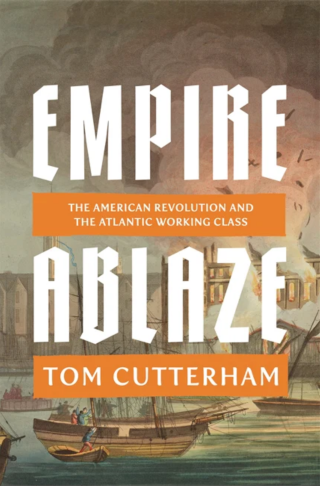
Late in 1776, with the War of Independence underway in the American colonies, a twenty-four-year-old housepainter named James Aitken walked into Britain’s most important naval dockyard and set it on fire. The damage was significant: estimates for repairs were twice the value of the tea destroyed at Boston harbor three years earlier.
The sense of threat experienced by Britain’s ruling elite was also profound. Few people today remember Aitken’s acts of sabotage against the British war machine. But they deserve recognition as part of the wider transatlantic workers’ struggle that helped make the American Revolution.
Three years earlier, Aitken had been in Philadelphia. There, the city’s working class had been gradually taking over political leadership since the mid-1760s. Some people were appalled by their confident sense of equality. In the words of one clergyman: “The poorest laborer upon the shore of the Delaware thinks himself entitled to deliver his sentiments in matters of religion or politics with as much freedom as the gentleman or scholar.”
Organized in patriot committees that worked consciously to cross ethnic and religious divisions, Philadelphia workers pushed forward the conflict with British imperial power. Like their comrades in Boston and other port cities, they saw the cause of colonial liberty as a chance to redress the balance of social power.
Aitken was probably in the crowd when eight thousand Philadelphians, roughly a quarter of the city’s population, turned out to demonstrate against “the detestable tea-scheme” of the British East India Company, which had (in the words of “A Mechanic,” writing in the Philadelphia Gazette) reduced “whole provinces” in India “to the distresses of oppression, slavery, famine, and the sword.”
Philadelphians already knew that a crowd in Boston had dumped their own delivery of tea into the harbor. Now merchants and lawyers from the moderate wing of the patriot movement hoped to avoid that kind of unruly violation of property. To their consternation, the Philadelphia crowd kept faith with their Boston counterparts, endorsing their “spirited conduct in destroying their tea.”
Such public disorder was hardly exclusive to the colonies. If anything, working-class organizers on the North American seaboard learned their steps from fellow travelers in London. There, at the heart of the empire, agitation against government corruption and tyranny was led by a similar coalition of laborers, artisans, and their middle-class allies.