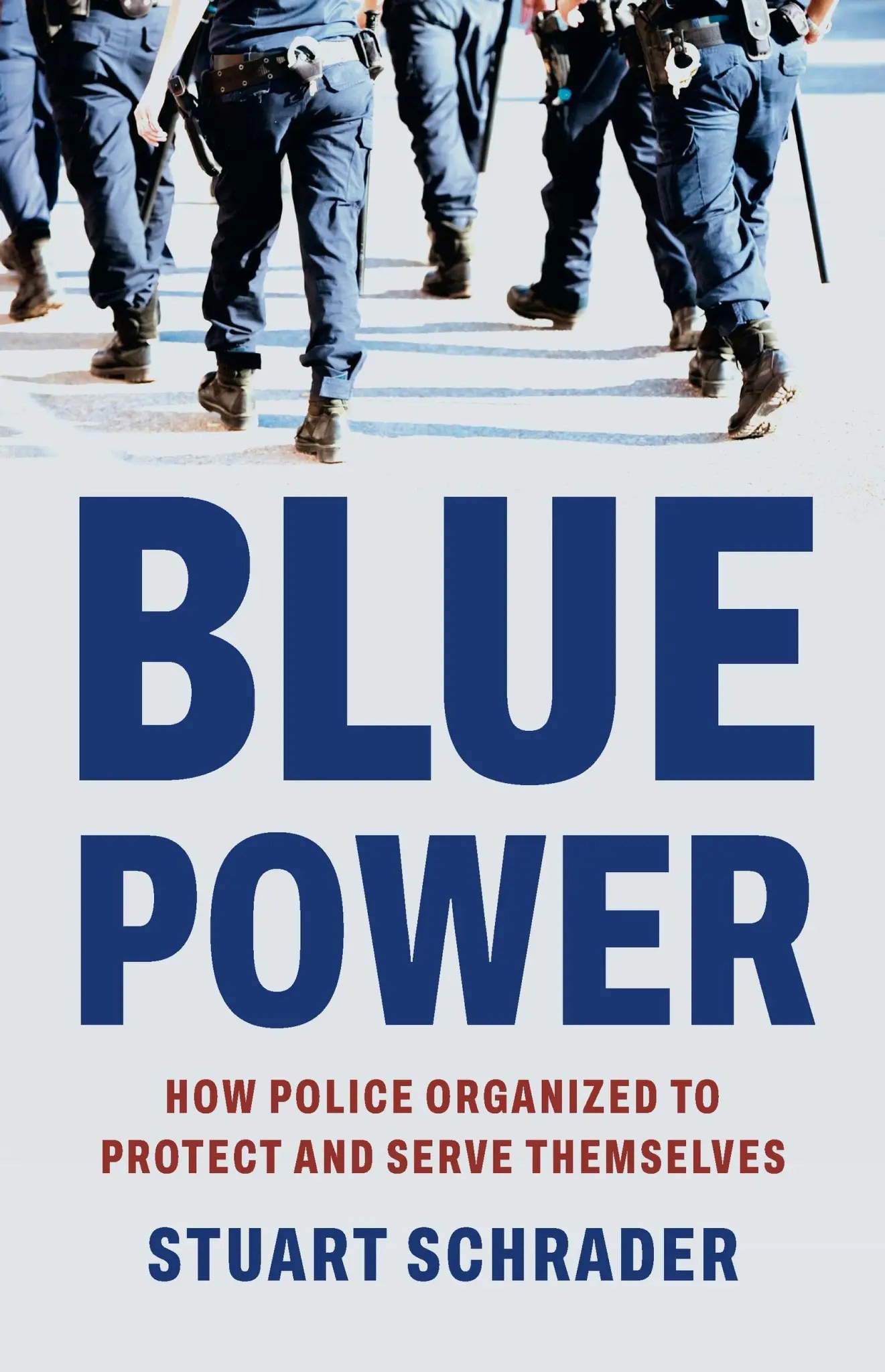
In 2010, Heather Ann Thompson wrote that American cities suffered “deep racial and political conflicts” and “experienced tremendous distress from substantial economic disinvestment” after WWII. She challenged researchers to explain how the expansion of the carceral state and the rise of mass incarceration played a role.1 Stuart Schrader’s new book Blue Power: How Police Organized to Protect and Serve Themselves answers that call. Schrader focuses on the backlash from rank-and-file police officers against the professionalization movement led by police administrators attempting to elevate the status of the police by instilling military-style discipline in their departments. Police administrators organized and unified those efforts through their union, the International Association of the Chiefs of Police (IACP). Resentful of restrictions on their discretion and autonomy, rank-and-file police began to use their own police unions to reject attempts at reform and oversight from their leadership or elected officials. The astonishing political success of rank-and-file bargaining and lobbying efforts won generous wages and benefit packages, and shaped public discourse around crime control to inflate the status of the police at the expense of the most marginalized. Schrader shows that rank-and-file police unions shaped the urban crisis by diverting enormous economic and political capital to municipal police departments amid increased budgetary austerity from the 1970s forward.
Schrader shows that rank-and-file collective action originated as cities ended the spoils system associated with machine politics. As police autonomy increased, police command attempted to establish sole control over hiring, promotion, and discipline of patrol officers. In response, rank-and-file officers looked to establish their own unions. The American Federation of Labor and the Teamsters attempted to organize the rank and file in Detroit in 1941 with organization drives and legal action. These efforts failed as courts deemed police departments too essential for collective bargaining rights and administrators lobbied for full control of their departments. For the next twenty years, patrol officers organized work slowdowns and mass callouts to pressure cities to recognize their right to bargain collectively.