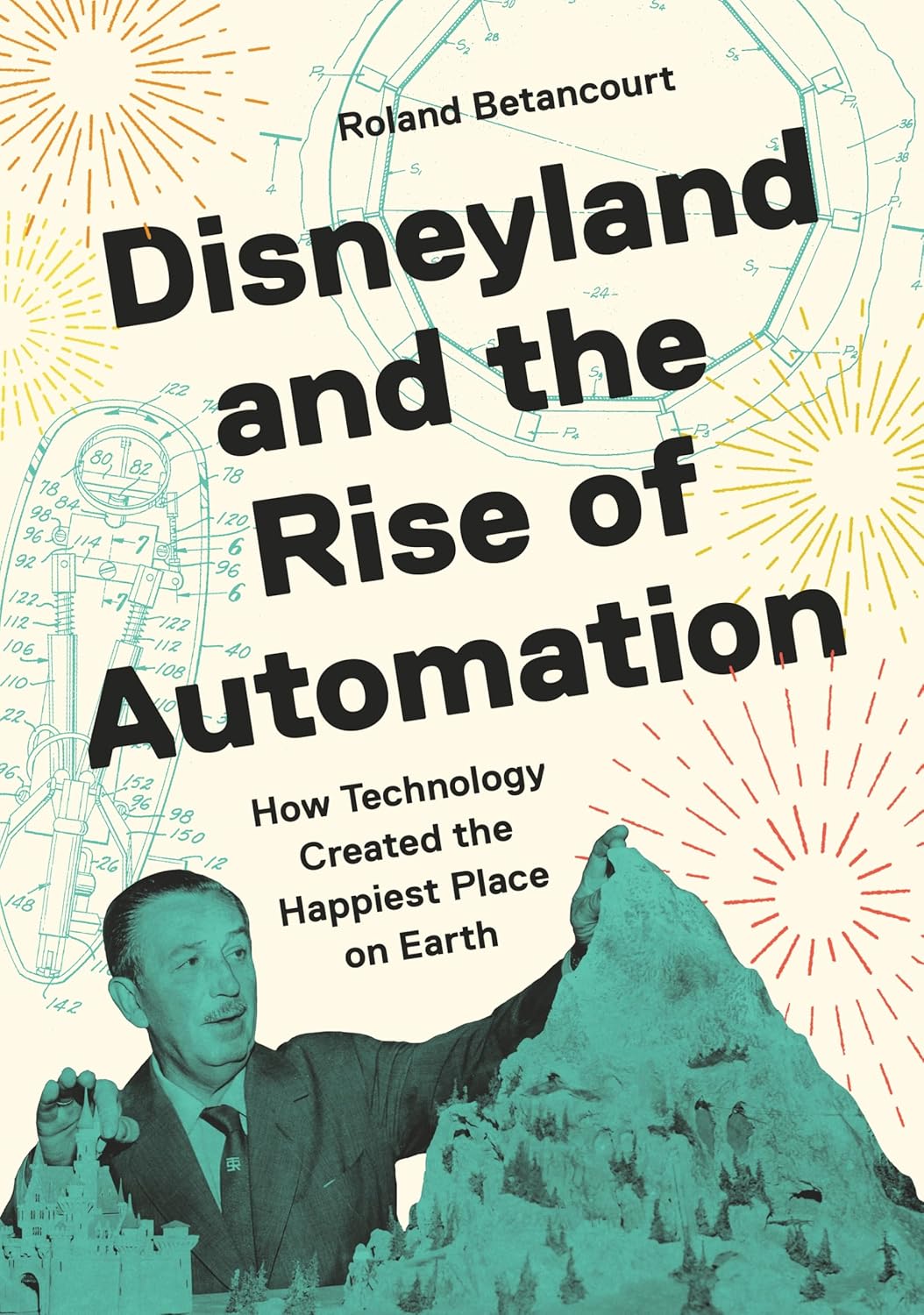
On August 23, 1948, Walt Disney arrived in Detroit with a colleague, the animator Ward Kimball. The pair had spent the past four days traveling to the Chicago Railroad Fair, an exposition commemorating a century of rail operations in the city. Their next stop was the Ford Motor Company complex in Dearborn, Michigan. The men spent the morning perusing a collection of antique automobiles and locomotives, and the late afternoon at Greenfield Village, an outdoor living history museum.
In his diary, Kimball recounted how he and Disney had their photo taken “in [an] old tintype shop” and rode through the “village in [a] horse-drawn buckboard wagon.” They also visited what was perhaps the most impressive marvel in the complex: Ford’s River Rouge plant. “Good god!” Kimball wrote. “What a sight! My mouth hung open!”
Disney’s 1948 trip with Kimball has been widely identified as the spark for the development of Disneyland, which opened in Anaheim, California, on July 17, 1955. The “themed” spaces of Greenfield Village and the Chicago Railroad Fair, presenting sanitized and romanticized views of American history, clearly provided models for the areas and motifs of the future Disney park.
As art historian Robert Neuman has expertly demonstrated, these sites were articulated at Disneyland with the artistic and technical know-how of studio craftspeople whose labor had designed the Hollywood backlots of the era. Yet what has often been overlooked in the origins, conceptualization and development of this American theme park is its deep and inextricable entanglements with the rise of automation in the period.
From the late 1940s to the mid-1960s, American audiences were fixated on this newly minted word: “automation.” The term spread like wildfire after businessman John Diebold published his book Automation: The Advent of the Automatic Factory in 1952. A revision of earlier words like “automatization,” it described the enhancement of the factory assembly line with automatic feedback systems developed during World War II. In 1948, during Disney’s visit to the River Rouge plant, “automation” had just received its name behind those very walls.
River Rouge was an imposing complex, towering and sprawling. Although it wasn’t the company’s only factory, it was emblematic of Ford manufacturing in the American imagination, synonymous with mass production and the assembly line.
In 1940, River Rouge even received a lushly illustrated profile in Life magazine that walked readers through its 1,200 acres. High-contrast color images of the foundry show molten ore flowing in glowing rivulets across trenches, while black-and-white images present crisp scenes of ceaseless overhead conveyors carrying tires and engines on various assembly lines.