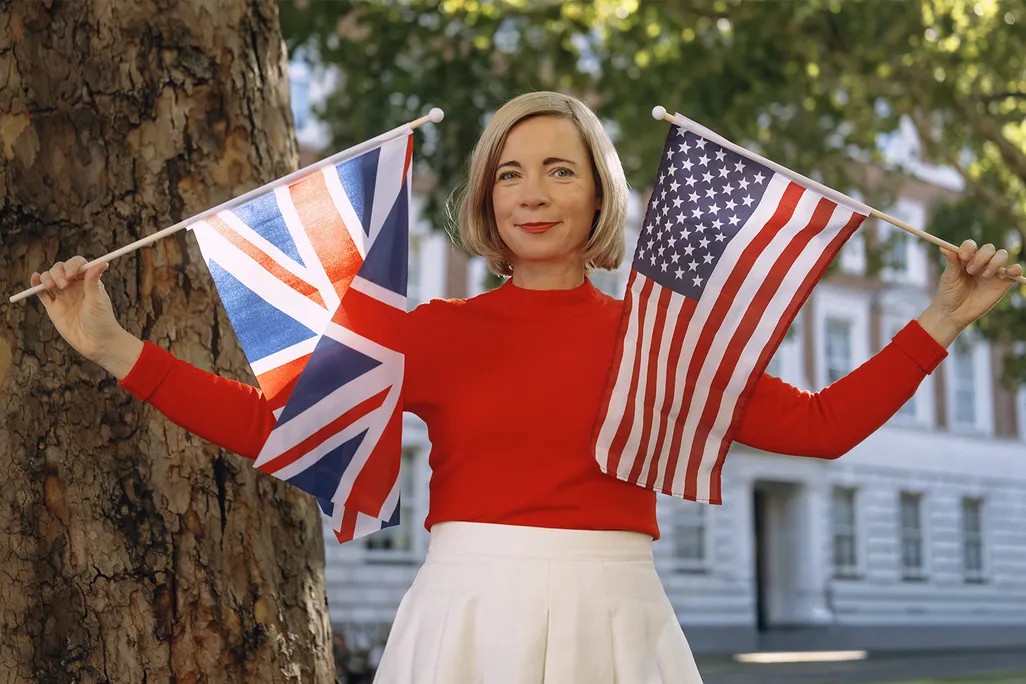
In the United States, the story of the American Revolution is often framed as a triumphant fight for independence. But the colonists’ British counterparts had a different perspective. Some agreed with the Americans that the Thirteen Colonies shouldn’t be taxed without representation. Others thought the colonists shouldn’t question how George III chose to rule over his subjects. Still others were simply anxious about the prospect of war and its hardships.
As the U.S. prepares to celebrate the 250th anniversary of its founding on July 4, 1776, a new PBS documentary hosted by the British historian Lucy Worsley spotlights individuals on the other side of the Revolution, from the king and his fellow elites to British merchants and the working class. “Lucy Worsley Investigates: The American Revolution” also examines the events that sparked the Revolution and its aftershocks, with an emphasis on the emotional fallout of this historic rupture.
Worsley’s focus is reflected in the titles of the documentary’s two installments: “The Breakup,” premiering on April 7, and “A Messy Divorce,” which will follow on April 14. “This was a perfect union that went wrong,” Worsley tells Smithsonian magazine. “It could have gone a different way with couple’s therapy.”
No taxation without representation
Between 1754 and 1763, American colonists fought alongside the British in the French and Indian War, a subsidiary conflict of the global Seven Years’ War. In the aftermath of the hostilities, Americans largely remained loyal to the crown. But they soon took issue with Britain’s refusal to grant the Thirteen Colonies a representative in Parliament.
Britain’s leaders believed that their country’s population was diverse enough that “at least some members of Parliament were going to represent the views of the Colonies,” Liz Covart, a historian who wasn’t involved in the documentary, tells Smithsonian. “But the colonists end up arguing, ‘Well, we don’t have real representatives, because you won’t seat anybody who comes from America.’”
These tensions came to a head when Britain introduced new taxes to revive its postwar economy. The fees imposed by the 1765 Stamp Act and the 1767 Townshend Acts were lower than the overall taxes paid by people in the British Isles, but Americans maintained their opposition to taxation of any kind without representation.
Some in Britain agreed with the colonists. In December 1768, Peter Verstille, a 34-year-old merchant from New England, sailed to London on business. While there, he visited “disputing clubs,” where large groups of men gathered to discuss political affairs. Whether Britain had the right to tax the Colonies was a regular topic of debate. Verstille recorded in his diary the result of one such discussion: “It was evidently proved to the general satisfaction of the company that it was neither for the interest nor the honor of Great Britain to tax the Americans at this time.”