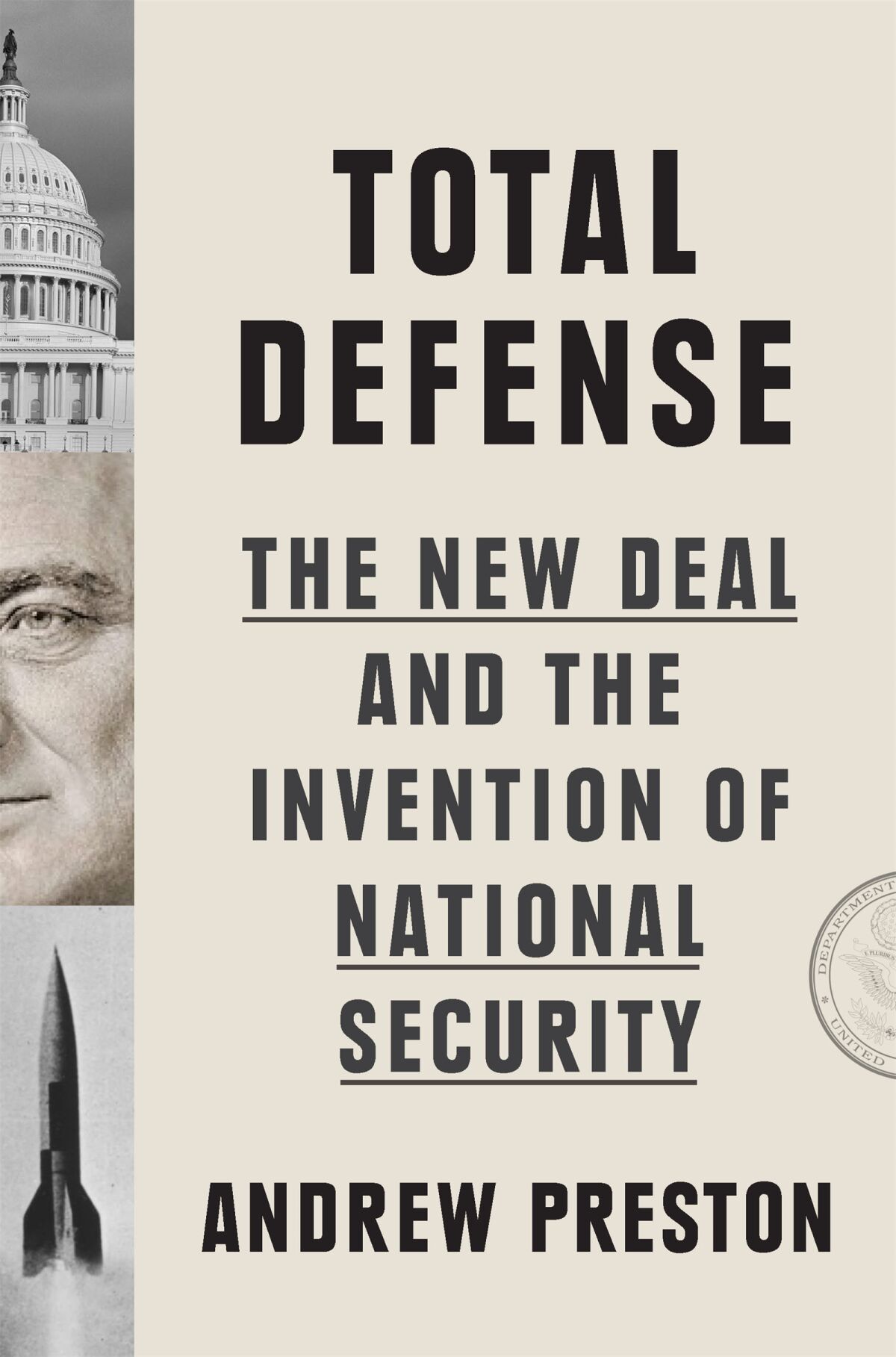
Following Ira Katznelson and other New Deal historians, Preston contends that this notion of risk management was the central premise of the New Deal. “Turning anarchic uncertainty into manageable risk…was the New Deal’s prime objective, because from there New Dealers could build a system to ensure security.” Further, “[e]ven though it was in some ways an odd value for a progressive to hold, as it could come at the expense of justice or liberty, this basic principle—security—was thus Roosevelt’s watchword.” Summarizing the arguments of other New Dealers, Preston concludes, “More than liberty, property, or prosperity, even more than democracy itself: security was the very foundation of the New Deal order because…everything else rested on it.”
As another world war threatened, then, it was only natural that this language of risk management and security was eventually applied to foreign policy. Preston locates the pivotal moment in Roosevelt’s “Quarantine Speech,” delivered in Chicago in 1937. Although the speech does not include the words “national security,” Roosevelt decried an “epidemic of world lawlessness” that needed to be quarantined. Because “we cannot insure ourselves against the disastrous effects of war,” he argued, the country needed to adopt positive measures to “minimize our risk.” After that speech, Preston observes, “Roosevelt repeatedly invoked the phrase ‘national security’ to explain America’s stakes in the world crisis, using it nearly as many times in those four years alone [1937-41] as all other presidents before him combined.”
From a term frequently used to refer to financial stability—Preston notes that in this era there was both a National Security Bank and a National Security Life and Accident Company—“national security” came to refer almost exclusively to foreign policy issues. The term captured risks that went beyond territorial defense, but did not rely entirely on Wilsonian idealism. As World War II progressed and was followed by the Cold War, the rhetoric and institutions of national security became entrenched. Roosevelt’s Democratic successors—Presidents Truman, Kennedy, and Johnson—all largely followed the same paradigm: expanded social security at home coupled with military interventions, in the name of national security, abroad. In fact, national security went global: today, countries as diverse as China, India, Israel, Norway, and many others all have national security councils.