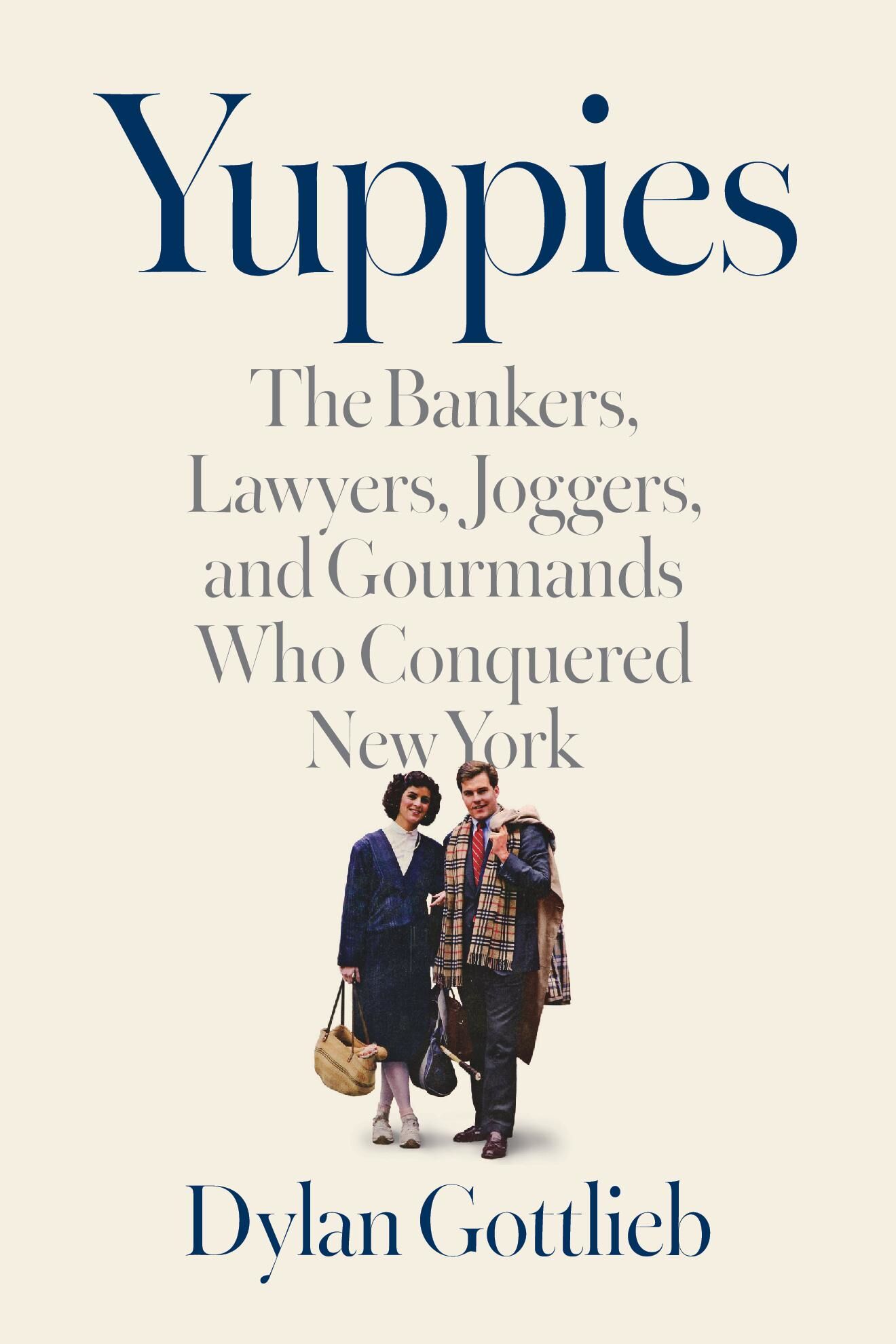
Gottlieb’s story begins with the “unshackling of Wall Street” in the Carter and Reagan years. Deregulation helped make the finance industry more lucrative and thus more appealing for recent college grads, particularly those coming from elite institutions. Banks also recruited aggressively on Ivy League and Ivy-plus campuses, while business schools worked in tandem with investment firms to develop a pipeline of young, exploitable, entry-level analysts (and future MBA students). As a result, Gottlieb documents, a “massive wave of yuppies” hit investment banks during the 1980s. Whereas only 3 percent of Wharton seniors went into investment banking in the late 1970s, 34 percent of the graduating class of 1987 did.
Once they arrived in New York City, the finance capital of the world, these yuppies often encountered harsh working conditions, especially during the chaotic mergers and acquisitions boom of the 1980s. Yuppie lawyers who joined Skadden, Arps, Meager, and Flom, the country’s most profitable law firm in the ’80s, “work[ed] longer hours, under closer managerial oversight, on smaller and less intellectually demanding piecework, with less meaningful training, all for narrower chances of promotion to partner.” Still, most yuppies toughed it out in the city, in part because of the allure of urban living.
The yuppies needed the city, and the city needed the yuppies. New York had taken a beating in the 1970s. A fiscal crisis had brought the city to the brink of bankruptcy and prompted cuts in essential services—police, fire, sanitation, and beyond. These cuts intensified many of the city’s existing problems and made New York an increasingly unlivable place. Yuppies, many believed, could save the city. But the city had to burn first.
As Gottlieb illuminates, the “urban renaissance” offered by the yuppies—the sidewalk cafés, the packs of joggers, the leafy avenues of renovated brownstones—required the “urban terror” of harassment, displacement, and even arson. On Manhattan’s Upper West Side; in Hoboken, New Jersey; in Park Slope, Brooklyn; and elsewhere, speculators at first employed less incendiary methods to remove poor, working-class, and even middle-class tenants to make room for yuppies. When they failed to evict these tenants through quasi-legal means—exploiting rent-control loopholes, for instance—they resorted to “steadily escalating harassment.” If these methods proved ineffective, they turned to the torch.
Deadly, deliberate fires engulfed many parts of New York City and its adjoining areas in the 1970s and early 1980s. Hoboken’s proximity to Manhattan—a feature that marketers emphasized with almost comedic glee—made it a prime target for arson. A January 1979 fire intentionally set at a Hoboken apartment building killed 21 people and permanently displaced 130 others. With buildings destroyed, owners collected insurance payouts and sold the land for development. And once sites in newly desirable neighborhoods were razed, new buildings sprang up within a couple of years, commanding pricier rents. Hardly anyone would face serious repercussions for the arson-for-profit wave that swept over the city in this moment.