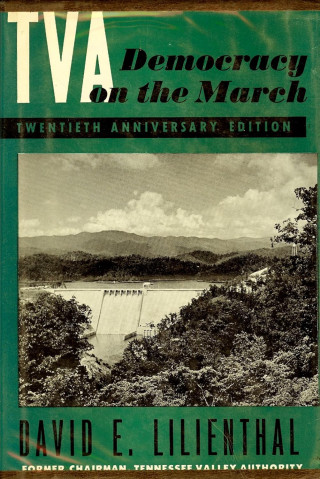
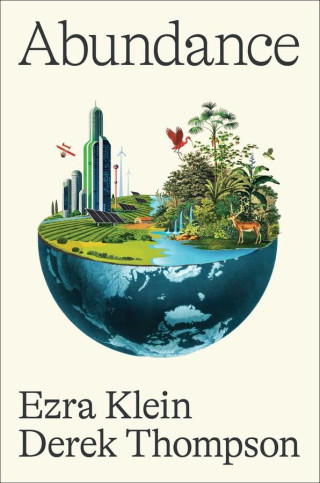
Lilienthal’s book is less like Klein and Thompson’s book, and more like a much better-known work from the 1940s — Frank Capra’s It’s a Wonderful Life, albeit if George Bailey had lived in the Deep South and built hydroelectric plants.
Both works are about Abundance. It’s a Wonderful Life is rightly remembered as a Christmas classic, but the main character, George Bailey, ought to be considered a YIMBY hero. He gives up his dreams to finance affordable housing that wealthy locals disapprove of! It is odd, and somewhat telling, that the Abundance movement has never claimed the film for themselves, despite Bailey being the perfect distillation of their policy goals.
Lilienthal’s vision of Abundance is forgotten for the same reason that Capra’s is unrecognized. He framed economic development as a question of personal character and collective purpose, two values arguably absent in today’s Abundance movement, which often speaks in the detached idiom of Twitter policy debates. In Lilienthal’s telling, prosperity is a human — not technocratic — endeavor.
The difference is visible on the first page. Klein and Thompson begin by imagining a future where Abundance has delivered a solarpunk Eden, replete with lab-grown meat and supersonic jets. Their vision is set in 2050 in some unnamed city. They offer moderate analysis — environmentalism and community involvement are good, but only in the right amounts. Their book offers policies that support a better America.
Contrast this with Democracy on the March. Lilienthal’s first page locates his story of progress in a specific time and place:
This book was written in the valley of a great American river, the Tennessee. It is about that river, and that valley; about the soil of its farms, the white oak and pine on its mountain slopes, the ores and minerals that lie buried in its hills. It is about the rain that falls so violently upon its fields, and the course the water follows as it seeks out first the streams and then the river itself. This book is about the people of this valley region, the men who work the land, the men who roll the silver sheets of aluminum, who run the cotton gins, and stand behind the counter in the general stores. It is about the women who tend the spindles or stir the kettles or teach the children in the schools.1
While Lilienthal starts with a geographic description, he goes on to offer a sermon. He was an optimist about economic growth — the “Grand Job of This Century” — but not a booster. As he warned:
The physical achievements that science and technology now make possible may bring no benefits, may indeed be evil, unless they have a moral purpose, unless they are conceived and carried out for the benefit of the people themselves.
Lilienthal’s language was unapologetically moralistic. For him, technology mattered insofar as it shaped character and built up communities. His vision began with the individual: people must first believe they can make a difference. From there, they could join with others to build a stronger civic life. This moral vision was not blind to the challenges of the modern era. His two guiding principles — the need to respect the “unity of nature” and the imperative that “the people must participate actively” in development — directly addressed what we now call environmentalism and community involvement. His moral vision turned these from obstacles into opportunities for shared action. Like Klein and Thompson, he offered policies that could improve America. But more than that, Lilienthal wrote in a way that makes you want to be a better American.