Everyone hates “waste, fraud, and abuse.” Indeed, the phrase has become a touchstone of modern politics, “the unholy trinity of government administration” (to borrow a phrase from Brookings Institution scholar Donald F. Kettl).
Politicians, of course, are always happy to nurture a grievance; it’s easier to gin up votes with outrage than inspiration, which is why C-SPAN viewers are treated to an endless stream of oversight hearings on government waste. Politicians in both parties love these spectacles — especially when they can target programs they never liked in the first place.
That’s the nature of politicized crackdowns on “waste, fraud, and abuse”: Pocketbook battles against waste become ideological crusades against modern government. That’s certainly what happened to the taxpayer associations. In the 1930s, Americans created thousands of new organizations dedicated to reducing the cost of state and local government. Born of the Great Depression and its economic trauma, these groups advanced a pocketbook agenda, much of it focused on practical administrative reform.
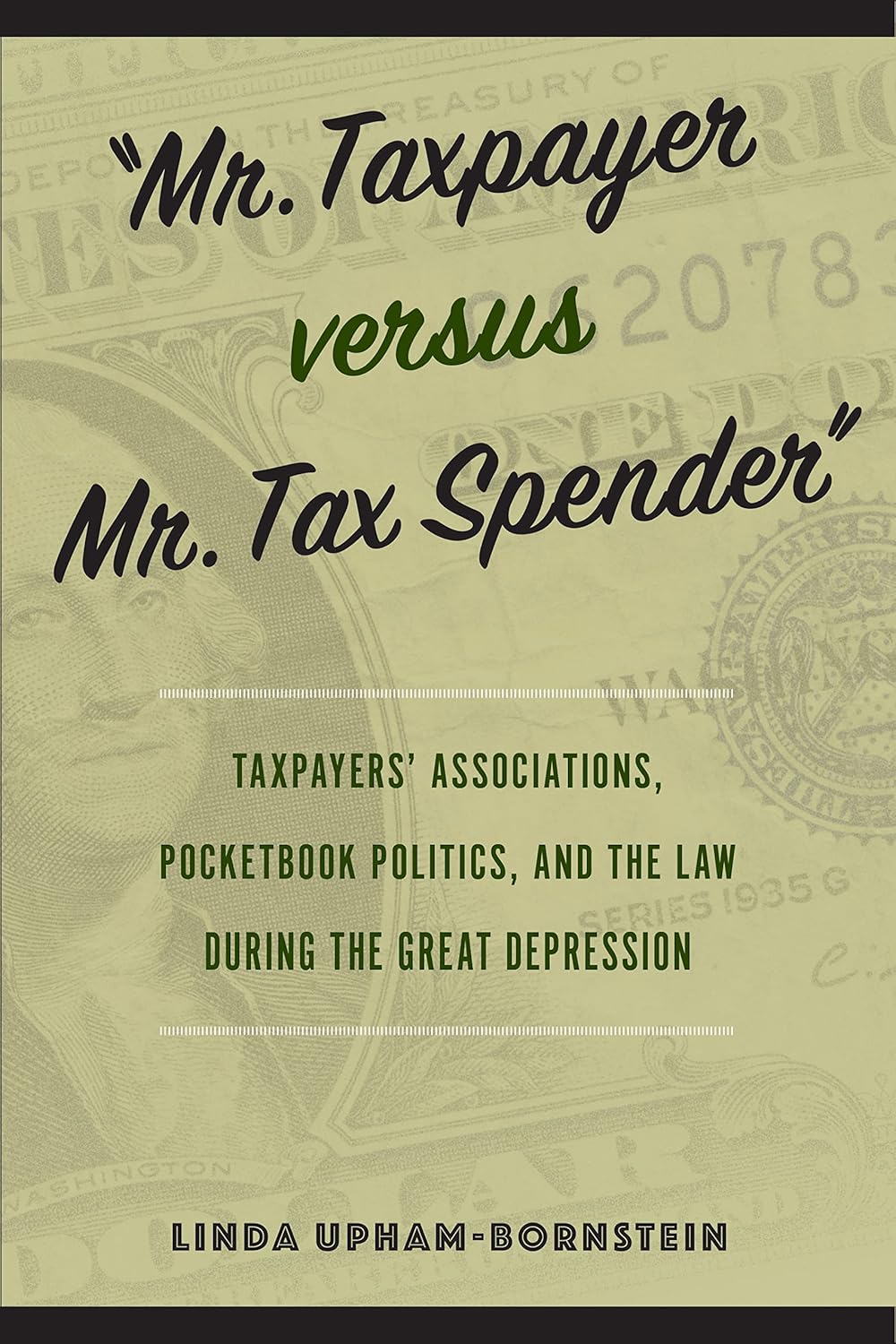
But by the 1970s, taxpayer groups had become something different. Less concerned about the burden of paying taxes, they focused instead on transforming the nature of modern government. “Opposition to taxes since the 1970s has concentrated more on vindicating the rights of taxpayers than on reducing their tax bills,” writes Linda Upham-Bornstein in her new book, Mr. Taxpayer Versus Mr. Tax Spender: Taxpayers' Associations, Pocketbook Politics, and the Law During the Great Depression. “Depression-era taxpayers’ groups worked for government that was better and less expensive, not government that was so small and feeble that it could barely govern.”
Understanding Resistance
Upham-Bornstein’s book sheds much-needed light on the history of America’s antitax movements. She begins with a discussion of antitax groups in the 19th century and ends with a brief discussion of anti-government groups in the 1980s and beyond.
But most of the book takes a hard look at the antitax agitation of the 1930s. And that focus makes sense, not least because the sheer size and ambition of the New Deal — including both its spending and its tax programs — tends to obscure our view of opposition movements.