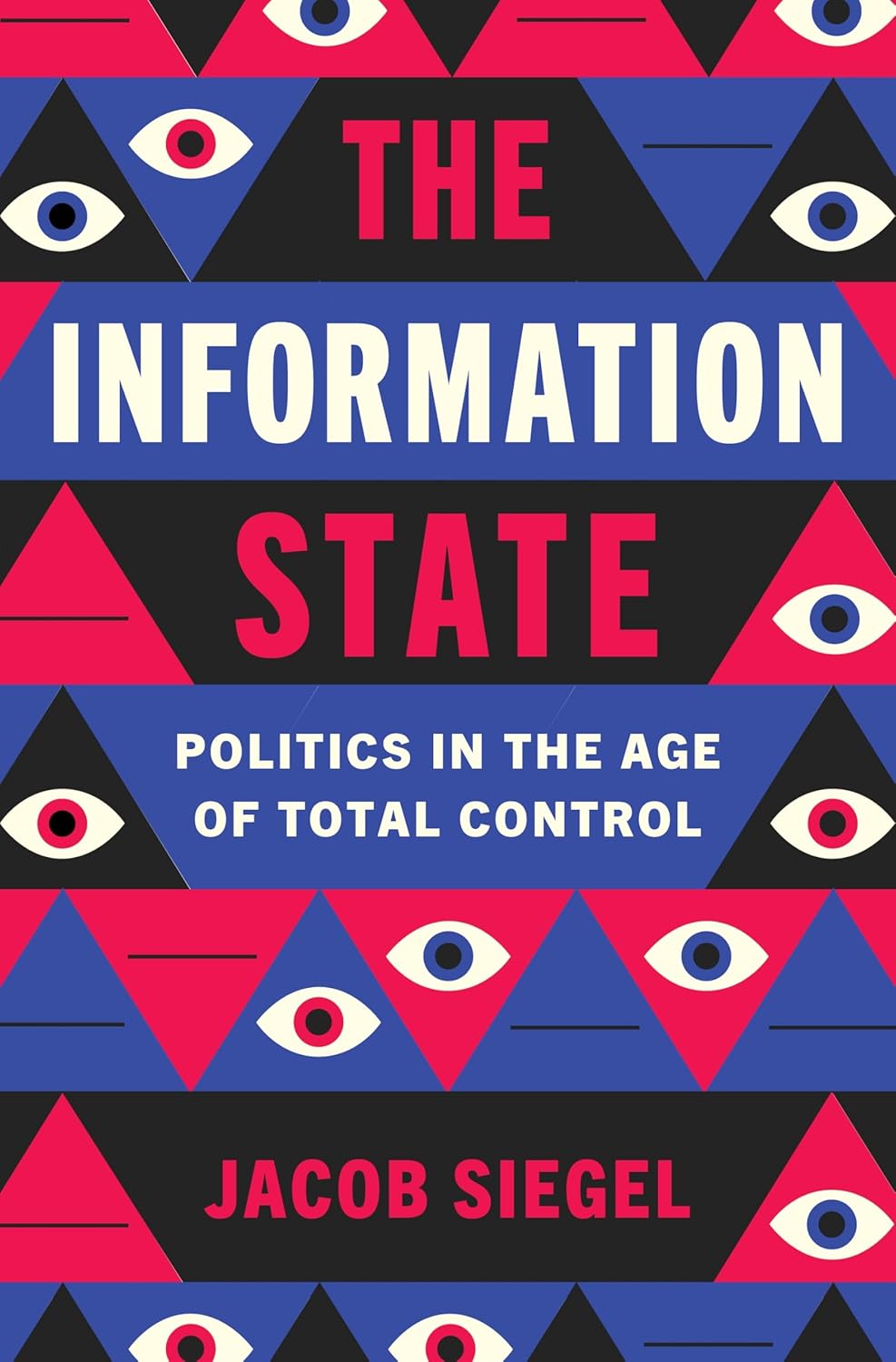
The Information State examines the ways states have sought to collect, control, and wield information going back to the France of Louis XIV. Siegel’s narrative lays special emphasis on two previous periods of US history in which rapid technological change coincided with foreign military excursions: the presidency of Woodrow Wilson and the Vietnam era. World War I, by Siegel’s account, was the founding moment of modern state propaganda, justified then as now by the need to counter foreign threats. Some of the era’s leading intellectuals, driven by faith in progressive technocracy, went to Washington to support the federal government’s use of new media tools to tame the unruly masses. Something similar happened in the 1960s, when the “best and the brightest” sought to instrumentalize cutting-edge information technology for hard and soft power ends as well as domestic crisis management.
Both of these prior episodes ended in ignominy. Wilson’s Committee on Public Information (CPI) was disbanded toward the end of his presidency, and some of its most prominent collaborators, like Walter Lippmann, came to regret their participation. Later, the arrogance of the Johnson administration officials who mistook their computer simulations for the actual Vietnam war helped deflate the pretensions of elite technocratic rule for a generation. Meanwhile, the abuses of the 1960s security state in covert enterprises like the FBI’s COINTELPRO prompted Congress to enact new civil liberties protections.
Siegel argues that even though these previous periods of overreach provoked a backlash, much of the damage was never undone. When it comes to Wilson, he writes, his “greater legacy endured.” Even with the CPI gone, “the functions of propaganda, censorship, and publicity diffused throughout countless government offices, public relations agencies, military and intelligence bureaus, and advertising firms.” Likewise, he sees the establishment of FISA courts as a mostly symbolic victory against state surveillance of American citizens. FISA, he says, “is still held up as a model of effective oversight,” but in fact it has “turned into a rubber stamp.”
The years since 2022, when the Twitter files were released, have seen a comparable pendulum swing against the anti-disinformation crusade that began the previous decade. Siegel draws a parallel between the ascendance of Warren G. Harding in 1920, elected “with a mandate to roll back the excesses of the Woodrow Wilson administration,” and Trump’s return to office in 2024. In both elections, voters—a much larger majority of them in 1920—turned against an administration that had attempted to use emergency measures to suppress criticism.