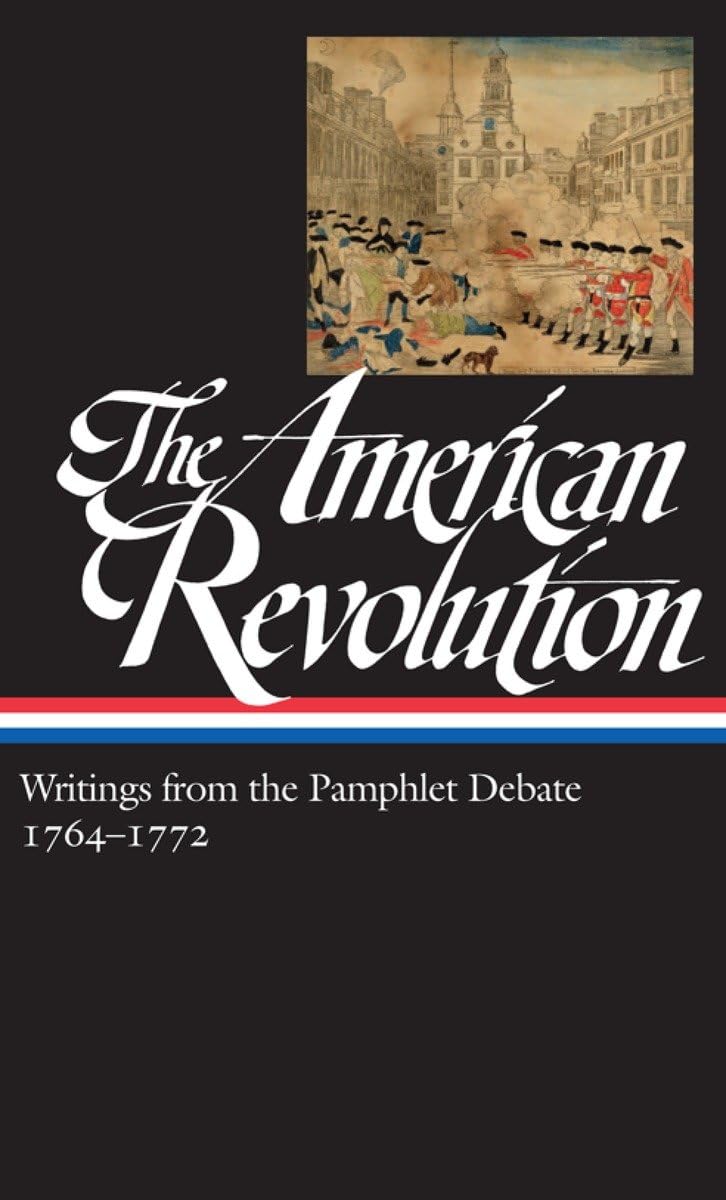
One volume covers pamphlets from 1764 to 1772, and the other covers 1773 to 1776. Are these in the nature of the British and the Americans explaining themselves to each other, or are they drawing battle lines?
They’re doing both. They’re certainly rhetorical — trying to convince their audience of their case that would be no different than the debates we have today. They’re making a case for their position; when opponents bring up a point, they’re trying to answer that point. Nobody is standing above examining these things from a disinterested point of view; everybody involved in the debate has a point of view. It would be similar to people arguing today about the Iranian deal — some people arguing for it and other people arguing against it.
The issues began with representation — whether the colonists were represented in the House of Commons — and then got into the issue of sovereignty. The colonists have to move and try to explain themselves because they had been accepting parliamentary regulation of their trade going back to the 17th century, and yet they weren’t willing to accept taxation. The English were saying you can’t divide those two things. It came down to sovereignty, which was the most important doctrine of 18th-century political thinking, which said that there has to be in every state one final, supreme, indivisible, law-making authority.
In 1774, all of the leading intellectuals — John Adams, Alexander Hamilton, Thomas Jefferson — all decide that Americans are no longer under Parliament at all and were tied solely to the king. Historians would call this the commonwealth theory of the empire from the Statute of Westminster of 1931 that established the modern English commonwealth where Canada and Australia and New Zealand have independent parliaments. That’s what the colonists were arguing by 1774.
The Declaration of Independence is quite curious. They charge George III — you’ve done this, you’ve done that — but they never mention Parliament even though it had passed the Stamp Act and the Townshend Acts. These guys are lawyers, and they want to establish their position that, by 1776, they have no ties to England except through the crown. It’s interesting to follow.
By the time of the Declaration of Independence, was it less about independence for the colonists than about having their own parliament?
No, by this point, they’re cutting the final ties. They had already decided that Parliament had no right to legislate for them in any way but that they had a common executive. When they come to the Declaration, they’re breaking that final tie — to the king, to George III.