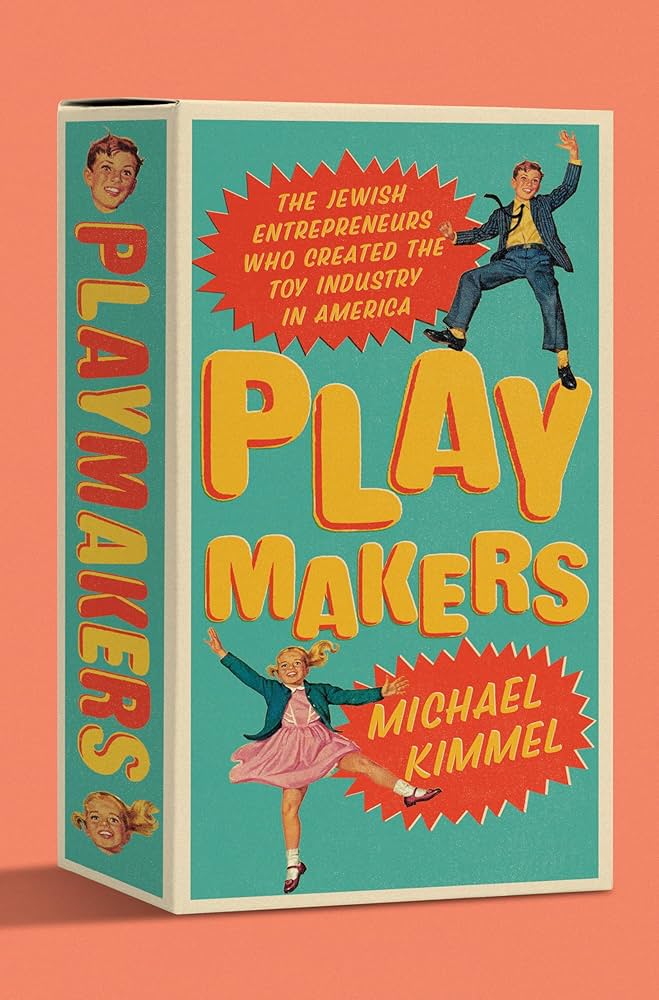
In fact, as Michael Kimmel describes in his new book, “Playmakers: The Jewish Entrepreneurs Who Created the Toy Industry in America” (Norton), the Teddy bear was good for dolls. It was good for toys of all kinds. Before the Teddy bear, the toy market did not exist in the sense that it does now. For much of the nineteenth century, dolls were made at home from corn husks, clothing scraps, and the like, or produced from expensive, fragile bisque porcelain and kept high up on shelves to be admired by grownup collectors, not pawed by clumsy kids. Most children had marbles, hoops, balls, and little else. Few people bought toys from stores. The success of the Teddy bear changed that, accelerating off a race to supply kids with the accoutrements of their leisure. Today, parents will not be surprised to learn, the American toy business is valued at roughly forty-two billion dollars.
Kimmel is a distinguished professor emeritus of sociology and gender studies at Stony Brook University, where he founded the Center for the Study of Men and Masculinities. His other books, of which there are many, have titles such as “Angry White Men: American Masculinity at the End of an Era” and “The Gender of Desire: Essays on Male Sexuality.” He began writing “Playmakers” as a family history. Morris Michtom was his great-great-uncle on his mother’s side, though he inherited none of the Teddy spoils; his own great-grandfather, Michtom’s half brother, never worked at Ideal, the toy company that Michtom founded.
As Kimmel poked around, he discovered that Michtom was hardly the only immigrant or first-generation Jew to have had a major part in the development of the toy business. Hasbro, the company behind hits like Mr. Potato Head, Transformers, and My Little Pony, was founded by Hillel, Herman, and Henry Hassenfeld, three brothers who fled pogroms in Kishinev and arrived in New York just after the Teddy bear débuted. Joshua Lionel Cowen, born on the Lower East Side, to Jews who came from the border of Poland and Lithuania, created Lionel Trains. Louis Marx, a round, bald little man who was proclaimed the “toy king” of America by Time, was the Brooklyn-born son of Austrian Jewish parents. Model airplanes, hula hoops, tiddlywinks, and even Chinese checkers turned out to be Jewish creations, and the list goes on. Few of the inventors of these toys enjoyed what could be called a carefree youth. Many came from grinding poverty and squalor. Yet, Kimmel argues, they ended up shaping American childhood as we know it.