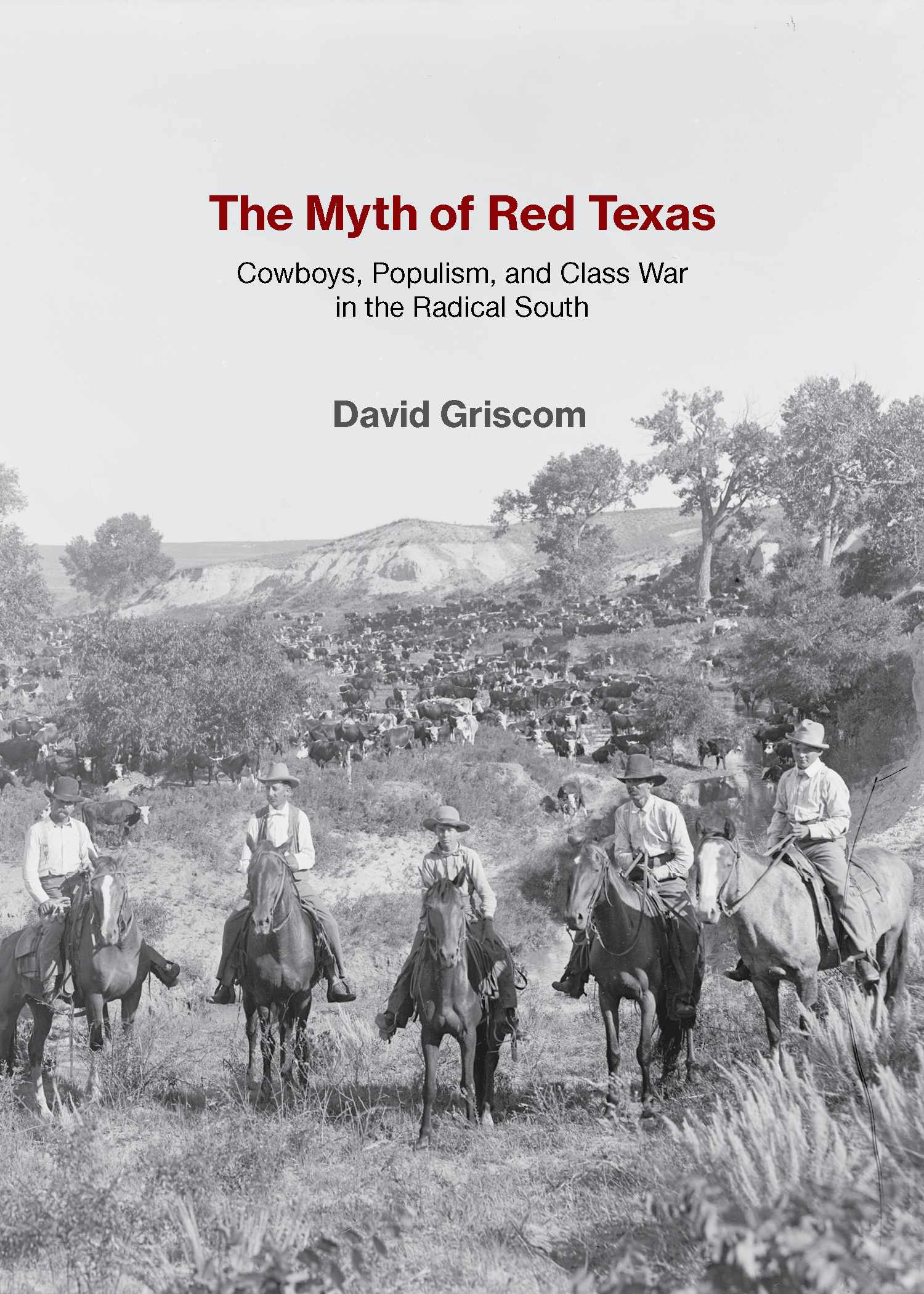
In 1885, two years after the Great Cowboy Strike, blizzards swept from the north across the Texas Panhandle. Unlike the buffalo, who turn to face the bad weather, when cattle smell a storm like this one, they (quite reasonably) move in the opposite direction. Picture these massive herds shuffling southward, toward safety and warmth of the canyons and valleys they traditionally sought in bad weather. Unbeknownst to them, they were marching to their death.
The once open-range grasslands were now covered with miles upon miles of so-called “drift fences,” consisting largely of barbed wire, which landowners used to stake their claim on broad swaths of territory. As a result, these herds pushed up against the fences but were unable to pass. They walked the seemingly never-ending fence line as the freezing winds cut through them. Eventually, the panicked cattle pressed against each other for warmth, a final respite as the cold closed in. When the storms receded, cowboys found mountains of frozen cattle huddled upon one another. One cowboy in the Texas Panhandle described the scene:
“I could have walked for miles on dead animals, stepping from one to another. These were mostly natives belonging to northern ranges which had drifted across the burned prairie. As long as they could travel, cattle kept alive. Finally, the drift fence halted them. Here they stopped … bunched close together as for a last protection, helplessly dropped in their tracks and froze.”
This was the great “Die-Up” of 1885-86. The land in Texas and across the West was changing. The previous decade had seen abundant rain, which nourished the grasslands of the Southern Plains. Capitalists invested heavily in the cattle industry, and ranchers felt their fortunes were made. But this climate was only temporary, and soon came the extreme weather—fire, droughts, and blizzards. Land became even more precious. Defending your finite grasslands from your competition’s hungry cattle became a business necessity. As a result, big Texas ranchers had gone crazy for barbed wire; to them, this new technology meant security, prosperity, and property rights. The cattle weren’t the only casualty; barbed wire was also killing off a way of life. The idea of the open range, that land and water belonged to all, was on its last breath. For the landless cowboys, the sheepherders, and the small landholders, this tool was choking off the land. They knew it as the “devil’s rope.”