How will America’s 250th birthday influence our memory as a people? Many nostalgically remember the tall ships coming into the harbor for the country’s bicentennial, an experience that will be repeated this year. Maintaining the memory of a nation’s origin story is a necessary task for perpetuating a republic and unifying a people. The anniversary of the signing of the Declaration of Independence is an opportunity to revisit our national narrative, including the principles that define our experiment in self-government.
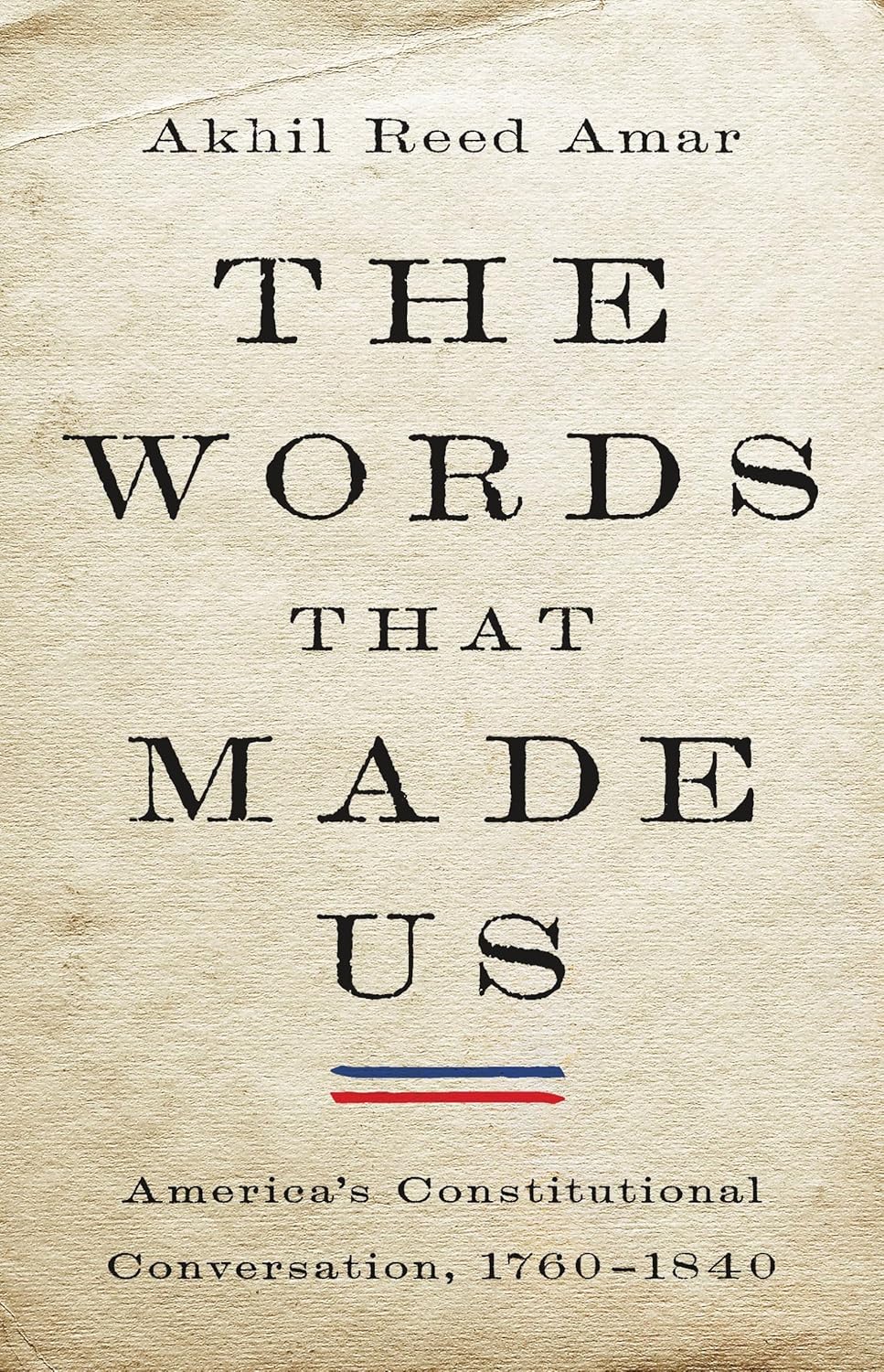
Akhil Reed Amar’s book The Words That Made Us is another attempt at getting American history right. Now five years old, it’s worth revisiting as we approach our country’s quarter-millennium. Amar’s contention is that the real writers of the Declaration of Independence and the Constitution were the American people: Those documents were the culmination of a widespread conversation among the citizenry. Two and a half centuries later, they still belong to us. Reading works like Amar’s critically is exactly the kind of engagement we need to revive our familiarity with our founding story.
The Words That Made Us is a spirited and enjoyable read filled with much good. It is both scholarly and popular, a mix of history and legal analysis, and it appeals to a wide audience. The great men of history, such as George Washington, are given their due, but so are everyday Americans. This is a fitting approach for understanding the character of America, which has been formed by both public opinion and statesmanship.
The most significant thematic focus of The Words That Made Us is on deliberation and constitutional conversations between the colonies and Great Britain and among the American people and the states. Across the generations, Amar aptly writes, history’s kaleidoscope continued to turn and create new patterns of constitutional discourse. Some issues tumbled into view, others fell out of sight, and still others reemerged in vivid new configurations as public servants and private citizens at all levels of government and society participated in a boisterous and sophisticated conversation about legal and political first principles.
Amar highlights how essential newspapers, political cartoons, and artwork were for building a consensus and encouraging political involvement (churches were also central for disseminating and forming American principles). The network of newspapers was particularly strong in America compared to other countries, and it both reflected and formed a republican character among the citizenry. Cleverly, Amar points out that the Stamp Act burdened paper businesses, including newspapers. In protesting against the Stamp Act, Americans were defending not only the principle of representation but freedom of speech.