I was bleary-eyed on a delayed flight when I spotted a New York Times article about Kerri Greenidge, a historian of Black political life and memory. It took me a moment to realize I was reading a postmortem, written while the body was still warm.
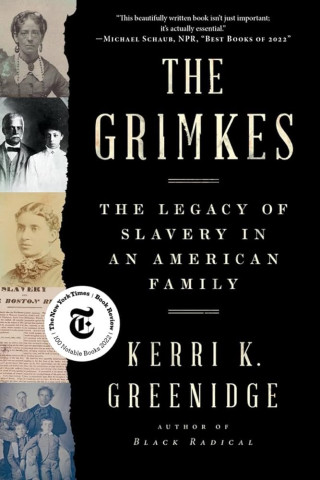
The source of Greenidge’s downfall, The Grimkes: The Legacy of Slavery in an American Family, had only recently been treated as a triumph. In 2022, the book had been widely praised as one of the best history books that year, and selected as a finalist for the National Book Critics Circle Award. It fit her profile: Greenidge’s previous work is held in high regard, too.1 I was somewhat aware that a few determined scholars had challenged several of the book’s citations, with varying degrees of specificity. Given the subject and the field, I assumed that was par for the course.
What followed was anything but: The publisher now appears to have stopped listing the book, and Greenidge is no longer employed by Tufts.
Why are we reading about this now? I have no idea, and I don’t think the facts reported here explain the scale of what followed. Either far more happened than it tells us, or the response was wildly disproportionate. Instead of resolving that central question, the piece gives us the wreckage without explaining the force of the impact: a secret external review, an unnamed complainant, a requested restraining order, a vanished book, and a vanished career. It leaves the reader to assemble the crime scene from fragments, then declines to investigate the most damning ones.
What I can confirm is that the article offers no convincing explanation for a response this totalizing. It does not solve the mystery. It compounds it.
So let’s go with what little we do know: Greenidge, who was allegedly surprised the Times cared (a weird use of space in place of something substantial and useful to the reader), confirmed that the Tufts review began with complaints from “a white woman scholar.” She declined to name that scholar, whom she had sought a restraining order against. The article names Myra C. Glenn as a prominent critic, but it does not establish that Glenn was the unnamed complainant.
That distinction matters, as does the unexplored question of how an academic dispute reached the point of a restraining-order request. It’s notable in any profession, I’d hope, and certainly this one. I’ve seen and felt my share of ire, but never anything like that.