
The attack on Sumner poured gasoline on a smoldering fire. More than 1 million copies of his speech “The Crime Against Kansas” were circulated. A little-known abolitionist named John Brown heard the news and was moved toward violent rebellion. The newly founded Republican Party, which emerged from the ashes of the establishment Whigs, campaigned that year on “Bleeding Kansas” and “Bleeding Sumner,” paving the way for Abraham Lincoln and secession. Outraged white people finally understood Sumner’s point: As long as the slaveholder oligarchy persisted, no one was free.
In time, the symbols loomed larger than the men themselves: Sumner’s chair was left empty as a testament to the brutality of the “Slave Power,” and pieces of the shattered cane were hoarded like relics of the true cross. Yet as the memory of the Civil War faded, the meaning of the symbols changed; the names Sumner and Brooks became emblems of partisan rancor—a cautionary tale about the breakdown of civil discourse. As Senator Susan Collins of Maine put it in 2010: “The weapon of choice today is not the metal-topped cane, but poisonous words.”
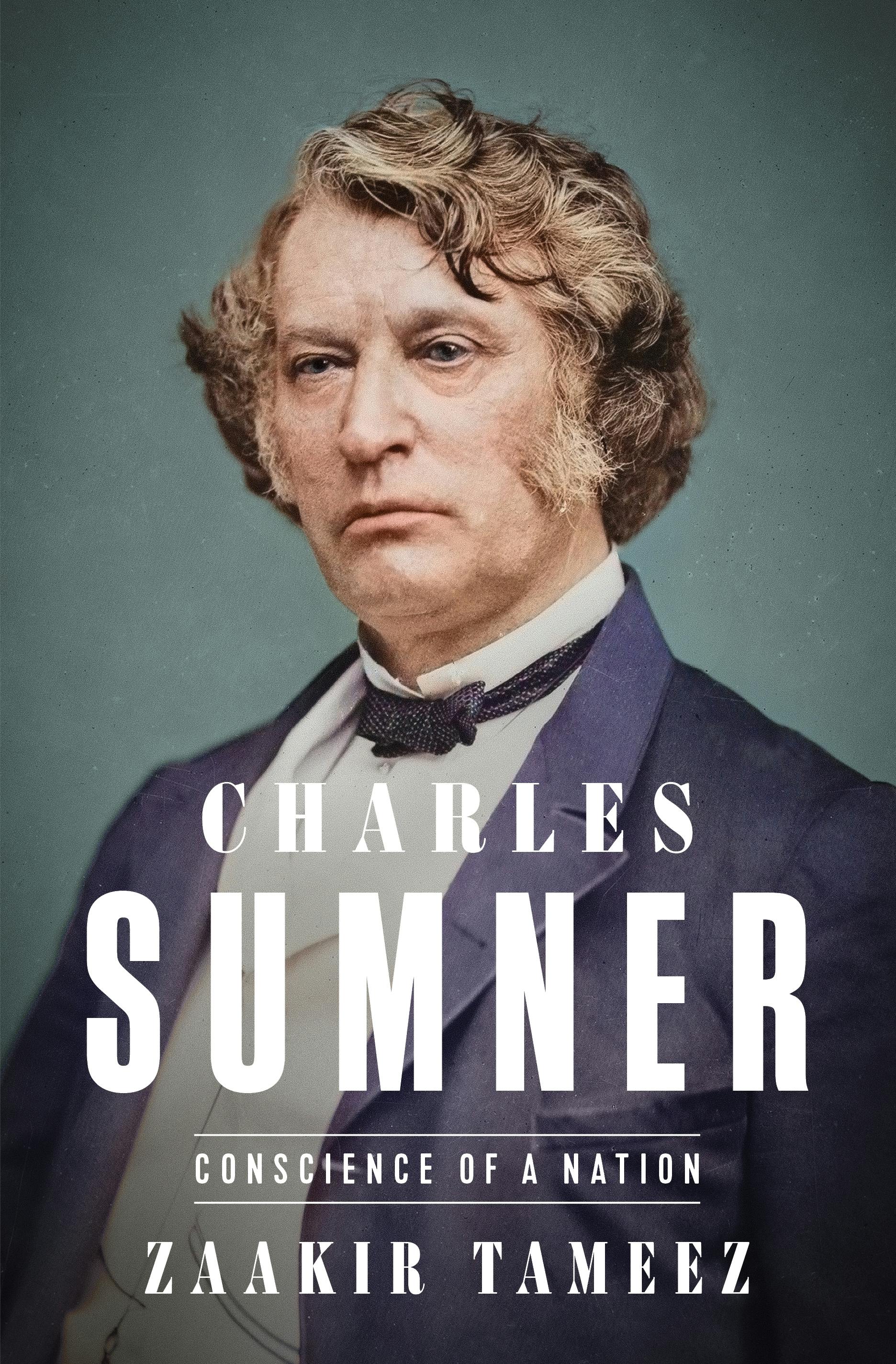
Over the past year, two biographers have attempted to flesh out the men behind the symbols. In Charles Sumner: Conscience of a Nation, the constitutional-law scholar Zaakir Tameez portrays his subject as the Martin Luther King Jr. of the 19th century, a man who originated key legal concepts behind civil-rights victories beyond his time. Twentieth-century historians tended to paint the senator as an ineffectual hothead, but Tameez maintains that Sumner’s in-your-face style helped shock a complacent nation into action. The case for Sumner as an underappreciated figure is stronger than it is for Brooks, a comparative mediocrity who died a year after the attack. But in The Man Behind the Cane, Paul Quigley, a Civil War historian, argues that Brooks represents an eternal archetype in American politics: “angry, alienated men” who try to expiate their failures through a “spectacular act of public violence.”
Today, political violence is again on the rise. Angry, alienated men have taken shots at the president, stormed the Capitol, and attacked state legislators in their homes. Each flare-up leads to a round of calls to tone down the rhetoric—even phrases such as 86 47, which anyone who works in the hospitality industry can tell you is not a violent threat—on the assumption that “poisonous words” lead to evil deeds. But in citing the infamous caning, Collins and others have lost sight of a crucial distinction. Civil-rights movements that challenge an oppressive status quo usually provoke a disproportionate response; in fact, the strategy of nonviolent resistance depends on it. The lives of Sumner and Brooks demonstrate that harsh words do incite violence—but also that they can topple the structures that perpetuate it.