A Changing Blue-Collar Union Culture
In the last half-century, the culture of blue-collar unionism in the Big Apple has become far less Mafia-influenced, due in large part to successful union democracy and reform struggles. In the 1990s, a longtime leader of Teamsters Local 804 in Queens, Ron Carey, became the international union president, with the backing of the Teamsters for a Democratic Union (TDU) reform caucus and its chapters around the country.
Under Carey’s leadership, the Teamsters conducted a successful nationwide strike at United Parcel Service (UPS), the union’s largest employer, in 1997. Local 804 continues to be a model Teamster local today, nurturing rank-file-activists like Anthony Rosario, a UPS veteran named “2025 Labor Organizer of the Year” by In These Times, because of his efforts to organize nonunion Amazon workers.
The changes, made possible when IBT rank-and-filers won the right to vote on their top officers, became an inspiration for union reformers elsewhere. Just three years ago, United Auto Workers members — long dominated by the corrupt and undemocratic Administration Caucus — used referendum voting to put opposition candidates like now-President Shawn Fain in office, after decades of tightly controlled convention elections that favored the incumbents.
But in old-fashioned business unions — still run from the top down, nationally or locally — institutional loyalty runs deep. Where grifters and goons still hold power in New York City, they’re usually savvy enough to deflect criticism of themselves by claiming that internal dissent threatens the very existence of trade unionism itself. In the Trump era, rank-and-file defeatism — about the inevitability of corruption in politics, big business, and organized labor — is even easier for incumbents to exploit.
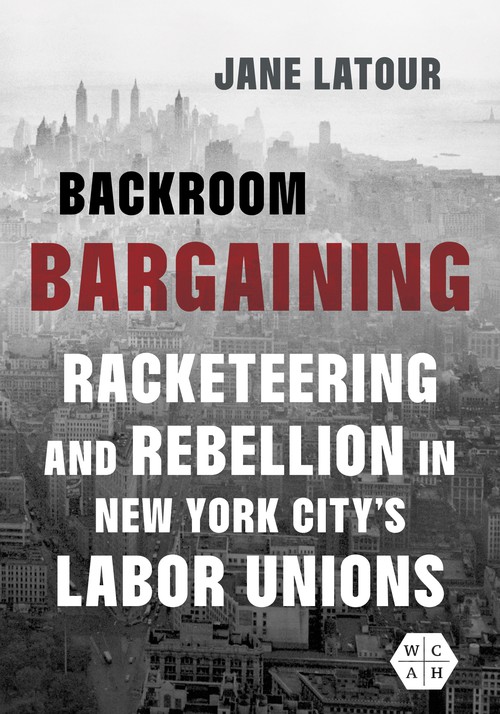
This is the local labor terrain explored by the late Jane LaTour, a much-beloved labor organizer, journalist, and advocate for women in the building trades, in Backroom Bargaining: Racketeering and Rebellion in New York City’s Labor Unions. Her previous book, Sisters Inside the Brotherhoods, was an outgrowth of her work for the Women’s Project of the Brooklyn-based Association for Union Democracy (AUD). Her new volume again utilizes oral history interviews, this time with predominantly male building service employees, painters, carpenters, utility workers, maritime union members, and Teamsters who joined FORE to fight labor-management corruption in the construction industry.