“Money makes the world go round,” the cynical old maxim, and Broadway show tune, runs. “Follow the money,” a maxim minted in the film “All the President’s Men,” has become just as familiar. Yet in practice we rarely follow the money far enough to discover how it actually moved, or who set it in motion. The financing of the material conditions of history—how buses are hired for a great march; who pays for the guerrillas’ guns and grub—mostly remains opaque in our chronicles. When we look at the famous painting of Washington crossing the Delaware, the last question we ask is the first one we should: Who paid for the boat?
One reason for this absence is that economic history seems boring when compared with military history, and that economic forces are hard to dissolve into a stream of stirring, distinct individual choices. Money flows more than it leaps; that’s why we follow economic change in charts, with slow, incremental movements up and down, and arrows telling us what is really going on behind the jumpy shadow puppets of politics. Who won the battle? can be simplified, dramatically, into strategic decisions and pivotal moments. Who paid for the soldiers to get there?—and thus made it possible for the battle to be fought at all—usually involves a long-distance jumble of government bonds, loans, and guarantees complex enough to send us back to the battle itself. “One if by land, and two if by sea” is a memorable phrase as we picture Paul Revere on his midnight ride; learning that the British were coming by sea because, so to speak, shifts in Amsterdam bond markets affected British decisions about financing ships feels too remote and intricate to capture our attention.
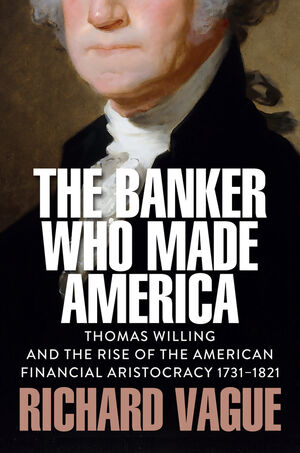
Any number of good books and studies aim to remedy this gap in our understanding, and one of the best ways of doing it, paradoxically, is to fix complicated impersonal finances into a figure of a single person who can be thought to have made military-style strategic decisions. In Richard Vague’s new book, “The Banker Who Made America: Thomas Willing and the Rise of the American Financial Aristocracy, 1731-1821” (Polity), we have a hero worthy of the enterprise. Indeed, it is telling that Willing’s name is presented only in the subtitle, on the understandable ground that, without giving the role he played top billing, his name would mean nothing.