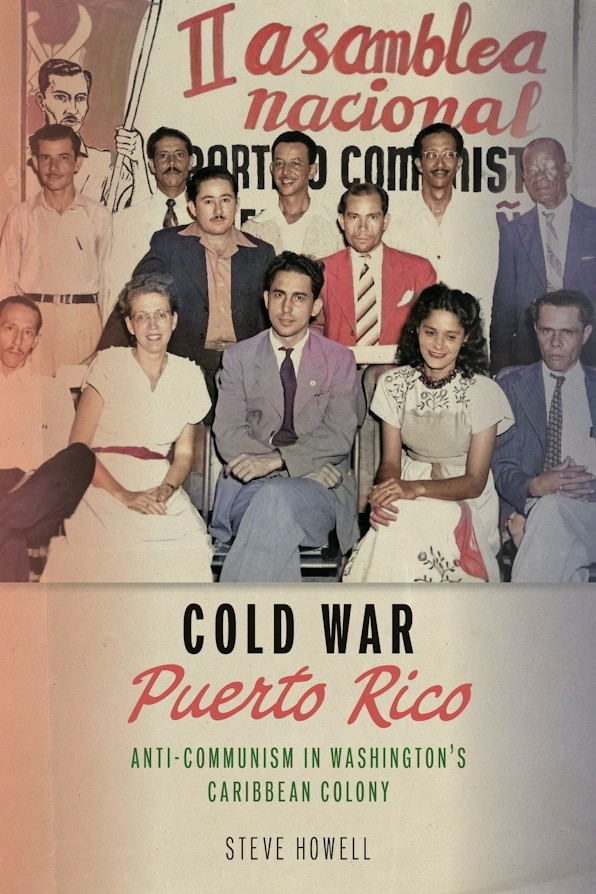
Given Puerto Rico’s crucial regional importance, the question is not why the United States held onto it — long after conceding independence to the Philippines — but how it did so. Journalist Steve Howell’s new book, Cold War Puerto Rico: Anti-Communism in Washington’s Caribbean Colony, offers both a comprehensive and deeply personal answer. The son of an exiled American architect who came to the island to work for the New Deal governor Rexford Tugwell, Howell only began earnestly digging into his father’s past after his death. What he uncovered, and presents capably in this rich and informative work, is the story of Puerto Rico’s struggle for autonomy and the American repression that repeatedly smothered it, all while claiming to uphold the principles of international self-determination.
Meeting in Placentia Bay, Newfoundland, amid an escalating war effort, Franklin D. Roosevelt and Winston Churchill signed the Atlantic Charter, which laid out a vision for a postwar order that would bind the Allies in a web of international cooperation, ensuring freedom of the seas, disarmament, and an end to territorial expansion. It also promised the right of all peoples to choose their form of government, giving people in Puerto Rico, then an “unincorporated territory” of the United States, grounds to hope they might break free. In inaugurating this new and profoundly moral vision of a postwar order, Washington created a predicament: how to hold onto what was effectively a colonial possession while publicly championing self-determination.
The history Howell tells shows, first, how Washington responded to this challenge by nominally changing the terms of rule and incorporating elements of consent to create the illusion of a compact. In 1952, against the backdrop of widespread suppression, strikes, and a violent nationalist insurrection on the island, Public Law 600 — the so-called Gag Law — was passed by the Puerto Rican legislature, giving the island Commonwealth status and the right to draft its own constitution.
Abroad, American officials presented this as a way to placate the United Nations and secure Puerto Rico’s removal from the list of non-self-governing territories. In Puerto Rico, however, they unilaterally altered the constitution — removing a bill of social and economic rights — while retaining near-total control over the island’s defense, currency, and trade.
The parallel, and more comprehensive, story Howell tells is of the United States’ shifting strategies of intimidation and repression, which drove his family from the island to the United Kingdom and continued to haunt their lives even there. The first phase saw the imposition of the Gag Law, which criminalized even the hypothetical advocacy of independence and gave the state license to surveil and then round up thousands of suspected nationalists and critics of the proposed Commonwealth.