Menu
Excerpts
Exhibits
Collections
Originals
Podcasts
Categories
Map
Search
Excerpts
Curated stories from around the web.
Load More
Viewing 11,301–11,350 of 15,295
Sort by:
New on Bunk
Publish Date
New on Bunk
partner
Meatpacking Work Has Become Less Safe. Now it Threatens Our Meat Supply
Protecting the food supply chain means protecting workers.
by
Christopher Deutsch
via
Made By History
on
May 1, 2020
Mark Twain in the Time of Cholera
The disease afflicted the author as he was writing what would become "The Innocents Abroad."
by
Johnny Miller
via
National Review
This publication restricts nonsubscriber access to some or all of its articles.
on
April 16, 2020
The League of Revolutionary Struggle and the Watsonville Canning Strike
More than anything else, the Watsonville Canning strike was a fight against national oppression.
by
Peter Shapiro
via
Viewpoint Magazine
on
August 30, 2018
How Poor, Mostly Jewish Immigrants Organized 20,000 and Fought for Workers Rights
These women came ready to fight.
by
Meagan Day
via
Timeline
on
March 9, 2018
The Socialist Party in New Deal–Era America
The 1930s Socialist Party is often seen as a marginal force, but its successes laid the groundwork for the next generation of organizing.
by
Shawn Gude
,
Jake Altman
via
Jacobin
This publication restricts nonsubscriber access to some or all of its articles.
on
October 1, 2019
May Day's Radical History
The date of Occupy's strike has ties to the eight-hour day movement, immigrant workers and American anarchism.
by
Jacob Remes
via
Salon
on
April 30, 2012
Jubilee Jim Fisk and the Great Civil War Score
In 1865, a failed stockbroker tries to pull off one of the boldest financial schemes in American history: the original big short.
by
David K. Thomson
via
Boston Globe Magazine
This publication restricts nonsubscriber access to some or all of its articles.
on
April 22, 2020
If You Think Quarantine Life Is Weird Today, Try Living It in 1918
From atomizer crazes to stranded actor troupes to school by phone, daily life during the flu pandemic was a trip.
by
Michael Waters
via
Slate
This publication restricts nonsubscriber access to some or all of its articles.
on
April 17, 2020
partner
The Sting of ‘Thank You for Your Service’
The benefits that come with serving the country have withered in recent decades.
by
John Worsencroft
via
Made By History
on
April 29, 2020
Disease Has Never Been Just Disease for Native Americans
Native communities’ vulnerability to epidemics is not a historical accident, but a direct result of oppressive policies and ongoing colonialism.
by
Jeffrey Ostler
via
The Atlantic
This publication restricts nonsubscriber access to some or all of its articles.
on
April 29, 2020
The War on Coffee
The history of caffeine and capitalism can get surprisingly heated.
by
Adam Gopnik
via
The New Yorker
This publication restricts nonsubscriber access to some or all of its articles.
on
April 20, 2020
Death Can’t Take the Stories Our Elders Pass On
The pandemic doesn’t just threaten our loved ones, but knowledge of our past — so Nelson George went and found his.
by
Nelson George
via
Medium
on
April 21, 2020
Medicare for All in the Age of Coronavirus
A history of U.S. health care debates.
by
Nancy Tomes
via
Perspectives on History
on
April 24, 2020
A Brief History of the Gig
The gig economy wasn’t built in a day.
by
Veena Dubal
via
Logic
on
April 27, 2020
The Coronavirus War Economy Will Change the World
When societies shift their economies to a war footing, it doesn’t just help them survive a crisis—it alters them forever.
by
Nicholas Mulder
via
Foreign Policy
This publication restricts nonsubscriber access to some or all of its articles.
on
March 26, 2020
Teaching History Is Hard
Bunk Executive Director Ed Ayers on the importance of teaching students to think for themselves.
by
Ed Ayers
via
Medium
on
April 28, 2020
The History of the Hawaiian Shirt
From kitsch to cool, ride the waves of undulating popularity of a tropical fashion statement.
by
Teddy Brokaw
via
Smithsonian Magazine
on
April 16, 2020
partner
The Founders Never Intended the U.S. Postal Service to be Managed Like a Business
The mail delivery agency is supposed to serve the public good — not worry about profit.
by
Richard R. John
via
Made By History
on
April 27, 2020
Are You a Seg Academy Alum, Too? Let’s Talk.
Reflecting on the impact of an education in an institution deliberately set up to defy court-ordered desegregation.
by
Ellen Ann Fentress
via
The Bitter Southerner
on
June 7, 2019
partner
How New York Became the Capital of the Jim Crow North
Racial injustice is not a regional sickness. It's a national cancer.
by
Jeanne Theoharis
,
Brian Purnell
via
Made By History
on
August 23, 2017
Who Was the First Black Child to Go to an Integrated School?
She was a high-schooler in Iowa more than 150 years ago.
by
Russell Ellsworth Lovell II
via
The Conversation
on
September 10, 2019
The University of Texas’s Secret Strategy to Keep Out Black Students
Long-hidden documents show the school’s blueprint for slowing integration during the civil-rights era.
by
Asher Price
via
The Atlantic
This publication restricts nonsubscriber access to some or all of its articles.
on
September 19, 2019
Philanthropists Will Not Save Us
All of Andrew Carnegie’s arguments were devoted to explaining why inequality ultimately was good: not only for its beneficiaries, but for poor people as well.
by
Kim Phillips-Fein
via
Public Books
on
October 17, 2018
The Young Lords’ Revolution
A new book looks at the history of the Afro-Latinx radical activist group and how their influence continues to be felt.
by
Ed Morales
via
The Nation
This publication restricts nonsubscriber access to some or all of its articles.
on
March 24, 2020
Long-Forgotten Cables Reveal What TIME's Correspondent Saw at the Liberation of Dachau
Two copies of the first-person account were tucked away, largely untouched until after his death. Now, his family is sharing his story.
by
Olivia B. Waxman
via
TIME
on
April 21, 2020
partner
How DIY Home Repair Became a Hobby for Men
It was only in the 20th century that toolboxes became staples in the homes of middle-class men.
by
Steven M. Gelber
,
Livia Gershon
via
JSTOR Daily
on
April 20, 2020
A Revolution of Values
Martin Luther King Jr. proposed a fix for America’s poisoned soul: ending the Vietnam War.
by
Peniel E. Joseph
via
Lapham’s Quarterly
on
April 6, 2020
A Brief Criminal History of the Mask
How a New York law on “masquerading” passed in the early nineteenth century has been used—and abused—in the decades since.
by
Melissa Gira Grant
via
The New Republic
This publication restricts nonsubscriber access to some or all of its articles.
on
April 21, 2020
Typhoid Mary Was a Maligned Immigrant Who Got a Bum Rap
Now, she's become hashtag shorthand for people who defy social distancing orders.
by
Katherine A. Foss
via
The Conversation
on
April 24, 2020
Slavery Documents from Southern Saltmakers Bring Light to Dark History
For one West Virginia community, the acquisition is a missing puzzle piece to questions about slavery in the state.
by
Makeda Easter
via
Los Angeles Times
on
April 16, 2020
Numbering the Dead
A brief history of death tolls.
by
Shannon Pufahl
via
New York Review of Books
This publication restricts nonsubscriber access to some or all of its articles.
on
April 21, 2020
partner
President Trump’s Immigration Suspension Has Nothing to Do With Coronavirus
Restrictionists have long sought to cut U.S. immigration — to zero.
by
Carly Goodman
via
Made By History
on
April 22, 2020
The Evolution of the American Census
What changes each decade, what stays the same, and what do the questions say about American culture and society?
by
Alec Barrett
via
The Pudding
on
March 30, 2020
“Destroyer and Teacher”: Managing the Masses During the 1918–1919 Influenza Pandemic
Revisiting the public health lessons learned during the 1918–1919 pandemic and reflecting on their relevance for the present.
by
Nancy Tomes
via
PubMed Central
on
April 1, 2010
Indian Removal
One of the world's first mass deportations, bureaucratically managed and large-scale, took place on American soil.
by
Claudio Saunt
via
Aeon
on
April 23, 2020
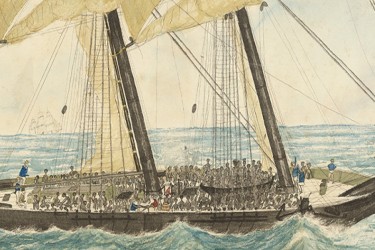
Infection Hot Spot
Watching disease spread and kill on slave ships.
by
Manuel Barcia
via
Lapham’s Quarterly
on
April 22, 2020
Racism After Redlining
In "Race for Profit," Keeanga-Yamahtta Taylor walks us through the ways racist housing policy survived the abolition of redlining.
by
N. D. B. Connolly
via
Black Perspectives
on
April 21, 2020
America's Devastating First Plague and the Birth of Epidemiology
In the 1790s a plague struck the new American nation and killed thousands. Noah Webster told the story of pandemics and invented a field.
by
Joshua Kendall
via
TIME
on
April 4, 2020
What the Civil War Can Teach Us About COVID-19
Lessons from another time of great disillusionment.
by
Jason Phillips
via
OUPblog
on
April 18, 2020
partner
We Had a Better Social Safety Net. Then We Busted Unions.
COVID-19 has taught us all just how frayed our social safety net has become, and how its holes make us all more vulnerable.
by
Lane Windham
via
HNN
on
April 19, 2020
partner
The Other Pandemic
In addition to COVID-19, another pandemic is preying upon the human spirit, nourished by a vulgar bigotry that has gone viral.
by
Alan M. Kraut
via
HNN
on
April 12, 2020
Another Time a President Used the “Emergency” Excuse to Restrict Immigration
It was 1921, and it changed the character of the United States for decades.
by
Joshua Zeitz
via
Politico Magazine
on
April 22, 2020
partner
Governors Must Hold Firm on Stay-at-Home Orders
Weariness of strong government is a key American tradition. But equally important is the revolutionary idea that national governance should come from the states.
by
Liz Covart
via
Made By History
on
April 20, 2020
partner
As Our Meat, Pork and Poultry Supply Dwindles, We Should Remember Why
While worrying about our food supply, we must also worry about workers producing it.
by
Anya Jabour
via
Made By History
on
April 21, 2020
Capital of the World
The radical and reactionary currents of New York at the turn of the 20th century.
by
Kim Phillips-Fein
via
The Nation
This publication restricts nonsubscriber access to some or all of its articles.
on
August 2, 2018
partner
Coronavirus Has a Playlist. Songs About Disease Go Way Back.
Coronavirus songwriting has gone as global as the pandemic itself, creating a new genre called pandemic pop. It’s a tradition with a long history.
by
Anthony DeCurtis
via
Retro Report
on
April 17, 2020
John Muir's 1897 Case for Saving America's Forests
"God has cared for these trees, saved them from drought, disease, and avalanches; but he cannot save them from fools—only Uncle Sam can do that."
by
John Muir
via
The Atlantic
This publication restricts nonsubscriber access to some or all of its articles.
on
August 1, 1897
American Pastoral
Reflections on the ahistorical, aristocratic, and romanticist approach to "nature" elevated by John Muir, and by his admirer, Ken Burns.
by
Charles Petersen
via
n+1
on
February 26, 2010
Who Owns Anne Frank?
The diary has been distorted by even her greatest champions. Would history have been better served if it had been destroyed?
by
Cynthia Ozick
via
The New Yorker
This publication restricts nonsubscriber access to some or all of its articles.
on
September 28, 1997
The Nazis and the Trawniki Men
Decades after the war, a group of prosecutors and historians discovered the truth about a mysterious SS training camp in occupied Poland.
by
Debbie Cenziper
via
Washington Post Magazine
This publication restricts nonsubscriber access to some or all of its articles.
on
January 23, 2020
Previous
Page
227
of 306
Next
Filters
Filter by:
Categories
Belief
Beyond
Culture
Education
Family
Found
Identity
Justice
Memory
Money
Place
Power
Science
Told
Content Type
-- Select content type --
Annotation
Antecedent
Argument
Art History
Audio
Biography
Book Excerpt
Book Review
Bunk Original
Comment
Comparison
Debunk
Digital History
Discovery
Dispatch
Drawing
Etymology
Exhibit
Explainer
Film Review
First Person
Forum
Journal Article
Longread
Map
Media Criticism
Museum Review
Music Review
Narrative
News
Obituary
Oral History
Origin Story
Overview
Poll
Profile
Q&A
Quiz
Retrieval
Satire
Social Media
Speech
Study
Syllabus
Theater Review
Timeline
TV Review
Video
Vignette
Visualization
Select content type
Time
Earliest Year:
Latest Year: