Menu
Excerpts
Exhibits
Collections
Originals
Podcasts
Categories
Map
Search
Person
Sean Wilentz
Bylines
Vance’s Junk History
When Donald Trump and his followers go in search of historical forerunners to justify their regime, they turn with striking regularity to the presidency.
by
Sean Wilentz
via
New York Review of Books
This publication restricts nonsubscriber access to some or all of its articles.
on
April 25, 2025
‘The Dred Scott of Our Time’
The Supreme Court has invested the presidency with quasi-monarchial powers, repudiating the foundational principle of the rule of law.
by
Sean Wilentz
via
New York Review of Books
This publication restricts nonsubscriber access to some or all of its articles.
on
July 4, 2024
The Case for Disqualification
Three years later, amid another national election, the American public is still slow to understand the enormity of January 6, 2021.
by
Sean Wilentz
via
New York Review of Books
This publication restricts nonsubscriber access to some or all of its articles.
on
January 30, 2024
The Revolution Within the American Revolution
Supported and largely led by slaveholders, the American Revolution was also, paradoxically, a profound antislavery event.
by
Sean Wilentz
via
New York Review of Books
This publication restricts nonsubscriber access to some or all of its articles.
on
October 23, 2023
American Carnage
A new book about Timothy McVeigh and the Oklahoma City bombing traces the path from Ronald Reagan’s antigovernment ideology to today’s radicalized right.
by
Sean Wilentz
via
New York Review of Books
This publication restricts nonsubscriber access to some or all of its articles.
on
July 25, 2023
The Emancipators’ Vision
Was abolition intended as a perpetuation of slavery by other means?
by
Sean Wilentz
via
New York Review of Books
This publication restricts nonsubscriber access to some or all of its articles.
on
December 1, 2022
The Paradox of the American Revolution
Recent books by Woody Holton and Alan Taylor offer fresh perspectives on early US history but overstate the importance of white supremacy as its driving force.
by
Sean Wilentz
via
New York Review of Books
This publication restricts nonsubscriber access to some or all of its articles.
on
December 24, 2021
Bob Dylan, Historian
In the six decades of his career, Bob Dylan has mined America’s past for images, characters, and events that speak to the nation’s turbulent present.
by
Sean Wilentz
via
New York Review of Books
This publication restricts nonsubscriber access to some or all of its articles.
on
June 19, 2021
Forging an Early Black Politics
The pre-Civil War North was a landscape not of unremitting white supremacy but of persistent struggles over racial justice by both Blacks and whites.
by
Sean Wilentz
via
New York Review of Books
This publication restricts nonsubscriber access to some or all of its articles.
on
June 11, 2021
Lincoln’s Rowdy America
A new biography details the cultural jumble of literature, dirty jokes, and everything in between that went into the making of the foremost self-made American.
by
Sean Wilentz
via
New York Review of Books
This publication restricts nonsubscriber access to some or all of its articles.
on
April 29, 2021
The GOP Test
History is asking only one question right now as Trump refuses to concede. Will the Republicans decide they are no longer an American political party?
by
Sean Wilentz
via
Democracy Journal
on
November 12, 2020
View All
19
Book
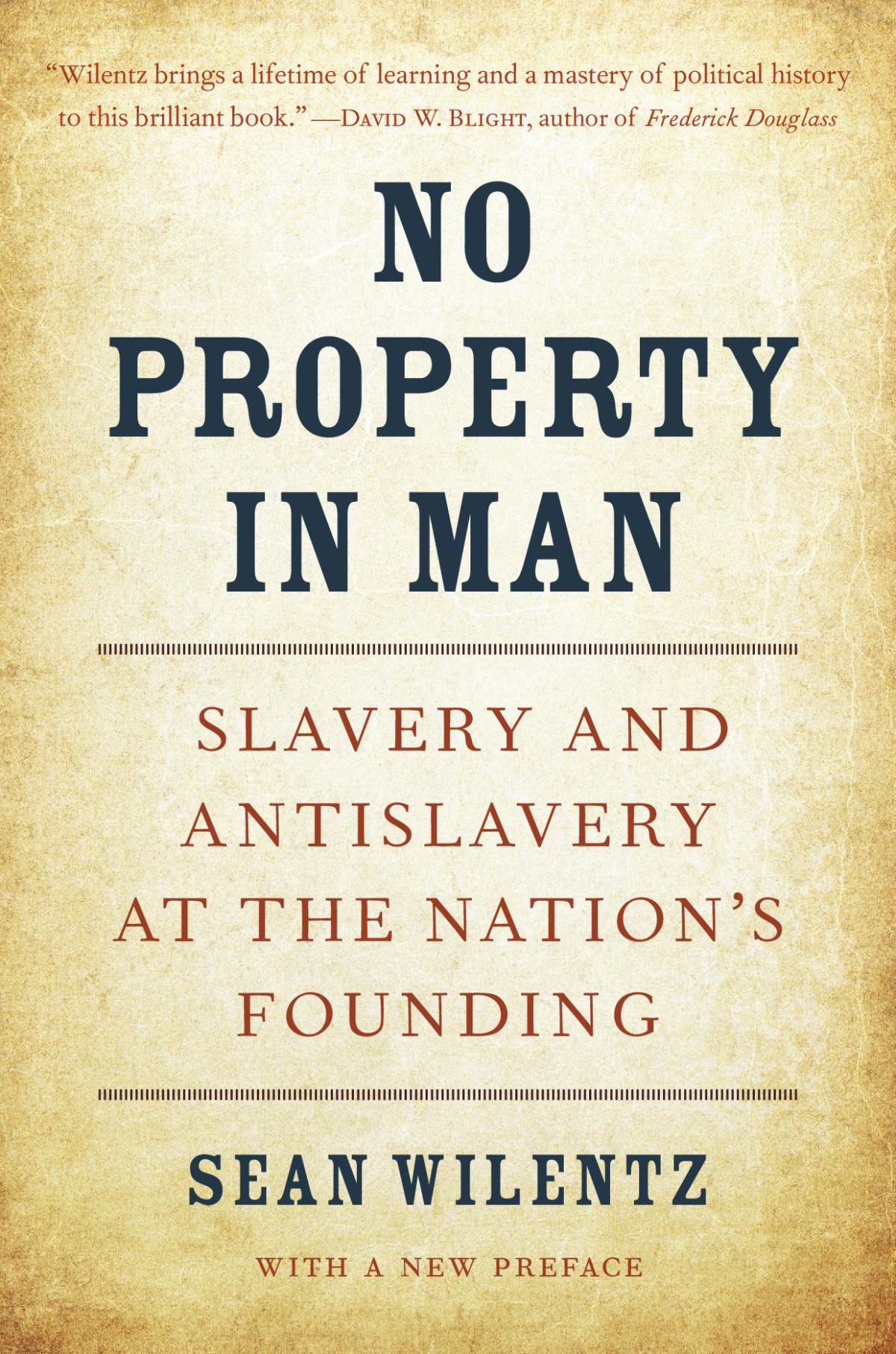
No Property in Man
: Slavery and Antislavery at the Nation’s Founding
Sean Wilentz
2019
View on Map
Related Excerpts
Load More
Viewing 1–20 of 30
The 1619 Project and the Work of the Historian
Sean Wilentz wrote a piece opposing the New York Times Magazine's 1619 Project, but his use of Revolutionary-era newspapers as sources is flawed.
by
Joseph M. Adelman
via
The Junto
on
January 23, 2020
The Political Odyssey of Sean Wilentz
How one of America's original Bernie Bros became an outspoken critic of the left.
by
Timothy Shenk
via
The Nation
This publication restricts nonsubscriber access to some or all of its articles.
on
May 20, 2019
Looking Back at 1619 in 2019–2021, and Beyond
1619 Project reignited debate over slavery’s origins, exposing tensions between continuity vs change in U.S. history and competing “origin stories.”
by
David Waldstreicher
via
Reviews In American History
This publication restricts nonsubscriber access to some or all of its articles.
on
March 16, 2026
How the 1619 Project Took Over 2020
It’s a hashtag, a talking point, a Trump rally riff. The inside story of a New York Times project that launched a year-long culture war.
by
Sarah Ellison
via
Washington Post
This publication restricts nonsubscriber access to some or all of its articles.
on
October 13, 2020
I Helped Fact-Check the 1619 Project. The Times Ignored Me.
The paper’s series on slavery made avoidable mistakes. But the attacks from its critics are much more dangerous.
by
Leslie M. Harris
via
Politico Magazine
on
March 6, 2020
The Hidden Stakes of the 1619 Controversy
Critics of the New York Times’s 1619 Project obscure a longstanding debate among historians over whether the American Revolution was a proslavery revolt.
by
David Waldstreicher
via
Boston Review
on
January 24, 2020
The Fight Over the 1619 Project Is Not About the Facts
A dispute between some scholars and the authors of NYT Magazine’s issue on slavery represents a fundamental disagreement over the trajectory of U.S. society.
by
Adam Serwer
via
The Atlantic
This publication restricts nonsubscriber access to some or all of its articles.
on
December 23, 2019
How Proslavery Was the Constitution?
A review of a book by Sean Wilentz's "No Property in Man," which argues that the document is full of anti-slavery language.
by
Nicholas Guyatt
via
New York Review of Books
This publication restricts nonsubscriber access to some or all of its articles.
on
June 2, 2019
partner
James Madison Responds to Sean Wilentz
Madison's Notes of the Constitutional Convention answer a current argument on the Electoral College.
by
Alan J. Singer
via
HNN
on
April 7, 2019
The Real Authors of the Founding
Americans must live up to “the words that made us.”
by
Brenda M. Hafera
via
Modern Age
This publication restricts nonsubscriber access to some or all of its articles.
on
June 5, 2026
History Has Its Eyes on You
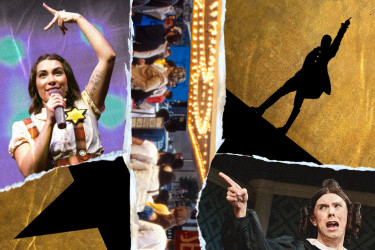
Slam Frank and musical theater’s Hamilton bind.
by
Emma Adler
via
The Drift
This publication restricts nonsubscriber access to some or all of its articles.
on
April 21, 2026
partner
Strange Political Bedfellows
The origins of the Electoral College are entwined with slavery, but not in the way that recent accounts have suggested.
by
Mark McKibbin
,
Denver Brunsman
via
HNN
on
October 9, 2024
Is the Age of the Resistance Historian Coming to an End?
People who study the past don’t always have special insight into politics. Recent events have made that crystal clear.
by
William Hogeland
via
Slate
This publication restricts nonsubscriber access to some or all of its articles.
on
July 11, 2024
“A Theory of America”: Mythmaking with Richard Slotkin
"I was always working on a theory of America."
by
Kathleen Belew
,
Richard S. Slotkin
via
Public Books
on
April 19, 2024
Teaching the Story of “Universal Liberty” in Revolutionary Rhode Island
Revolutionary ideals of liberty exposed the hypocrisy of slavery, sparking early antislavery movements.
by
Erik J. Chaput
via
The Online Review of Rhode Island History
on
May 13, 2023
No, Liberal Historians Can’t Tame Nationalism
Historians should reject nationalism and help readers to avoid its dangers.
by
Eran A. Zelnik
via
The Activist History Review
on
November 8, 2022
Was Emancipation Constitutional?
Did the Confederacy have a constitutional right to secede? And did Lincoln violate the Constitution in forcing them back into the Union and freeing the slaves?
by
James Oakes
via
New York Review of Books
This publication restricts nonsubscriber access to some or all of its articles.
on
April 20, 2022
The Historians Are Fighting
Inside the profession, the battle over the 1619 Project continues.
by
William Hogeland
via
Slate
This publication restricts nonsubscriber access to some or all of its articles.
on
October 30, 2021
Did the Constitution Pave the Way to Emancipation?
In his new book, "The Crooked Path to Abolition," James Oakes argues that the Constitution was an antislavery document.
by
Richard Kreitner
via
The Nation
This publication restricts nonsubscriber access to some or all of its articles.
on
October 6, 2021
Whose Freedom?
On the ways that people have conflated freedom with whiteness but pays too little attention to the force of freedom as a concept.
by
David A. Bell
via
New York Review of Books
This publication restricts nonsubscriber access to some or all of its articles.
on
September 2, 2021
Previous
Page
1
of 2
Next