Menu
Excerpts
Exhibits
Collections
Originals
Podcasts
Categories
Map
Search
Person
Frederick Douglass
View on Map
Related Excerpts
Load More
Viewing 61–80 of 315
‘A Doubtful Freedom’
Andrew Delbanco's new book positions the debate over fugitive slaves as a central factor in the nation's slide toward disunion.
by
David W. Blight
via
New York Review of Books
This publication restricts nonsubscriber access to some or all of its articles.
on
January 14, 2020
partner
The 19th Amendment Was a Crucial Achievement. But it Wasn’t Enough to Liberate Women.
It’s time to fight for the original and heretofore unachieved goals of the women’s movement.
by
Holly Jackson
via
Made By History
on
October 17, 2019
The Anti-Slavery Constitution
From the Framers on, Americans have understood our fundamental law to oppose ownership of persons.
by
Timothy Sandefur
via
National Review
This publication restricts nonsubscriber access to some or all of its articles.
on
September 12, 2019
How Proslavery Was the Constitution?
A review of a book by Sean Wilentz's "No Property in Man," which argues that the document is full of anti-slavery language.
by
Nicholas Guyatt
via
New York Review of Books
This publication restricts nonsubscriber access to some or all of its articles.
on
June 2, 2019
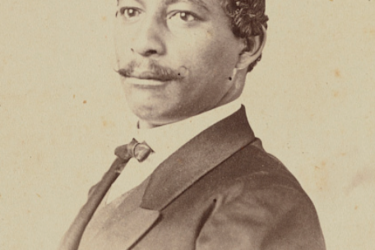
The International Vision of John Willis Menard, the First African-American Elected to Congress
Although he was denied his House seat, Menard continued his activism with the goal of uniting people across the Western Hemisphere.
by
Lorraine Boissoneault
via
Smithsonian Magazine
on
March 6, 2018
The Hidden History of Anna Murray Douglass
Although she’s often overshadowed by her husband, Anna made his work possible.
by
Lorraine Boissoneault
via
Smithsonian Magazine
on
March 5, 2018
Theorizing Race in the Americas
What are Latin American ideas about race, and how have they been formed in relation to the U.S. and vice versa?
by
Francisco Herrera
,
Juliet Hooker
via
Black Perspectives
on
September 7, 2017
America's Deadly Divide - and Why it Has Returned
Civil War historian David Blight reflects on America’s Disunion – then and now.
by
David W. Blight
via
The Guardian
on
August 20, 2017
Frederick Douglass, Real Estate Developer
Frederick Douglas had another, lesser known, impact on Baltimore.
by
Joshua Clark Davis
via
Black Perspectives
on
June 19, 2017
On Memorial Day, Weaponizing the American Flag
As a young woman, civil rights pioneer Pauli Murray discovered that the flag could be used as a symbol of defiance.
by
Jedediah Britton-Purdy
via
Scalawag
on
May 30, 2016
Race and the American Creed
Recovering black radicalism.
by
Aziz Rana
via
n+1
on
December 7, 2015
Struggle and Progress
On the abolitionists, Reconstruction, and winning “freedom” from the Right.
by
Eric Foner
via
Jacobin
This publication restricts nonsubscriber access to some or all of its articles.
on
August 17, 2015
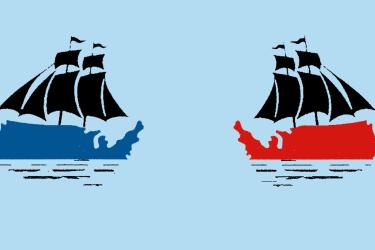
The ‘Two Ships’ Theory of American History
Can our unruly national story be squeezed into two vessels?
by
James Traub
via
The Atlantic
This publication restricts nonsubscriber access to some or all of its articles.
on
June 28, 2026
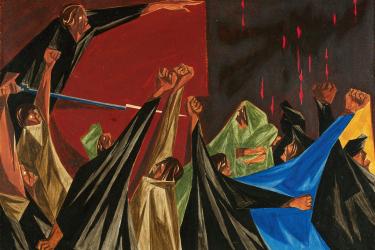
“Do You Understand Your Own Language?”
Black radicals read the Declaration of Independence.
by
Robin D. G. Kelley
via
Hammer & Hope
on
June 24, 2026
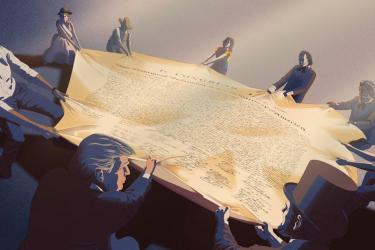
Who Owns the Declaration of Independence?
The Declaration has always been fought over. We can let Trump claim it, or we can take up its battle cry to “alter or to abolish” what’s destroying our country.
by
Osita Nwanevu
via
The New Republic
This publication restricts nonsubscriber access to some or all of its articles.
on
June 22, 2026
The Spirit of ’76
What is living and what is dead in our memory of the American Revolution.
by
David Waldstreicher
via
Boston Review
on
June 17, 2026
Harriet Beecher Stowe Wrote a Work of Fiction That Seemed So Real It Changed the Country’s History
To fight against slavery, the author collected true stories then picked up a pen and distilled them into “Uncle Tom’s Cabin.”
by
Geraldine Brooks
via
Smithsonian Magazine
on
June 8, 2026
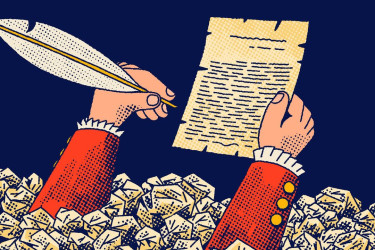
Was the Declaration of Independence Better Before the Edits?
Amid contention, criticism, and compromise, a divided nation had to present a unified front. It came at a cost.
by
Jill Lepore
via
The New Yorker
This publication restricts nonsubscriber access to some or all of its articles.
on
May 4, 2026
partner
The Revolutionary Beginnings of the Republican Party
Popular resistance to the Fugitive Slave Law and “Slave Power” helped forge a new electoral force.
by
Matthew Karp
,
Livia Gershon
via
JSTOR Daily
on
April 7, 2026
Hunted and Banned
Efforts to control Black mobility—from early passports to the Fugitive Slave Act—laid much of the groundwork for today’s border regimes.
by
Robyn Maynard
via
Boston Review
on
March 25, 2026
Previous
Page
4
of 16
Next